The History of the “Pocket Slim” Filofax Part 3

Part 1 and Part 2 of this series took us through the ’80s, ’90s and early 2000s. Now we’ll cover the 2010s to the present.

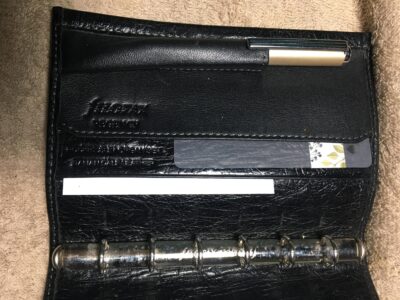
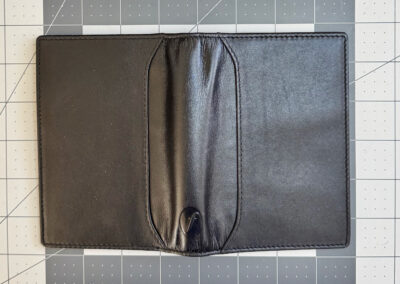
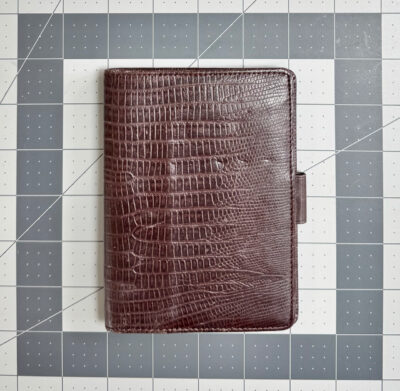
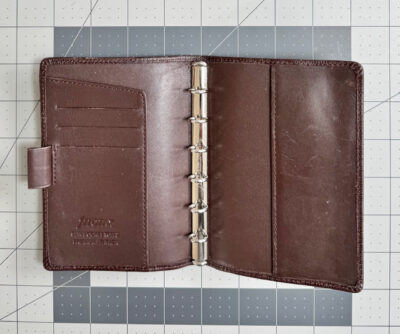
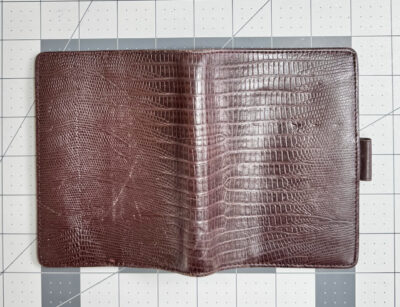
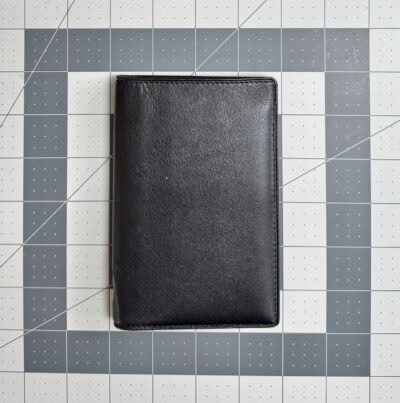
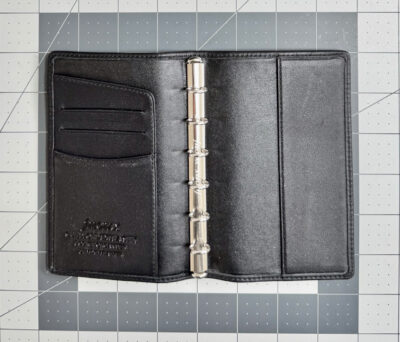
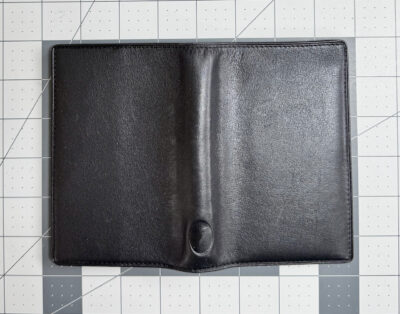
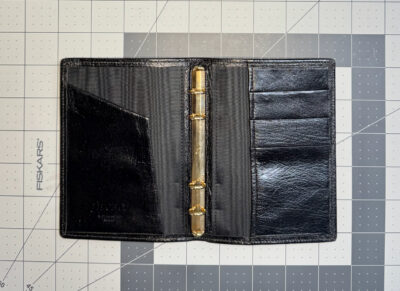
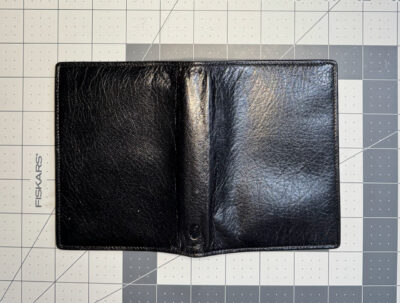
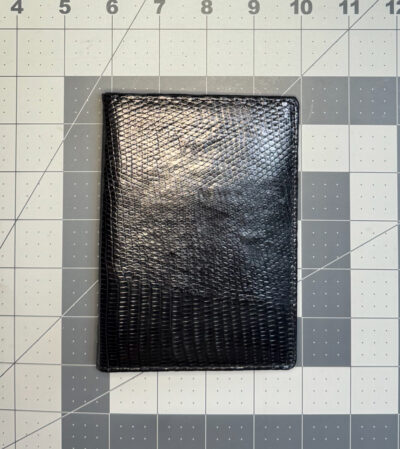
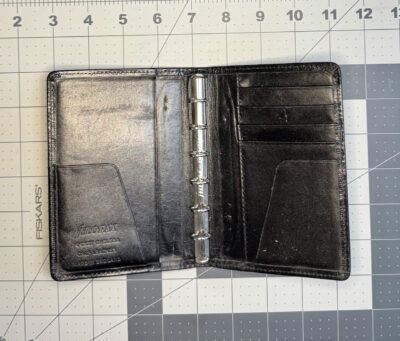
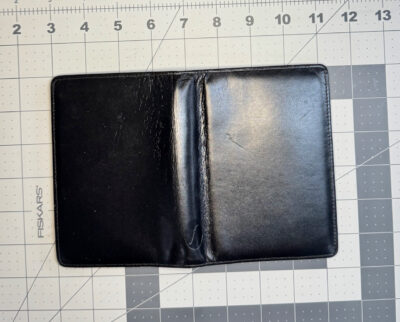
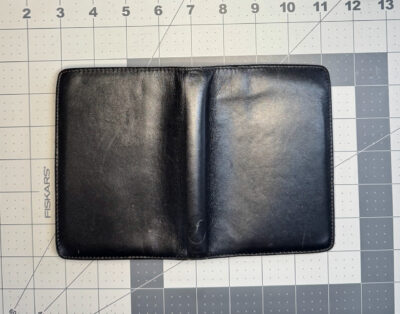
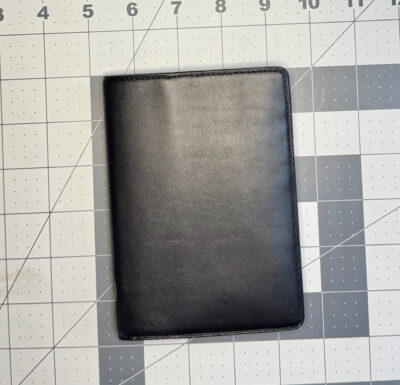
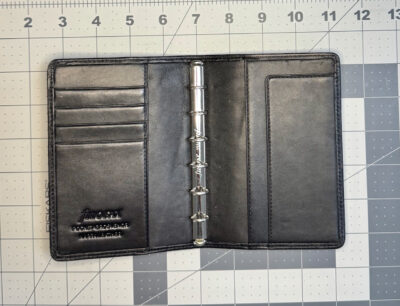
I believe the next pocket slim Filofax made is the Regency, from 2011. This model wasn’t on my radar at all until a member of the Philofaxy Facebook group posted photos of a pocket sized Regency without a fastener, noting that it had 1cm rings. It has an unusual pen loop– it’s actually more of a long pen sleeve or pocket on the inside front cover. Many thanks to Janine for letting me use these photos:

filofax regency pocket slim
filofax regency pocket slim open
filofax regency pocket slim front inside cover
filofax regency pocket slim

The Regency line appears in a 2011 Filofax “look book” and 2011 UK catalog but not a 2011 US catalog. It was only shown in personal and compact sizes, in black and brown, made of “glossy Italian leather” in an ostrich print. The prices were quite high vs. other ranges. A pocket Regency listing (or remnants of one) still appears online on the Filofax.co.za site, without much detail or any photos. I’ve seen a few other mentions of the Regency range online and it sounds rather nice, so I wish I could find more information about the pocket slim. I’d love to see it next to some of these other models to see if it has a narrower shape. [You can also see someone’s Flickr photos of their Regency organizers here] If anyone wants to sell me one of these, please get in touch!

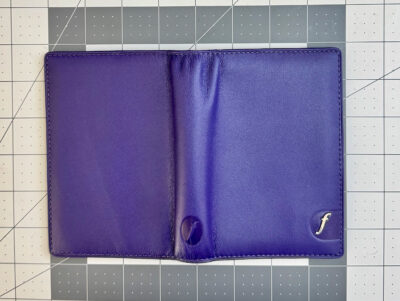
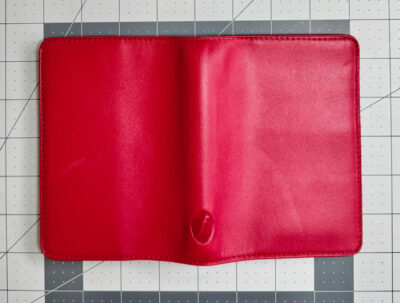
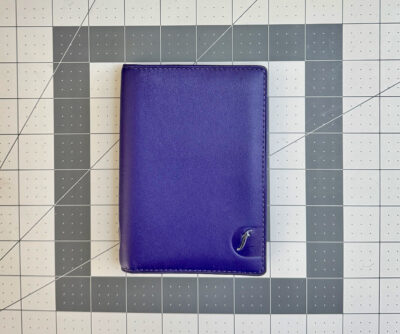
The Filofax Boston Pocket Slim appears in 2013, in black (#024920), pink (#024926), and ultraviolet (#024932). The Boston description says it’s made of “Deluxe Nappa Leather,” but I bought one and it feels kind of like the leather used in the Executive and Guildford models, only even cheaper. It is nothing at all like the nappa leather of the Grosvenor. The Boston seems to be made of a thin layer of leather with a lot of padding underneath, which gives it a weird spongy feeling. There is a shiny metal F logo on the front. There’s a pen loop in the inside front cover, and two full-length pockets on each side of the cover, with a fabric lining. There are no credit card pockets, so this is more suited to be a notebook than a wallet. But the nice thing is that it is a little slimmer than the Executive– narrower just by a hair. I couldn’t help wanting to have a complete collection of these Filofax pocket slim models, but otherwise I would not have bought this, especially if I’d been able to see and touch it first! It’s my least favorite Filofax.
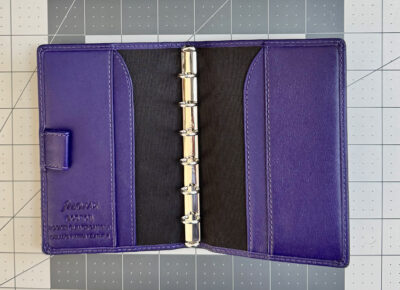
filofax boston pocket slim
Filofax Boston Pocket Slim in Ultraviolet
filofax boston pocket slim

In 2016, Filofax announced the Lockwood and Nappa slim organizers. Until recently, you could still see a tweet about it dated October 3, 2016 on X/Twitter— the post is now gone but the image still pops up in Google:
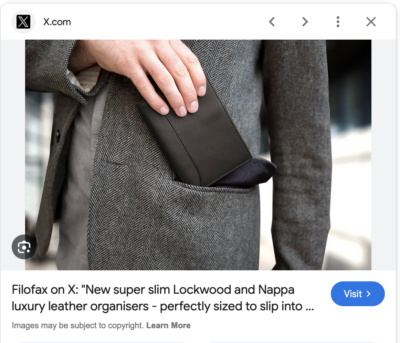
filofax nappa pocket slim twitter image

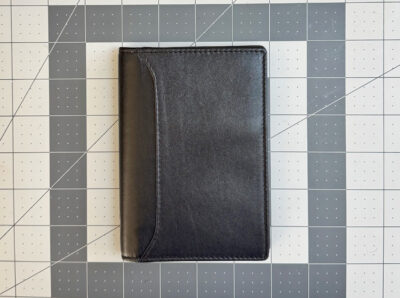
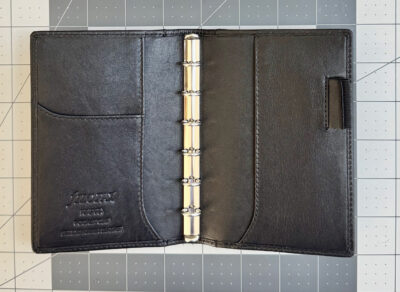
The Lockwood line featured “full grain buffalo leather with a lightly oiled burnished finish,” while the Nappa is made of, you guessed it, “soft nappa leather.” It’ s not as nice as the Grosvenor nappa, but luckily it is not the puffy nappa of the Boston either. The design of the Lockwood and Nappa models is the same, with a decorative exterior curved seam, one credit card pocket and one full length pocket on the left, and one full length pocket on the right. The full length pockets have a curved bottom edge that echoes the seam design element on the outside. There is also an elastic pen loop on the back inside cover, but it’s tucked in behind a flap of leather so page edges won’t catch on it. (The leather flap should also hide the signs of carnage when I eventually cut the pen loop off!)

The Lockwood is a nice, sturdy little Filofax, though it won’t lie flat like the Guildford or the Grosvenor, at least not without a lot of breaking in. The leather is thick and slightly glossy, and it came in some fun colors: navy (#026055), cognac (#026051), garnet (#026053), and aqua (#026049). The Nappa is also quite nice– its leather is softer and a bit less thick, making it about a millimeter thinner than the Lockwood. The Nappa also needs a little massaging to lie flat. The shape of both models is even narrower than the Boston– not by much, but I think these are the slimmest models other than the Guildford Extra Slim, while still being just wide enough to accommodate standard index tabs. They’re almost perfect– I wish they’d made them just a smidgen taller as that would give them perfect proportions, in my opinion.

Lockwoods can be found second hand here and there, and there are even some new ones that pop up– right now there’s one in the cognac color (#026051) on Amazon. The Nappa is available on Amazon in a black/taupe color combo (#026032). The all-black version (#026030) can also be found on Amazon, as well as from the Filofax Australia site and eBay, but they all tend to be a bit pricey. It looks like the Nappa range has been discontinued, as only a few larger size items remain on the Filofax US website and they’re all marked down. Lockwood is an active range for Filofax, though the pocket size has been discontinued.
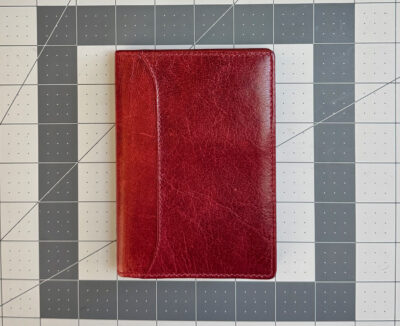
filofax lockwood pocket slim
Filofax Lockwood Pocket Slim in garnet
filofax lockwood pocket slim
filofax nappa pocket slim
Filofax Nappa Pocket Slim in black
filofax nappa pocket slim

So the question now is what’s next? It’s been a long time since Filofax announced a new pocket slim model, as far as I can tell. If they’re winding down the Lockwood and Nappa, what’s next? Will they continue to make new pocket slim organizers? Will they ever make another pocket extra slim organizer like the Guildford? Filofax seems to be sticking with the chunkier, snap-fastened format (and some models that have an elastic closure that wraps around, like a Travelers Notebook). But if there’s one thing my deep dive into Filofax’s history has taught me, it’s that they’ve evolved and changed a lot over the years, trying new things as trends change. So maybe they’ll decide it’s time to revisit the pocket slim someday! I will be keeping an eye out.

In the final post of this series, I’ll talk about a couple of Filofaxes that I can’t quite fit into this history. I’ll also cover some other brands that make alternatives to Filofax pocket slim organizers. Luckily, there are some pretty good ones at a variety of price points!

Previous posts in this series:

The History of the Pocket Slim Filofax: Series Introduction

The History of the Pocket Slim Filofax: Part 1

The History of the Pocket Slim Filofax: Part 2

Notebook Review: Logical Prime

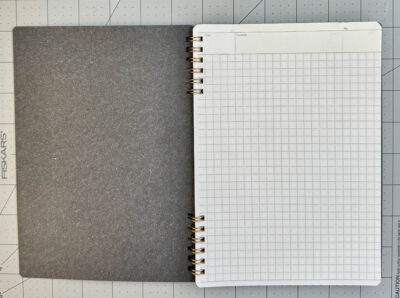
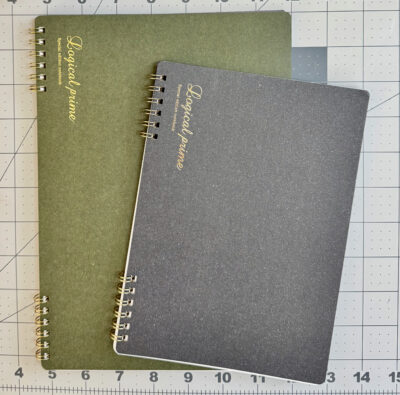
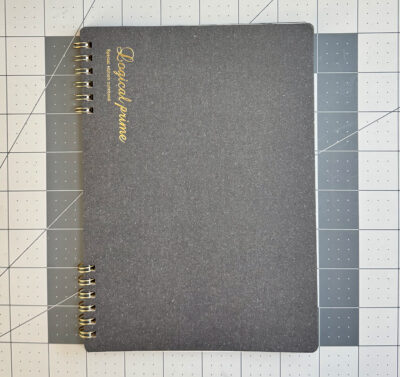
I bought these Logical Prime notebooks at Nota Bene in Montreal, a great destination for stationery shopping. These wire-o bound notebooks have a snazzy design that stands out from many of their competitors.

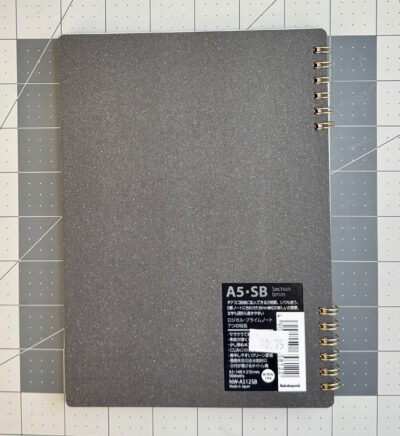
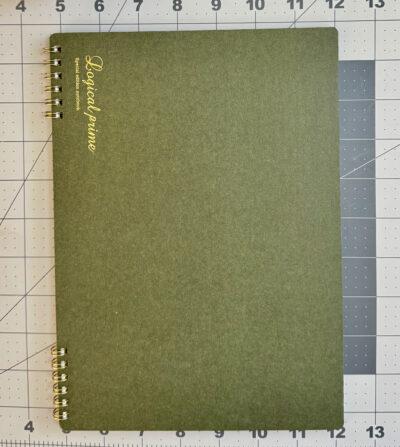
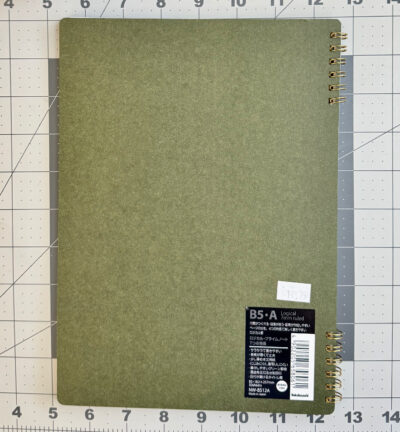
Logical Prime notebooks A5 and B5

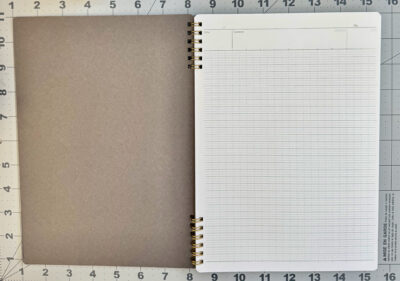
I chose a B5 size notebook with a green cover, and an A5 size in grey. The covers are made of a nice weight of cardstock. The grey has the same subtly speckled color on both sides, but the green is only green on the exterior, and plain grey inside. The covers have all four corners rounded, and they extend a bit beyond the page edges. I don’t usually like cover overhang on notebooks, but in this case it seems like a detail that required extra work and makes the whole design feel more thoughtful. But I also wonder how it would hold up over time– the edges might get bent and battered if the notebook is carried around in a bag.

Logical Prime notebook A5

Each Logical Prime notebook has 50 sheets, so they are pretty thin, with small rings. The binding is unusual, with short spans of 6 double wire rings at the ends of the spine, leaving the middle unbound. But like any other wire-o binding, the cover can be folded back 360 degrees, which I love. The color of the wire rings nicely matches the hold stamped branding on the covers. The gold stamping on the front is the only branding on the notebook itself. They say “special edition” but I’m not sure what that refers to. Other product details are on a sticker on the back cover, mostly in Japanese. From picking at a corner of the sticker, it seems like it should come off cleanly.

Logical Prime notebook B5

Inside, the green notebook has rule/dot grid pages, and the grey has squared pages. Both have a page layout that features a header where you can write the date and subject of your notes. This can be a nice feature, but for me, it can be a negative, as I sometimes use notebooks like this in landscape orientation as they fit my desk space better that way. At 6mm, I found the squares to be a bit wider-spaced than I prefer. The ruled/dot grid paper is different from anything I remember seeing. There are solid lines 7mm apart, with two dotted lines between each solid line. There are also vertical dotted lines at 7mm. This layout was also a little odd for the size of my typical handwriting, but it’s an interesting format that could be handy if you’re practicing calligraphy, perhaps.

Logical Prime notebook A5 squared pages
Logical Prime notebook B5 ruled and dot grid pages

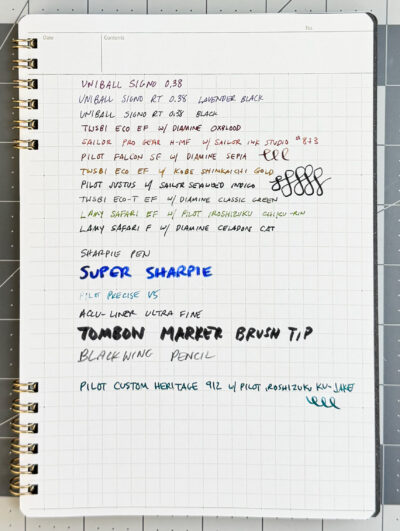
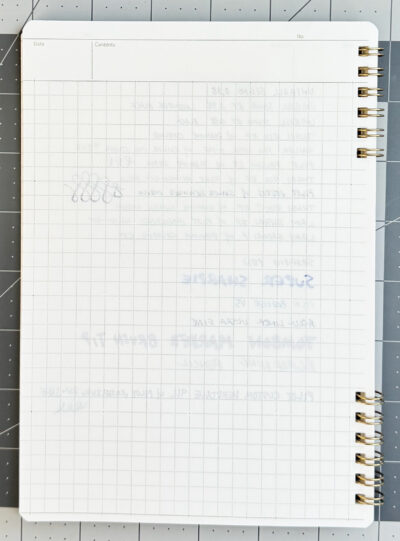
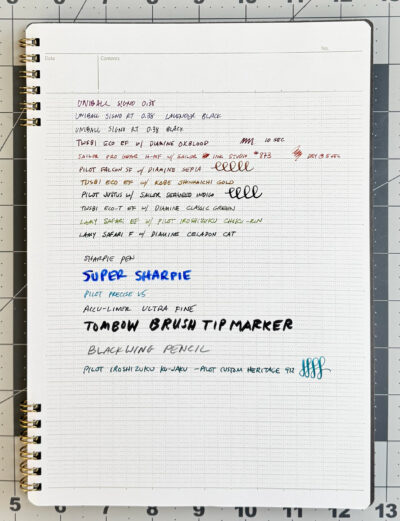
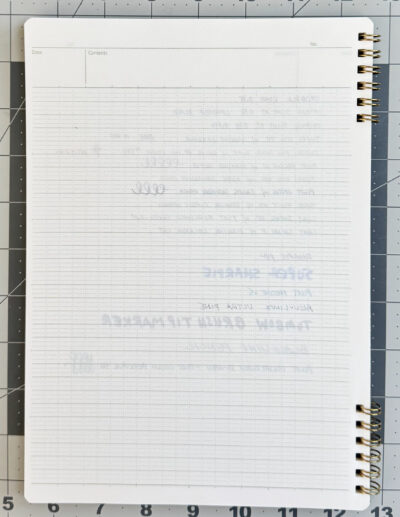
The paper is quite luscious and smooth, and it works very nicely with almost every pen, with almost no bleed-through except with my juicy Pilot Justus where it feathered and bled a wee bit, especially when I was flexing the nib. But otherwise, fountain pen users should love this paper.

Logical Prime notebook A5 pen tests front of page
Logical Prime notebook A5 pen test back of page
Logical Prime notebook B5 pen test front of page
Logical Prime notebook B5 pen test back of page

Logical Prime notebooks are made by Nakabayashi, a Japanese stationery company that was founded in 1923. The notebooks are available in a few other versions, but most of their catalog features markers, scissors and other attractively designed desk accessories.

You can buy Logical Prime notebooks from various independent stationery sellers such as The Gentleman Stationer, as well as on Amazon. The price stickers on mine are in Canadian dollars, but in USD, the A5 seems to go for around $7.00-7.50, and the B5 is about $8.00-9.00. These prices seem quite reasonable, and comparable to the Nebula Casual Note wire-o bound notebook I reviewed a couple of years ago, on a dollar per page basis. To me, these have better paper than the Nebula notebook, and a more elegant design, so I think the Logical Prime notebooks win on value! They are definitely worth a try if you want a nice-looking fountain-pen friendly notebook with the convenience of a wire-o binding.

The History of the Pocket Slim Filofax, Part 2

In Part 1, I covered pocket slim Filofaxes from the 1980s and 1990s, from the birth of the pocket Filofaxes as a small-ringed, no-fastener organizer, through their first few years when they transitioned to a standard configuration having larger rings, pen loops, and snap fasteners.

The first official catalog appearance of a pocket slim Filofax in the new millennium seems to be in the 2001/2002 US catalog, with the Executive model. This range was referred to a bit confusingly as the “Executive Slimline,” but then offered in the sizes Mini, Pocket, and Slimline. (Slimline had become the name for a Filofax that held personal size sheets of 3.75 x 6.75 inches / 95 x 171mm, but had small rings and no fastener.) Later catalogs just use the name “Executive,” and call this size “pocket,” not “pocket slim,” but since the whole range has small rings and no fastener, they had no need to distinguish particular sizes as “slim.”

The Executive design is somewhat similar to the Grosvenor, with 11mm rings and credit card pockets on the left, but it just has one full-length pocket on the right. It’s a little narrower than the Grosvenor. It came in black (model #022960) and red (model #022962). (In a 2005 catalog for Germany, a blue color was also offered, model #012959.) In the 2001 US catalog, it appears without a pen loop, but in other catalogs through 2006, it has a pen loop on the inside front cover.

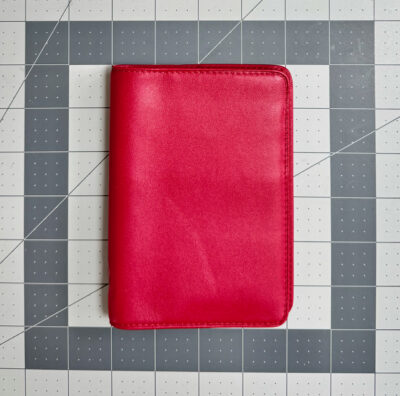
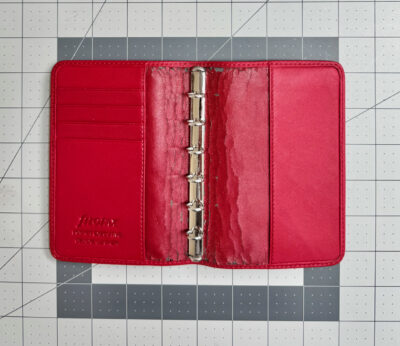
I have a red Executive, without the pen loop, purchased a while ago when I started researching this history. Mine, and almost every other example I’ve ever seen of the Executive line in any size, has a serious problem of flaky leather on the inside, whether they’re still new-in-box or well-used. The “deluxe leather” it’s made of is not so deluxe, and seems to just be a thin layer bonded to cloth padding underneath. I’ve had other notebooks made of bonded leather and have never seen anything disintegrate quite as badly as this. Maybe this leather defect was confined to a certain production year, or maybe it took a decade or two for this problem to emerge, but it’s surprising to me that such a problematic product continued to appear in catalogs for 5 years! I would be interested to know if people who bought these new in 2001 saw the leather starting to flake right away. It’s too bad, as it would be a really nice design if they’d made it with better leather.

Filofax Executive pocket slim front
Filofax Executive pocket slim interior
Filofax Executive pocket slim exterior

The next pocket slim model came on the scene in 2004: the Topaz, which was described as having “elegant full grain leather.” The lizard-like texture is stamped on the outside, while the inside is smooth, with cloth lining the pockets. It doesn’t feel like the highest quality leather, but after obviously having been used a lot, mine (bought 2nd hand) is pretty soft and flexible, even though it doesn’t quite lie flat. The Topaz seems to be the first time the Filofax catalogs use the term “pocket slim” to refer to a specific size with small rings and no fastener. The model name stamped inside says “Slim Pocket Topaz,” so I guess they hadn’t settled on their terminology yet! But despite being labeled as “slim”, it goes back to the very slightly wider profile of the Grosvenor. The 2004/2005 global catalog shows the Topaz pocket slim in black (#028340), brown (#028343), navy (#028345 ) and pink (#028347). In the 2005/2006 global catalog, the colors are black, brown, red (#028349), plum (#028344), and graphite (#028346). The design is like the Executive but the pocket on the left with the credit card slots has become a secretarial pocket, while maintaining the full length pocket on the right. Ring size isn’t specified, but they are probably 11mm. The Topaz line continued in the 2007/2008 catalog, but only models with fasteners were listed. I wouldn’t say this is one of my favorites, but there is something kind of pleasing about it and if I cut off the pen loop, I could see myself using it someday. Like if my other 10 favorite Filofaxes all wore out…

Filofax Topaz pocket slim front
Filofax Topaz pocket slim interior
Filofax Topaz pocket slim exterior

2007 brings the most exciting, most elusive, and most disappointing (in some ways) pocket slim Filofax of all: the Guildford Extra Slim, model #024840. This is the only Filofax I know of that states its size as “Pocket Extra Slim.” It is the perfect size, at least for me, because they’ve made it narrower while keeping the same height. Filofax divider tab inserts can’t really be used, as they will stick out. I don’t know why they didn’t sell some top-tabbed dividers to go with the Guildford, as there is plenty of room for them. The only downside to this size is that it works best as a more minimalist notebook– if you like to use a pocket Filofax as an overstuffed organizer and wallet, this might not be the best pick. The Guildford’s pockets are almost the same as the Topaz, except that there are two cut-in credit card slots plus one sewn-on slightly wider credit card pocket on the left, and there’s no pen loop.

I bought a Guildford sometime around 2008-2009, as that was the date on the calendar inside and though I know I ordered it online, I’m sure I didn’t get it on eBay. The “deluxe” leather feels pretty similar to the Executive, but at least so far, mine isn’t flaking, though I’ve seen photos of other Guildfords that have flaked. The Guildford is very soft and floppy, so it lies flat very easily. But the leather doesn’t feel very high quality to me, though it at least isn’t stiff vinyl– I remember being disappointed in the feel of it when it arrived, which is why I remember that I bought it online. (I kept it in its box for a long time but then used it as a daily carry for a while.) If they made the Guildford with the nappa leather of the Grosvenor, or the calf of the Chelsea, or the kid, or even the smooth but sturdier leather of the Lincoln, I’d probably have bought 20 of them to make sure they’d get me through the rest of my days. But alas, the Guildford Extra Slim only seems to have appeared in that 2007 catalog, and a 2013 Filofax Canada catalog, (at least those are the only ones in the Philofaxy archive to feature it) and this model now seems quite rare on the resale market. Too bad. I wish Filofax would make something like it again, as I don’t believe there are any other models with this extra slim profile.

Filofax Guildford pocket extra slim front
Filofax Guildford pocket extra slim interior
Filofax Guildford pocket extra slim exterior

Part 3 of this history will bring us up to the present. Coming soon!

Previous posts in this series:

The History of the Pocket Slim Filofax: Series Introduction
The History of the Pocket Slim Filofax: Part 1

Egon Schiele’s Sketchbooks

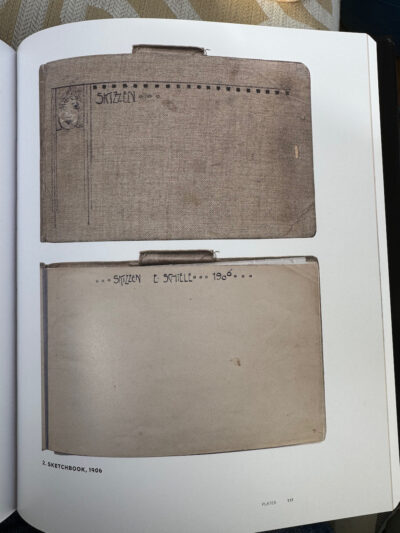
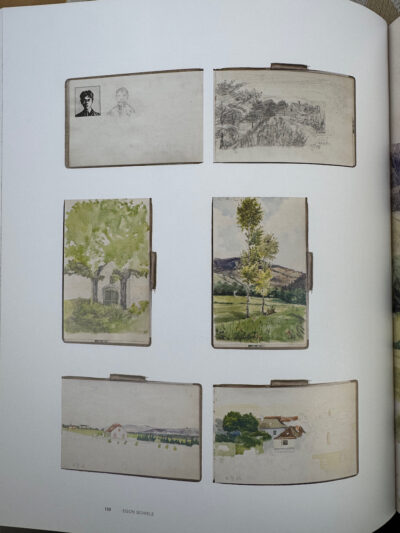
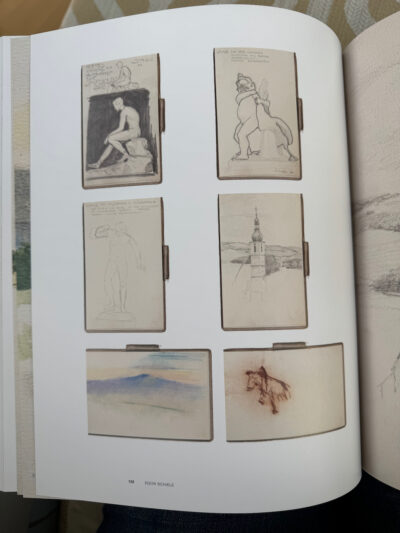
I love finding images of artists’ sketchbooks. I was familiar with some of Egon Schiele’s paintings, mostly portraits and figures, but a recent book focuses on his landscapes, and as a bonus, features some images of his sketchbooks:

egon schiele sketchbook
egon schiele sketchbook pages
egon schiele watercolor and drawings in sketchbook
egon schiele drawings in sketchbook

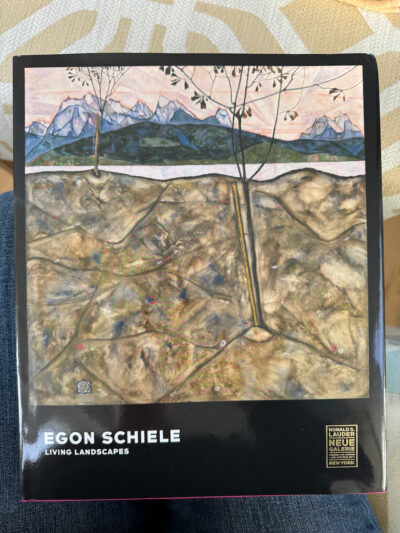
I wish I’d been able to see the exhibition at the Neue Galerie– the book was the exhibition catalog, so I assume the sketchbooks were part of what was on view. Unfortunately it ended in January 2025, but the book is still available: Egon Schiele: Living Landscapes.

egon schiele living landscapes book cover

The History of the “Pocket Slim” Filofax: Part 1

In the introduction to this series of posts, I covered some background on Filofax’s rare pocket size offerings from the 1930s to 1970s. With all that history out of the way, let’s look at how the modern pocket size Filofax organizer was first introduced in the 1989 Filofax UK catalog.

This year, the ultimate adaptability of the Filofax really comes into its own with the launch of the Pocket Organiser. Here is the Filofax that does not advertise itself– yet makes itself indispensable to its owner in no time at all.

–Filofax Catalogue 1989, via Philofaxy

The first pocket Filofaxes of the late 1980s were introduced as a sort of companion to a standard Filofax. Although earlier pocket sized binders from Filofax seem to have had a standard 6-ring configuration, the new pocket organizers were designed with 4 rings, spaced so that the inserts could fit the inner rings of a personal size Filofax. The pocket organizers were launched in 3 leather types: soft calf with a “diced” grain, in pink, green or blue; kid, in black, burgundy or blue; and calf with a saffian criss-cross grain, in black, burgundy or brown. The ring size was 7/16″ (or 11mm), and cover size noted as 137mm x 99mm. And fasteners were not even mentioned as an option.

I have two of these original models, in the kid leather. One was my very first Filofax, that I purchased in 1992 or 1993, I think. I had it cut down to a narrower shape (see Pocket Filofax, Early 1990s for details). The black one is a later eBay purchase that is still in its original state. The black one is marked CAB in gold letters inside the secretarial pocket, and the burgundy one says CBB. They’re really lovely– so finely made, lightweight and supple. It’s hard to find inserts that fit the 4-ring configuration nowadays so you have to punch your own, but despite being at least 35 years old, these kid leather models still have lots of life left in them.

kid leather pocket filofax late 1980s
Two late 1980s kid leather pocket Filofax organizers. Burgundy model on left was altered.
kid leather pocket filofax interior
kid leather 1980s filofax exterior
kid leather pocket filofax 1980s code inside pocket

I think I also have an Iguana, though I’m not sure. I bought it from a seller in Japan, so may have been a model that was tweaked for that market. The leather has a stiff backing, and there is no model code on it anywhere, but I’ve seen similar ones for sale with 1990 inserts in them, so I do think it’s a very early model.

filofax iguana 1980s japanese special edition
Pocket Filofax Iguana from late 1980s or early 1990s? Or Japanese special edition.
filofax iguana 1980s japanese special edition interior
filofax iguana 1980s japanese special edition exterior

In the 1990 UK Filofax catalog, the pocket size models shifted a bit. The standard configuration is now noted as having a pen loop and fastener. The soft kid version is still available in black, blue and burgundy, and it is noted that versions without a fastener or with larger rings are also available. The other versions are now iguana calf leather in blue, green, pink, violet or black; and vinyl in black, blue or red.

From 1989 to 1991, all these models have the same interior pocket configuration as far as I can tell– a secretarial pocket on the left, and a full length pocket with credit card slots on the right. Inside, they are stamped with the Filofax name, the leather type, and “Made in England.” There is a small F logo on the spine.

In 1991, the iguana and vinyl models are pretty much the same, except for slightly different color options for iguana. All models have 11mm rings, but the kid leather model now comes with a fastener and pen loop, and also offers a 16mm ring option. In black kid leather only, they offer an 11mm ring version with no fastener.

In 1992, the pocket size line expands with the introduction of some new models, and they now have names. The kid leather now seems to be called Sherwood, the vinyl has become Berwick, and iguana is … Iguana. There’s also the Tejus, described as calf leather print, and Lincoln, which is smooth leather. In this catalog, all are said to have 16mm rings and the cover dimensions are 140mm x 102mm. The pockets have changed to two full length pockets on the left, and one full length with credit card slots on the right. Although no “slim” option is mentioned, at least one existed, because I have it: I am 99% sure I have a fastener-free Lincoln, though the model name isn’t stamped in it. It does have the gold stamped Filofax name and it says “Made in England” and “Real Leather.” This is one of the only “slim” Filofaxes to have 16mm rings. Despite the bigger rings, the width is just enough to accommodate divider tabs without them sticking out. The shape of this Filofax is almost perfect– I just wish it was slightly taller. But it’s still one of my all-time favorites.

filofax pocket lincoln no fastener 1990s
Pocket Lincoln Filofax, early 1990s
filofax pocket lincoln 1990s no fastener interior
filofax pocket lincoln 1990s exterior no fastener

In 1993, not much changed except that they introduced another pocket model called the Windsor. Everything has a fastener and 16mm rings, except for the blue and red versions of the Berwick, which for some reason have 11mm rings. No mention of any “slim” versions.

1994 is a momentous year, as Filofax switches the pocket models from the 4 ring configuration to the standard 6-ring format that matches other brands’ similarly-sized looseleaf binders. Otherwise, not much is new except that the Iguana and Lincoln have gone away and the York (soft natural leather) and Chester (suede-finish vinyl) have been added. The Sherwood has switched from being made of kid leather to calf leather. The dimensions are now 140 x 105mm. Rings are all 16mm. No mention of any “slim” versions.

In 1995-1997, as far as I can see, everything has 16mm rings and a fastener. Various model names come and go. No mention of pocket slims.

In 1998, the Pocket Chelsea appears in the UK catalog, model #027860. The default description of pocket organizers is that they are 108 x 145mm, with 16mm rings, though the catalog notes that certain organizers may have a larger or smaller ring capacity. The Chelsea is described as a “slim organizer” made of English calf leather, only available in black, without a fastener or pen loop. The Chelsea continues to appear in the 1999 catalog with that model number. At this point, Filofax is starting to stamp the model names inside the organizer: I have two pocket Chelseas, clearly named on both, but interestingly, one has 11mm rings, and one has 16mm rings. Both say “Made in England.” They are made of a lovely soft leather and have a nice arrangement of pockets that make them work well as a wallet. I used mine actively in the mid- to late-90s. See “Filofax Pocket Chelsea, Two Ways” for more details. The one with the large rings is another all-time favorite for me– it’s a perfect shape and size, and with the larger rings allowing for more inserts. It’s wide enough to accommodate index tabs but it’s taller, so the proportions are very pleasing.

filofax pocket chelsea 1990s two versions
Two pocket Chelsea Filofaxes. On left, 11mm rings. On right, 16mm rings.
pocket chelsea filofax 1990s small rings interior
Pocket Chelsea 11mm rings
pocket filofax chelsea 1990s small rings exterior
Pocket Chelsea 11mm rings
pocket chelsea filofax 1990s larger rings interior
Pocket Chelsea 16mm rings
pocket chelsea filofax 1990s larger rings exterior
Pocket Chelsea 16mm rings

In 1999, a new model appears, but only in the US “New Arrivals” Filofax catalog: the Grosvenor, model #020260, list price $100. (Not to be confused with an earlier, totally different personal size Filofax model also called the Grosvenor, which had metal corners. It’s strange that they reused the model name.) The catalog calls the Grosvenor a “slender” organizer, made of “luxurious nappa leather.” I bought a 2nd hand Grosvenor, and I can confirm that it really does feel luxurious! The leather is soft and supple while also feeling quite durable. The Grosvenor measures about 142 x 104mm, and has 11mm rings. The credit card pockets are on the left, with full length and secretarial pockets on the right. It does not say “Made In England,” as Filofax was shutting down their UK manufacturing around that time. The Grosvenor is another one of my favorite Filofax models– I liked it so much I bought two, and modified one to swap in larger rings– see this post for details. The only negative about the Grosvenor is that the leather inside the large front and back pockets can become a little sticky, probably due to the natural oils. In the first one I bought, I thought the problem came from having been used or stored poorly, but the second one was brand new and pristine and still had the problem. In any case, I found that my pandemic era alcohol wipes cleared up the stickiness very nicely.

filofax pocket grosvenor 1999
Pocket Grosvenor
filofax pocket grosvenor 1999 interior
filofax pocket grosvenor nappa leather 1999 exterior

Check back for Part 2 of this series, where I’ll continue the history of pocket slim Filofax organizers into the early 2000s.

The History of the Pocket Slim Filofax: Series Introduction
If you’ve read any of my posts about the various pocket Filofax organizers I’ve used over the years, you probably noticed that they were all models that have no pen loop or fastener strap. Snap-closing fasteners have become the more common option for pocket Filofaxes, so I always assumed that having a fastener strap was the default configuration and thought models without it were rarities that I’d been lucky to find. But in the last year or two, I noticed a couple fastener-free Filofax models I wasn’t aware of, and after being inspired to dig into what other models might have been available, I discovered that my assumptions about pocket Filofaxes were all wrong. The very first pocket size Filofax organizers were introduced as slim, small-ringed models that had no fasteners– in fact, fasteners weren’t even an option at first. Over the years, there have been quite a few other models that came without fasteners. They’re still rare, but a lot less rare than I thought.

pocket filofax collection front view
Pocket Filofaxes I’ve used at various times over the last 30+ years

Thanks to the catalog archive at Philofaxy, I’ve worked up a chronology of what came to be called “pocket slim” Filofax models, which have no fastener, (often) no pen loop, and (usually) small 11mm rings. It seems that not all of these models were officially cataloged, or perhaps were only offered for sale in certain countries for which catalogs don’t appear in the Philofaxy archive. So this history may not be quite complete, but hopefully I’ll have captured all the official US/UK models.

pocket filofax collection top view
Pocket Filofaxes I’ve used

In Part 1 of this series of posts, I’ll cover the 1980s and 1990s. Part 2 will cover the first decade of the 2000s and Part 3 will bring us from 2011 to the present. I’ll conclude with Part 4, about some oddities and alternatives from other brands.

But first a little background on pocket size Filofaxes in general. The original parent company of Filofax sold looseleaf ring binders in various sizes since at least the 1930s, based on this ad shown in the corporate history on the Filofax website:

This Philofaxy post has more early catalog photos showing smaller organizers and inserts. But from at least the late 1930s (based on this source) through the brand reaching its heyday in the mid-1980s, what we now call “personal” size organizers (with inserts that measure 95 x 171mm, or about 3.75 x 6.75 inches) were the predominant product.

The older catalogs can be rather hard to follow– the “personal” size is sometimes referred to as a “pocket book”, as opposed to even larger desktop organizers. (The only pockets they’d fit in would be a man’s jacket pocket, probably.) The 1979 Filofax catalog posted at Philofaxy says on page 1 that “all sheets are a standard size, 6 3/4 x 3 3/4″ (171 mm x 95 mm),” despite page 13 offering “memo books” in larger sizes and “small ring books” that accommodated “junior” inserts measuring 2 1/2 x 4 1/2″. But these “memo books” were being marketed as just basic looseleaf notebooks, with plain or lined paper, address sheets and A-Z index tabs being the only inserts offered (as opposed to the wide range of inserts for highly specific purposes that were available in the personal size). They were not that different from looseleaf notebooks offered by other manufacturers– see this link for a 1911 catalog showing some made by W. J. Gage and Co.

That 1979 catalog may have been the last gasp of Filofax offering “basic” looseleaf binders. Shortly thereafter, they must have decided to focus on selling up-market personal organizer systems, so they stripped down their offerings to a narrower line of “personal” size leather organizers and printed inserts. This was the Filofax that exploded in popularity and became iconic in the 1980s. In the posts to come, we’ll see how pocket size Filofax organizers were (re-)introduced and evolved over the next few decades.

How Will Tariffs Affect Notebook Prices?

Last July, I wrote about how notebook prices had increased over the years. Since then, a lot has changed in the political and economic landscape, and it could mean that notebooks will become even more expensive.

notebook and money

Tariffs are constantly in the news now, with Trump’s policies changing from one day to the next. It’s a mess… and I can’t imagine how manufacturers and retailers will figure out how to move forward! As of this writing, there are huge tariffs being imposed on China, where many notebooks are manufactured. Even if a notebook is manufactured in the USA, it’s possible it is made of paper and ink manufactured in China, or printed and bound on machines that require parts from China. How will notebook brands deal with a 145% tariff on these elements?

Some of this will depend on whether notebooks are being imported in bulk for resale, vs. being delivered to consumers directly from China. Moleskine is apparently making at least some of their notebooks in Vietnam now, so they may be avoiding the worst tariffs, and at least for the moment, their prices seem to be the same as they were a year ago. The same may be true for other brands. But what about smaller brands that are doing direct to consumer business via Temu, Amazon or AliExpress?

For example, I bought a notebook from China about a month ago via AliExpress– I expected to see that its price had increased since then, but at least for now, the price is the same. But that pricing doesn’t include the tariff at all. According to a thread on Reddit, if I ordered that notebook today, I might be hit with a bill for the tariff myself sometime after its delivery. The shippers that are clearing items through customs are apparently passing along the extra tariff costs to the recipient. USPS may be starting to charge a $9 fee for any incoming packages, and it sounds like that is just for the nuisance factor of handling the shipment, on top of the tariff itself! I would imagine we’ll start to hear more outrage about this in the coming days as people start to get surprise tariff bills after ordering items online.

I’m all for made-in-USA goods, and I’ve often written nostalgically about vintage notebooks from the days when there were lots of regional stationery manufacturers in this country. Notebooks are a great case study for how global trade has evolved over the past century, not entirely for the best. But it’s not like those American factories are just sitting there dormant, waiting to be turned back on the minute tariffs make it easier to compete with cheap Chinese products. And the factories for the materials they would need aren’t sitting there waiting either– there’s a whole supply chain ecosystem that can’t be rebuilt overnight. There must be a better way to re-grow American manufacturing jobs without a sudden, drastic and chaotic change that hurts the economy in other ways in the meantime.

Is it the end of the world that a $30 notebook from China would now probably cost me over $80? No– it’s just a notebook and I can live without it. But say a pocket Moleskine starts to cost $25 or more at your local stationery store, or a 3-pack of Field Notes goes up to $15.95 because the aluminum used in their printing plates is from China and is now more expensive. If everyone starts deciding they can live without those too, it will hurt American small businesses and Americans may lose their jobs.

I don’t pretend I know the best answer to this. I just hope the most dire predictions don’t come to pass.

Moleskine Touch Notebook

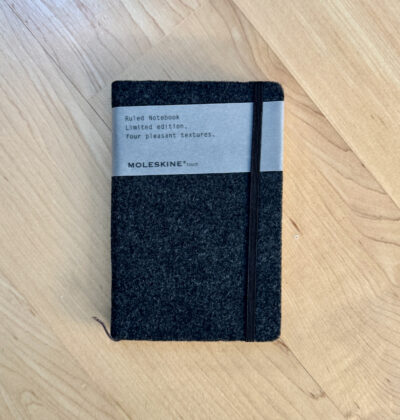
I’ve been paying a fair amount of attention to Moleskine notebooks for many years, so I sometimes think I can’t possibly discover anything new and interesting to say about them. Yet once in a while I discover some limited edition or series that I had never noticed. The Moleskine Zoom collection was one, and I recently came across another: a Moleskine Touch notebook.

moleskine touch notebook front

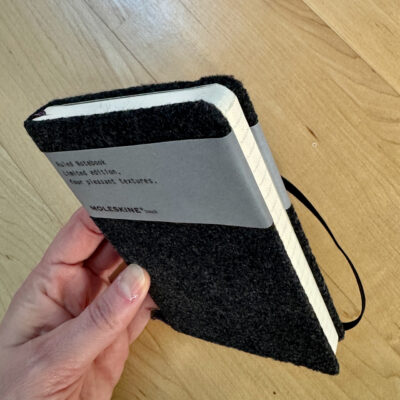
This was an eBay find– I wasn’t even quite sure what I was going to get, as the item description had some incorrect info, but I could see in the listing photos that this Moleskine notebook seemed to have a grey flannel-like cover. The band mentioned a limited edition of “four pleasant textures.”

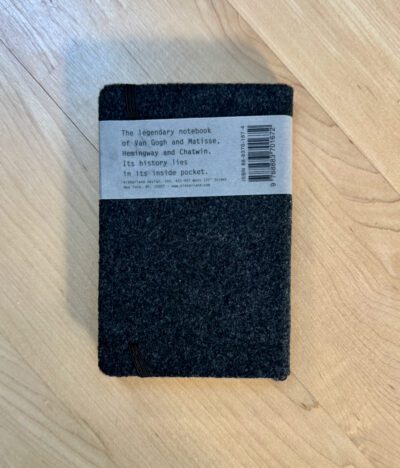
moleskine touch felt back

The design of the packaging indicated that this would probably have been from the late 1990s or early aughts. It’s definitely from before 2006, as it says Modo e Modo inside, and the back cover shows Kikkerland as their distributor, a relationship I believe ended in 2008. The booklet inside is also consistent with other examples that date to the very early 2000s, probably pre-2002. (See my previous post with more details on The Evolution of Moleskine Notebook Packaging.)

moleskine touch slipcase front
moleskine touch slipcase back

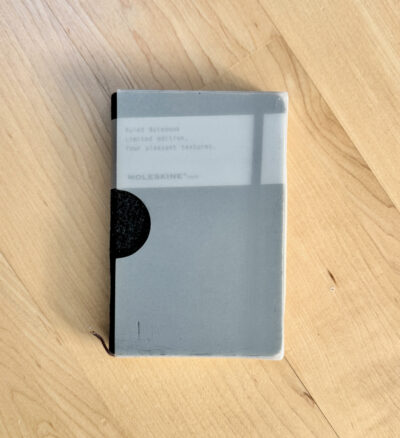
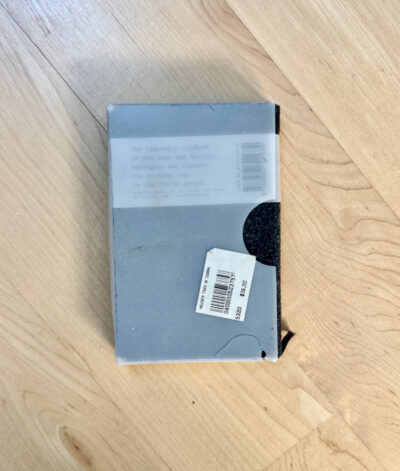
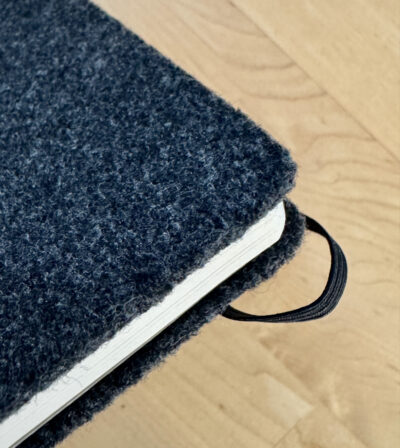
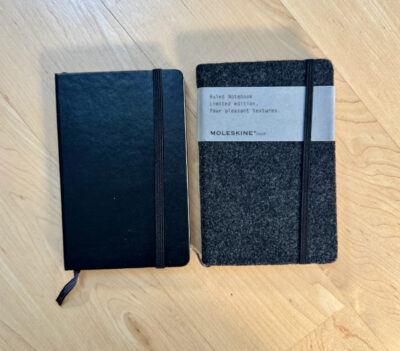
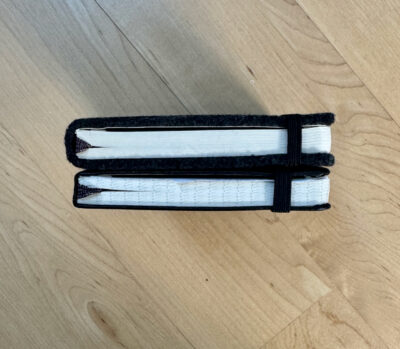
The notebook came in a translucent plastic slipcover. It’s an interesting choice– if it was for protection, they could have just shrinkwrapped it like other Moleskines. But I guess they wanted people to be able to touch all the Touch notebooks! The texture is indeed pleasant– it’s actually felt, a bit rougher than flannel. The fabric adds some bulk to the covers, making it quite a lot thicker than other Moleskine notebooks with the same page count. The insides are exactly the same as any other Moleskine of the time.

moleskine touch felt cover
moleskine touch felt cover close up
moleskine touch vs regular moleskine front view
moleskine touch vs. moleskine regular top view

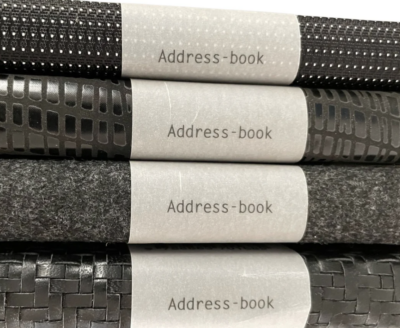
The only other trace of this collection that I could find was this page on Lovenotebooks.com: Moleskine Special Edition Touch Address Books . You can see all four textures that were originally offered– in addition to felt, there was Crocodile (faux, obviously), Dots (not sure what it’s actually made of but it seems to be fabric of some sort), and Woven (seems to actually be woven strips of faux-leather).

moleskine touch address books 4 textures

This collection isn’t as interesting to me as the Zoom Moleskines, but I like that it’s a relatively understated variation on the classic black Moleskine theme. And it’s always fun to find something old and yet new, at least to me– a relic from the early days of the Moleskine brand.

Notebook Addict of the Week: Joey

I haven’t done a Notebook Addict of the Week post in a while, so it was great to hear from Joey, who sent some photos of these beautiful spreads:

joey sketchbook spreads
notebook addict joey sketchbook spreads
sketchbook with drawings
colorful sketchbooks
open sketchbooks full of art

I love all the color and textures! If you check out Joey’s Instagram (@magician_menace), you’ll see even more use of these natural forms and dense patterns and sinuous shapes in multi-media artworks and amazing masks. Joey is obviously a very talented , imaginative and prolific artist!

Joey says:

I use a variety of different notebooks for arts-research! I like to combine writing and drawing to see what emerges, like having a conversation with myself across time. Sort of ‘chewing’ on ideas, letting them grow across pages and notebooks until I can tease the threads of the work out into something bigger. I feel like a notebook is my most used tool as an artist and writer, it lets me tinker, and play with all the shiny things like a magpie!

The notebooks I use vary, a lot of them I get rather cheaply at thrift stores or out of clearance racks at TK Maxx, I was using these but they reduced the quality of them by half, I also hand bind my own books when I want something chunky. Art mediums I use are dip pen and acrylic ink, drawing pens and watercolour. 

I’ve never seen the brand Joey linked to, called Elements of Art– looks like it is an Australian brand that’s made in China. It’s always so frustrating when a favorite brand suddenly changes their quality!

I’m grateful to Joey for submitting these fascinating sketchbooks and reminding me that I should be posting notebook addicts more often! If you’d like to be considered as a Notebook Addict of the Week yourself, you can reach me via the contact form at the top of the page. I love getting submissions!

Hypergraphics Anonymous?

“What happens when the impulse to put pen to paper becomes extreme?”

That’s the question posed by a recent piece in the New York Times Book Review: Pregnant With One Child and 295,233 Words

The article, by Molly Young, is about her reading and writing habits during her pregnancy. She managed to write a 295,233 word Google Doc. And her reading included a book called The Midnight Disease: The Drive to Write, Writer’s Block, and the Creative Brain, by Alice Flaherty, which talks about a medical condition known as hypergraphia.

Hypergraphia is the compulsion to write excessively and without obvious purpose or profit. Hypergraphics tend to exhibit flamboyant penmanship and fill every inch of space on a page. They favor colored inks and CAPITAL LETTERS. They write in response to internal rather than external pressures — so, not to achieve tenure or impress girls. And their writing must be coherent. That is, it must rise above sheer orthographic compulsion, must express more than a third grader’s cursive worksheet.

I have to admit that I felt a little shiver of self-recognition in that– and might not we all, those of us who love our notebooks and pens? I’ve often felt like I just want to write and doodle in notebooks without even really needing to, without a purpose other than to fill pages. It’s just because I like to write (and draw)–I like notebooks and pens, and I like the experience of using them. My enjoyment of using them is sometimes out of line with my actual need to use them, or any true creative production.

However, I don’t think most of us would truly qualify as compulsive writers at the level of true hypergraphia. The article says that “Flaherty reserves the label of clinical hypergraphia for those with known or likely temporal lobe abnormalities — the best-understood causes.” Hypergraphia can also be part of a manic episode or other mood disorders. And perhaps this association is why, as the article points out, the most prolific writers like Joyce Carol Oates or John Updike are sometimes looked down upon for spewing out such a high volume.

But perhaps there’s a spectrum of hypergraphia? Is there something in our brains that makes all of us love writing to various degrees, and sometimes too much? If someone did a study of the notebook and pen communities, would they find a neurological thing we all have in common, to varying degrees? I would love to know!

Notebooks, journals, sketchbooks, diaries: in search of the perfect page…