Notebooks from Ireland

Ireland is a fun place to visit. But I didn’t find it a wholly satisfying place for notebook shopping, which is always on my agenda when traveling. A few months ago, I was in Dublin and a few other towns, but most of the time, the pickings seemed slim. It was hard to even find places to look at notebooks: I wandered around looking for a stationery store I’d Googled, but it turned out to have moved or gone out of business. Despite all this I did end up buying a couple of notebooks from Ireland.

aisling notebook from ireland

This Aisling notebook is not the sort of thing I would normally get all excited about, but I quite like it. It is a very basic school notebook from what seems to be a very common Irish brand that you see in basic office supply stores and bookstores. I bought this one in an Eason’s store, for €0.30. As a bonus, the bilingual cover teaches you a few words in Irish! I love finding notebooks like this that are very much a home grown product and not something you’d find elsewhere.

Here’s some of the other notebooks Eason’s had on display:

The other notebook I purchased is a total tourist item, but I guess quite representative of Ireland in its own way.

guinness notebook from ireland

I had almost given up on buying any other notebooks from Ireland but found this Guinness notebook in a highway rest stop store towards the end of my trip. It’s my favorite size and format, and it has cool retro Guinness advertising art on the cover and front endpapers! Inside, the pages are lined in red, with a somewhat too large Guinness logo on every page. I think it only cost about €6 or maybe €8, and surprisingly, the paper is pretty fountain pen friendly, at least with some pens.

The only other notebooks that I remember noticing were in museum shops. Below are some leather notebooks with Celtic designs, spotted at the National Museum of Ireland– Archaeology in Dublin:

leather celtic notebooks ireland

These were at the Hugh Lane Gallery:

And I think these were at the EPIC Irish Emigration Museum. They’re from Duffy Bookbinders, who claim to be the oldest bookbindery in Ireland:

Finally, I just had to throw in this shot of a really adorable little school supply shop. They did have some notebooks, though nothing particularly exciting or unusual enough to photograph. But it was the kind of little shop I would have been crazy about as a kid, with little bins of erasers and toys and things. It was fun to browse in, even though I didn’t end up buying anything there! I wish every town still had a little corner shop.

Dingle Corner shop ireland

David Sedaris’s Diaries

A reader tipped me off to what looks like a really interesting book:

In this richly illustrated book, readers will for the first time experience the diaries David Sedaris has kept for nearly 40 years in the elaborate, three-dimensional, collaged style of the originals. A celebration of the unexpected in the everyday, the beautiful and the grotesque, this visual compendium offers unique insight into the author’s view of the world and stands as a striking and collectible volume in itself.

The diaries seem almost like scrapbooks, with lots of stuff pasted in, and typewritten entries. Sedaris binds them together with plastic comb spines or wire spirals.

Buy on Amazon: David Sedaris Diaries

Thanks to David for this great tip!

John Garcia’s Sketchbooks

I really miss the “Book by Its Cover” blog, especially the series of posts about sketchbooks. (The blog has been inactive since 2015 but the archives are still viewable.) Here’s a cool post I’d flagged a few years ago:

Book By Its Cover » Sketchbook Series: John Garcia.

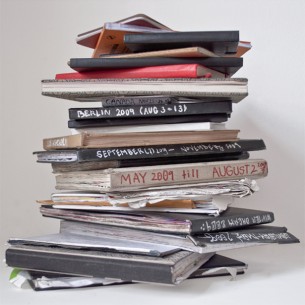
I love this shot of John’s pile of sketchbooks:

The interiors show a lot of variety:

There are additional images in the original post. You can see John Garcia’s other work at his website.

How Reporters Take Notes

An interesting item from the New York Times:

(Some of) the Many Ways Times Journalists Take Notes

If news reports make up the first draft of history, a reporter’s notebook is where that draft begins. Whether it’s an iconic quote scribbled in a notepad or a detailed scene describing a moment in time, the notes that reporters take are an early, but crucial, step in the process of Times journalism.

The means of note-taking have evolved, and reporters each have their own process for recording the details that make up their report, which can vary widely depending on their beat. But the goal remains the same: to document the truth.

Read more: (Some of) the Many Ways Times Journalists Take Notes

This got me thinking about the specific style of notebooks that reporters use. A company called Portage makes quite a few versions, as well as notebooks for other professional uses, such as medicine and law enforcement. I like this one because it has graph paper:

I also noticed this reporter’s notebook by Juvale, which is nice because it has a wire-o binding instead of a regular spiral (at least in the images it looks that way– the description uses the word “spiral.”)

Of course, if you want to spend 10 times as much money and look like an amateur, you can use one of these:

Pocket Size Notebooks and Planners from Nanami Paper

Nanami Paper‘s fountain pen friendly Tomoe River paper notebooks seem to be very popular. But I kind of wrote them off because they only seemed to sell larger A5-ish sizes rather than the pocket size I prefer. However, I recently took another look and was glad to see there are a few options that might appeal to people like me!

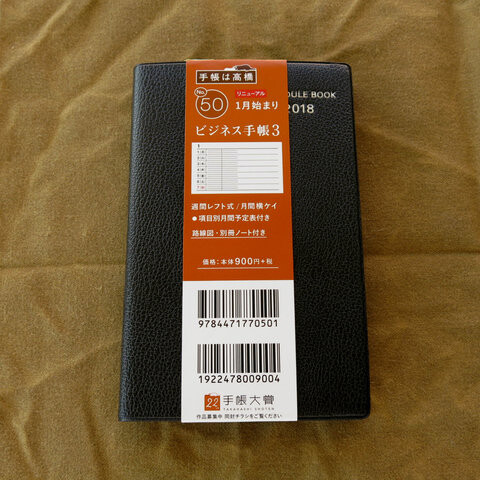
First is this Takahashi planner. At 150x95mm, it is not quite my perfect size of 140 x 90mm, but it’s pretty close, and it looks like it has some interesting features. I already have my other favorite fountain pen friendly Japanese diary from Nolty, but if I couldn’t get those any longer, I would consider the Takahashi.

Takahashi No. 50 Professional Planner 2020

Next is a regular notebook with gridded pages inside, the Cafe Note Pocket Edition. It has two ribbon markers, which is always a nice touch. At 92x155mm, it is still a little bit larger than my perfect size, but I can’t help being tempted!

Cafe Note Pocket Edition

Then there’s the Cafe Note A6 size. The dimensions in millimeters or inches aren’t specified, but they say it is A6, and to me, it looks like the size of the Hobonichi Techo, which is 105 x 150mm, which is almost exactly true A6 size. (Not all A6 notebooks really are A6 size!) This one is out of stock right now. Still not quite the right size for me, but close.

Cafe Note A6

Of all of these, I’m most attracted to the Cafe Note Pocket Edition. I like the taller proportions, which will seem strange to those of you who remember me complaining that I can’t buy Leuchtturm’s pocket notebooks because they are 150 x 95mm! But for some reason, with that retro faux-leather vinyl cover, and the 3.7mm grid, and that paper, it just looks very appealing to me!

FYI, I have not tried any of these notebooks, and have no connection or sponsor relationship with this retailer. Just my own opinions and interests as a notebook shopper!

Notebook Hack (Attempt): Moleskine + Stillman & Birn

It’s been a while since I attempted any sort of notebook hack or alteration (except for removing the pen loop from a Taotree notebook), but I recently decided to do a little experiment.

I’ve always like the Moleskine City notebooks because they have a nice thickness, with more pages than the normal pocket size notebooks. They also have 3 ribbon markers. But of course much of the interior is taken up with city info and there isn’t that much space to just write or draw. And the issue with Moleskine notebooks in general, as we all know, is that the paper isn’t great if you want to use certain types of pens. Even their sketchbook paper has issues– the smooth card stock they use can be great for some kinds of drawing, but not so much for watercolors, or fountain pens.

The pocket sketchbooks that have become quite popular are those made by Stillman and Birn. Artists love these because they are available with a variety of good quality paper types, in different weights, textures and colors. Their pocket size is the 3.5 x 5.5″ format, same as Moleskine, but they only come in softcover. S&B also makes hardcover sketchbooks but they have square corners and don’t get any smaller than 4 x 6″.

So I wondered what would happen if I did a little transplant surgery, removing a Moleskine City Notebook interior and filling the cover with Stillman & Birn paper. I had managed to buy an extra Moleskine City notebook very cheaply, so it seemed worth a try!

Moleskine City Notebook and Stillman & Birn softcover pocket sketchbook

Taking apart the Moleskine isn’t too hard– you just have to cut very carefully between the endpaper and the first signature to remove the page block. You can then remove the ribbons from the page block spine.

Moleskine City notebook hack, cover with pages removed
Moleskine notebook hack, cover with pages removed

I popped the S&B sketchbook inside the cover and it almost fits perfectly, except that the corners are rounded to a much larger diameter than the Moleskine cover. For me, this made the whole project a non-starter. It’s bad enough to have too wide an overhang, but when it’s wider on the corners than along the sides, that is just ugly.

top view of Moleskine cover with Stillman and Birn sketchbook inside
Corner detail of Moleskine cover with Stillman and Birn sketchbook inside

I also think that even if the corners matched perfectly, it would not quite work to just attach the S&B softcover inside as is. It works well in terms of its thickness–the one I’m using is an Alpha, but some of their other paper types would be too thick to fit. But I don’t think gluing the Moleskine endpapers to the cover of the S&B would make for a strong enough binding, given the stiffness of the S&B spine.

Other people have done this notebook hack by making their own sewn signatures and attached them to the Moleskine endpapers in this way, and it always made me wonder how well it held up to use. In most bookbinding, there is additional material glued to the spine (called the “mull”) that also gets attached to the cover boards underneath the endpapers. The mull is traditionally linen or some kind of loosely woven cloth, but on the Moleskine, it appears to be made of paper. From what I can see in my dissection, it isn’t glued that strongly to the spine, but it must add some reinforcement helping to keep the cover attached.

So now I am trying to figure out if there will be a next stage to this notebook hack. I could try removing the endpapers and back pocket and see if that would give me room to glue in a different, slightly thicker S&B sketchbook, gluing the outside cover of the S&B directly into the Moleskine. But that wouldn’t solve my corner problem. I could buy a larger size S&B and cut it down to match exactly, but that would be a lot of work, and would probably turn out looking all butchered on the edges. And I’d have to be sure the cutting didn’t run into the stitches that hold the signatures together. I could also try folding, cutting and sewing my own paper signatures… and while I’d really love to do my own bookbinding someday, I don’t have all the proper equipment to do it right, and this whole thing is starting to sound like an expensive pain in the ass.

At least for now, I’m going to have to admit that I just don’t have the patience to successfully carry out this particular hack. But if any readers have their own stories of similar projects, I’d love to hear them!

Édouard Manet’s Notebook

Here’s something I came across on the website of the Morgan Library:

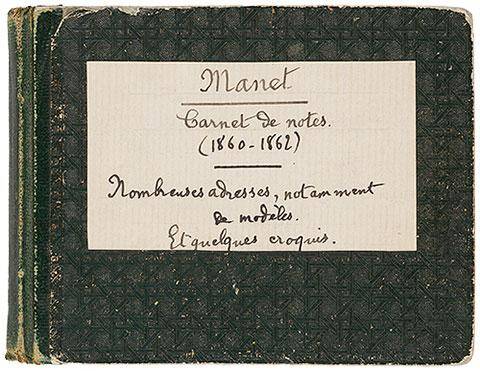
This is the only surviving personal notebook of the French artist Édouard Manet (1832–1883). He used it in the early 1860s, when he was between the ages of twenty-eight and thirty, documenting aspects of his everyday life and work in the two years leading up to his most significant contributions to modern painting, Le Déjeuner sur l’herbe and Olympia….

The notebook is small (10.9 x 14.1 cm), bound with a leather spine and embossed paper-covered boards, and heavily worn from frequent use. The inside front cover bears a label of the stationer J. Mèche, located at 189 rue Saint-Honoré, across from the Church of Saint-Roch, just steps from the Tuileries Gardens. Manet filled about 38 of the notebook’s 102 pages, leaving many blank….

Read more at the website of the Morgan Library: Édouard Manet’s Notebook, 1860–62

Octavia Butler’s Notebook

I loved these images of Octavia Butler’s notebook, with her affirmations about becoming a successful writer. (She eventually did.)

The post at Black Cardigan Edit where I found these also shows off some notebook pages by Sylvia Plath and Frida Kahlo!

Other posts about writers’ notebooks

Other posts about artists notebooks and sketchbooks

Rhodia Webnotebook Comparison: Then & Now

I recently wrote about how Moleskine’s packaging has evolved over the years. I thought it would be interesting to take a look at a similar Rhodia Webnotebook comparison. In future posts, I’ll also examine some other popular brands to see how their products have changed over time.

I first reviewed a Rhodia Webnotebook in 2009, not too long after they were introduced. Here’s the orange one I received as a sample from the company.

notebook6285
notebook6286

At some point, I also acquired a black Webnotebook with 80 GSM pages. I already had it when I reviewed the orange one, so I’m assuming I bought it in late 2008 or early 2009.

A few months ago, I purchased a current Webnotebook from JetPens when I saw that they were stocking the version with unlined 90 GSM pages, something I’d wished was an option years ago when they only offered lined pages.

rhodia webnotebook comparison

How have the old Webnotebooks held up over time? Neither of the early ones was subjected to daily use–they have just been stored in boxes, so I can’t really speak to durability. The orange one seems to show some wear or fading of the color on the cover at the edges and corners, but it’s basically in great shape. What is quite shocking is the condition of the old black one– the cover material is crumbling on both sides of the spine, to the point where flakes and particles fall off every time I pick it up. Seems very strange for a notebook that has barely been opened to wear out in that way.

80 GSM Rhodia webnotebook from 2009 showing spine deterioration

The original notebooks both had the vertical paper band with branding info on it. You can see that the newer one has a more typical horizontal band, just in white. It’s attractive, but I miss the iconic Rhodia orange! The other major difference in external appearance is that the recent model has a slightly larger cover and slightly smaller pages, leading to a great big cover overhang. The old black Webnotebook had the smallest overhang, and even the orange one was starting to get a little clunky looking, but this current one looks way worse. The cover also seems softer and almost rubbery.

rhodia webnotebook comparison thickness

My older black Webnotebook doesn’t note a country of origin, but the orange one said “Made in France.” The new one says “made in Étival-Clairefontaine, France,” but I think that refers just to the paper. Below that, the band says “French Design Made in Morocco.”

The 80 GSM paper in the old black notebook felt nice to write on but shows a lot of feathering and bleed-through with fountain pens. The 90 GSM paper in the old orange notebook and the current black notebook performs very well with fountain pens, and still feels wonderfully smooth to write on.

90 GSM Orange Rhodia Webnotebook from 2009:

notebook62857
notebook62858

80 GSM Rhodia Webnotebook tested in 2009:

notebook62859
notebook62860

90 GSM Rhodia Webnotebook from 2019:

rhodia webnotebook 2019 fountain pen tests
rhodia webnotebook 2019 fountain pen tests back of page

I was really hoping the unlined Rhodia Webnotebook would be something I could use day to day. I love the paper but I just can’t get past that clunky cover. (And I hope it won’t end up deteriorating like the other one!)

Bottom line on the Rhodia Webnotebook comparison: a cosmetic update to the packaging, but from what I can see, Rhodia seems to have stayed very consistent in their paper quality over the past decade, and it’s great that they introduced unlined (and dotted) versions after the early years when lined was the only option. Also, in 2009 I had noted that the suggest retail price was $15 for this pocket size– that does not seem to have changed, which is nice. Unfortunately, the exterior construction is a bit different after the move to Morocco, but if the larger overhang isn’t something that bothers you, it’s still a great notebook!

Various colors, size and paper formats available on Amazon.

Notebook Addict of the Week: Cuprohastes

Cuprohastes was one of the winners of my recent Arteza giveaway, and he included Arteza sketchbooks and watercolor books in this shot of his notebook collection!

notebook addict cuprohastes

Quite a variety here: I spy Field Notes, Moleskine, including one of the Van Gogh silk covered ones, perhaps Leuchtturm and I think Mead, as well as others I can’t identify.

Thank you Cuprohastes for sharing your addiction!

Notebooks, journals, sketchbooks, diaries: in search of the perfect page…