Such an odd story… they announced last week that two of Darwin’s notebooks must have been stolen, after being missing for 20 years. Imagine a library so big that it takes them 20 years to decide for sure if something is just misplaced or definitely not there at all!
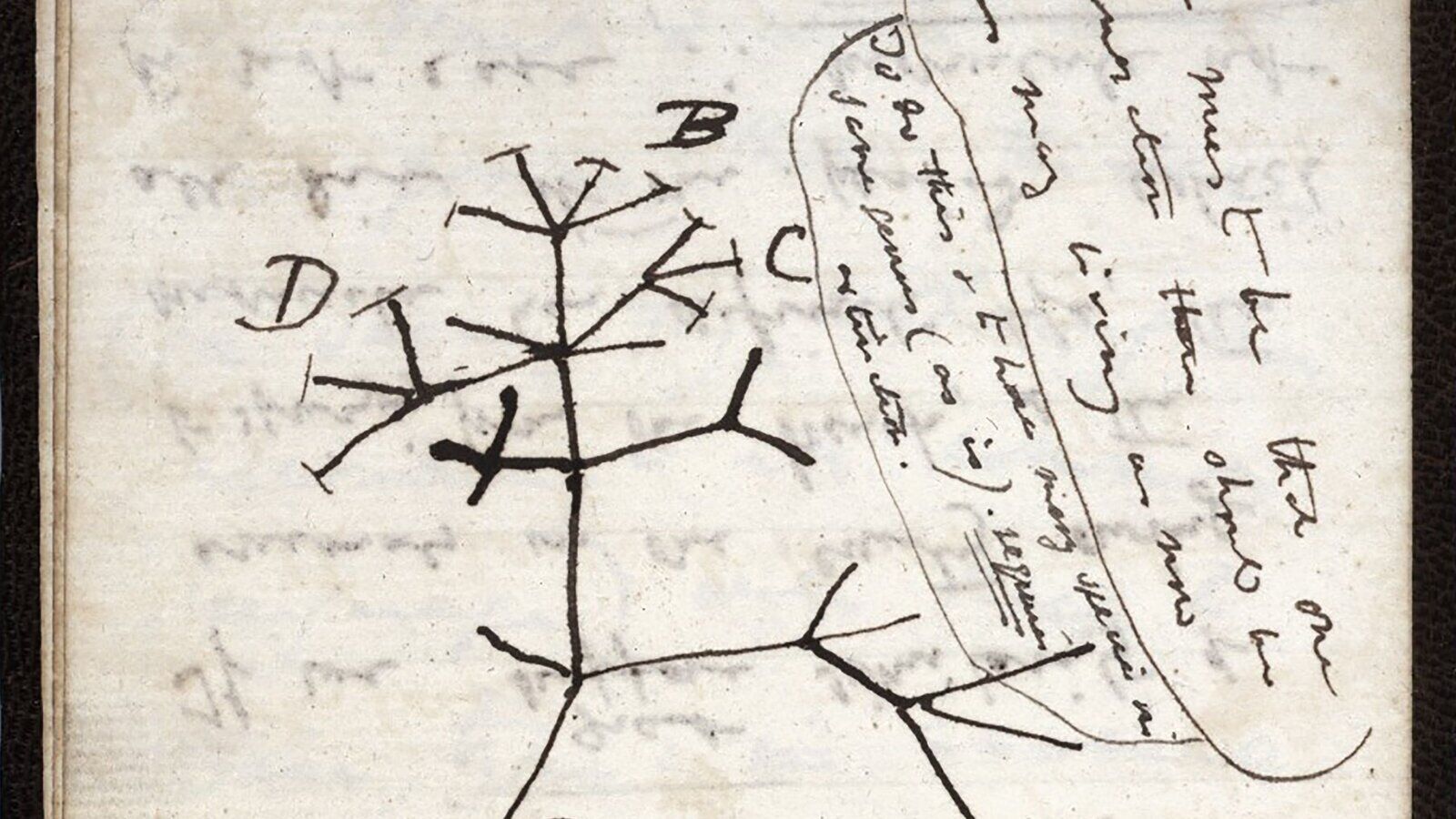
Twenty years ago, two historic notebooks belonging to the renowned naturalist Charles Darwin were found missing from the archives at Cambridge University Library. The tiny books recorded Darwin’s thoughts after he returned to England from his famed voyage aboard H.M.S. Beagle, as he grasped toward ideas that would form the foundations of modern evolutionary biology.
Now, the library has said it believes the notebooks were most likely stolen, and it launched a public appeal for any information about their whereabouts on Tuesday. The local police say they have asked Interpol to place the items on its Stolen Works of Arts Register. The library, which houses the largest collection of Darwin’s writings, has described the missing notebooks as “priceless†but nevertheless estimated their value at “millions of pounds.â€
For years, I’ve wanted to find an example of the original “carnets moleskine” that existed for many decades before the capital-M Moleskine brand was founded. It’s difficult to research online, as the capital-M notebooks dominate the results if you try to search any related terms. I wrote about it in a blog post a few years ago, when I actually did find an image of one of Picasso’s small notebooks.
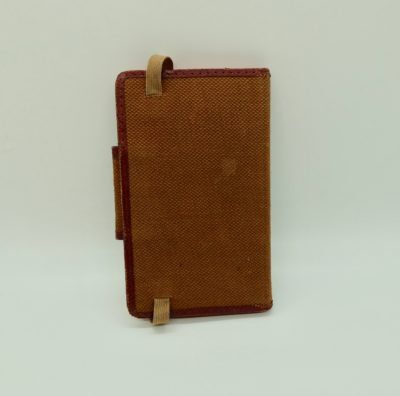
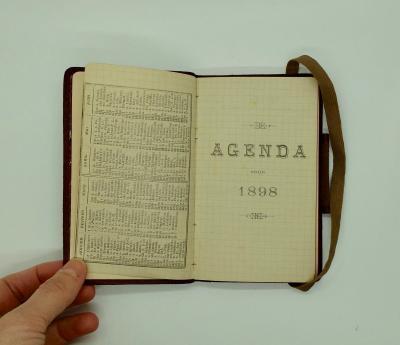
In doing some digging on eBay, I happened to find this lovely 1898 agenda notebook, and I was very excited, because it looks exactly like the Picasso notebook I had blogged about. I had also seen a similar notebook in a museum, I think belonging to Matisse. Perhaps the notebooks used by those famous artists were more often this design, rather than the black faux-leather covers so common today?
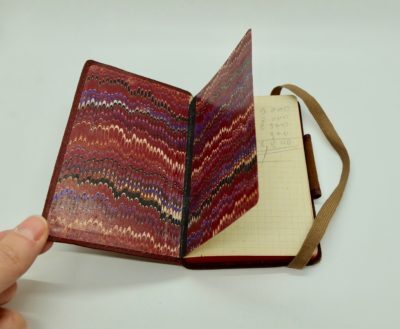
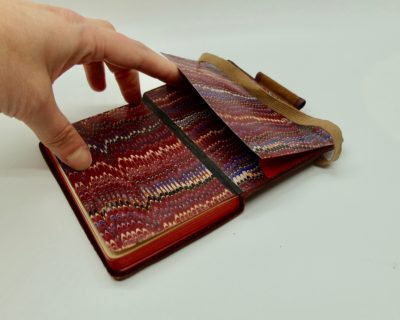
The cover is a woven fabric, with stitched edges reinforced with a faux-leather. It has an elastic closure. Inside, the endpapers are marbled, and in the back, there’s an expanding pocket. There is also a pen loop and red page edges, and the size is smaller than today’s usual standard for pocket notebooks, but it hits all the basic design elements that Moleskine later imitated. The paper inside is squared, except for a couple of signatures at the back.
Only one page at the beginning is unprinted. Then there is a page listing saints’ names for each day of the first 6 months of the year. The rest of the saints appear on a page at the back of the book. There must have been some printing reason for splitting them up.
Then the pages have dates printed, 4 days per page. The printing is kind of crooked, almost as if someone hand-stamped each page. In the back there is a page for each month, with the days listed line by line. Then there are a few pages of postal information. Finally, there is a section of information about all the prefectures and sub-prefectures in each department of France, with details on their distance from Paris, populations figures, and dates of fairs and markets. The list of departments in 1898 is slightly different from today’s, for instance still including Algeria, which was at the time a colony of France. Today, Paris is its own department, but it used to be the prefecture of the Seine department. The population was 1,955,295, and that’s all they have to say about Paris. But the sub-prefecture of Sceaux is noted to have “every Monday, renowned cattle market that rivals the one in Poissy.”
This notebook was barely used. Someone jotted a few numbers on the blank page at the beginning, and used the December page to write a list of words. At first glance, I thought it might be a shopping list, or a business person’s list of products for sale, since some of the words were basic items like “gasoline” and “oil.”
Reading more closely, some of the words seemed to be colors, and then I noticed “varnish,” “brushes,” and some terms I had to look up, which seemed to relate to architectural motifs and framing. “Essence” could mean “turpentine” rather than “gasoline,” and “Ripolin” is a brand of paint, so I realized that this notebook must have belonged to an artist! The Wikipedia entry for Ripolin even says that Picasso was known to have used that brand. Maybe I have an actual Picasso small-M carnet moleskine! (Which would have been even more exciting than buying Dora Maar’s address book on eBay!) I rather doubt it, especially as Picasso first went to Paris in 1900, but I suppose it could have belonged to some artist who moved in the same circles as Picasso and Matisse. Whoever it belonged to, I’m glad I have this fascinating notebook in my collection!
I thought this was quite an intriguing presentation of an artist’s sketchbooks– though perhaps frustrating, as you’d want to be able to see more! It’s from an installation of artworks by Antonio Marras, who is best known as a fashion designer.
Installation view of Nulla dies sine linea, 2016, at the Triennale Museum
He may have made a name for himself as a fashion designer, but the Sardinia-born and -based Antonio Marras also possesses a less widely celebrated talent as a visual artist – although he hasn’t exactly hidden this side gig, having previously illustrated prints for his collections. During each Salone del Mobile, his Milanese showroom is filled with the creative installations that he produces in collaboration with other artists, yet Marras’ full body of work has never been exhibited – until now.
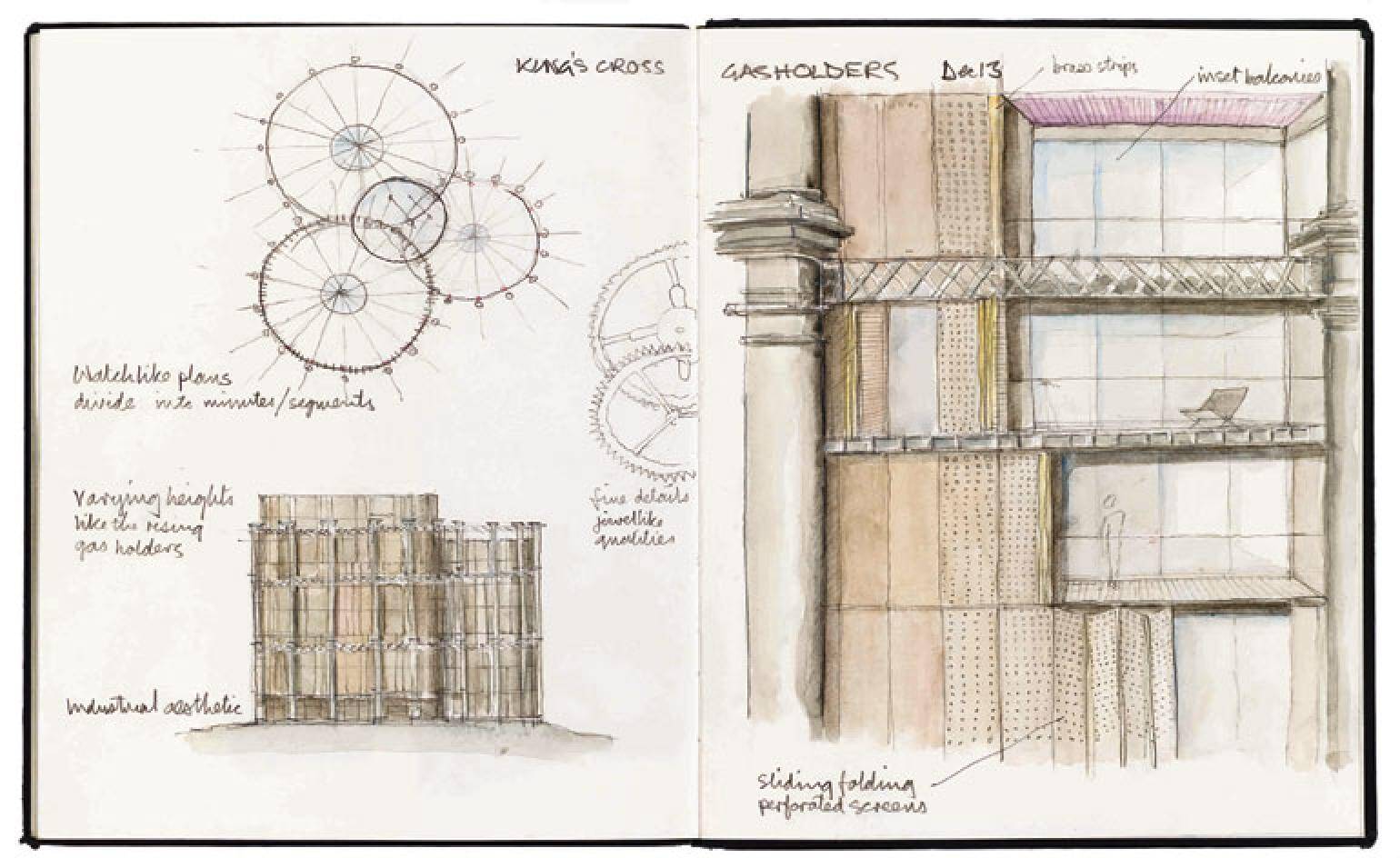
I stumbled across an old article from Wallpaper about a 2015 exhibition of the sketchbooks of British architect Chris Wilkinson, at the Royal Academy. Looks like it must have been a very interesting show! Here is an image from one of Chris Wilkinson’s sketchbooks:
I also love this image of his pile of sketchbooks. Almost uniform in format, all dated on the spine.
For a unique insight into an architect’s mind, peek into their sketchbook. Ever since the first architect scribbled the outline of a building on the first napkin, architects’ sketchpads have been more than just a blank page to draw; they are places to lay down thoughts and develop projects, keepers of trade secrets, visual notebooks and compilations of inspiration.
Happily, a book was published to accompany the exhibition: The Sketchbooks of Chris Wilkinson. I think I’ll have to add it to my collection of books about sketchbooks! (See many more books about sketching, journaling and artists’ facsimile sketchbooks in my Amazon lists here and here.)
Over the last couple of years, I haven’t had a full time job. But when I did have one, my life was full of meetings where I took notes in notebooks, calls during which I doodled in notebooks, and responsibilities that forced me to write long to-do lists in notebooks. I tended to use larger format notebooks such as a Grandluxe A4 notebook/folder that I loved, a large Doane Paper idea journal that was also a favorite, and an Appointed notebook that was very pleasing even though I would have preferred it to have full size 8.5 x 11″ paper.
When I left my last job, I mostly stopped using this kind of larger notebook. I even — gasp– threw away the Grandluxe and Doane Paper notebooks when I cleaned out my desk. I kept the Appointed one, since I had only used about half of it. It is still around and has come in handy from time to time. I used it most recently to jot some notes in preparation for a job interview. I guess it worked well, because I got the job and I’m now going to be working full time from home.
Having a “real” job again will force me to change my organizational habits. I currently keep a running to-do list in my Nolty planner, which I supplement with other short term task lists in my general purpose notebook/journal, currently a Bindewerk linen cover dot grid notebook. This routine works fine for personal tasks and notes, but there isn’t much room to spare in these pocket size notebooks.
It’s too soon to know exactly how things will play out in terms of what kinds of notes I’ll need to take and how I’ll need to structure my workflow, but I’m sure I’ll need to dedicate a notebook to this new job. If I’m on a phone call, I’ll need a larger lay-flat notebook to scribble notes more easily. Since I’ll be working from home, I’ll be in front of my computer the whole time, so I could potentially try to take notes by typing. But that is more screen time and more typing time– I think I’ll stick to my old method of jotting things by hand. At my old job I got a lot of letter size meeting handouts, and liked to be able to tuck them into my notebook. Working remotely will mean meetings are paperless, so I don’t think I’ll need to worry about that. Since my desk at home isn’t huge, a smaller notebook might make sense, as long as it lies flat. Something with a cover that folds all the way around would be ideal, so I don’t have to make room for a fully opened double page spread.
So I need a notebook that is at least 6 x 9″ or so, with a wire-o or spiral binding. Graph paper would be ideal. But narrow ruled would also work. The Appointed notebook would be fine, but it only has a few pages left it in so I’d rather start fresh. You’d think I’d have a bazillion notebooks I could use, such as the really nice Hamelin notebooks I reviewed last year, but I seem to have given away everything that meets this description except for one: this wire-o notebook from Printfresh. (See my Printfresh notebooks review from March 2019.)
I actually think this Printfresh notebook will be great. The paper works well with my typical gel ink pens. It even has a little folder in the front where I can tuck loose sheets. The cover is sturdy enough to support the notebook if I end up using it on my lap instead of on my desk. So I think I’m all set for my new job with this new notebook, for however long its 160 pages last.
I’m kind of disappointed I won’t have that new job experience of going to the supply closet and stocking up on office supply goodies. But on the other hand, I’ve mostly bought my own favorite pens and notebooks for many years, so I guess all I’m missing out on are the Post-Its and paper clips!
Photographer Nigel Shafran‘s “Work Books” were exhibited in 2018 as the first show at a new London gallery, Sion and Moore. Here’s a few photos from a Wallpaper article about the show:
Rather than present the photographs he is celebrated for, the work books – part sketchbook, part diary – give a deeper, more intimate view to the artist’s practice. The arrangement of his observations and notes, with labels and annotations, is one recurrent feature.
A good friend of mine has become a big fountain pen fan, and told me she’s been using the Exceed notebook from Walmart. She said it was a fountain pen friendly notebook at a bargain price, so of course I was intrigued! She was kind enough to send me two of them as a gift, so let’s take a look.
The Exceed notebook is a very standard Moleskine clone. A wrap-around paper band has product and brand info, and the logo is stamped on the back cover. It has the black faux-leather cover, an elastic closure, back pocket and as a nice bonus, two ribbon markers instead of one. It has a somewhat chunkier feel than a Moleskine, with slightly thicker cover boards but similar cover overhang. There’s a fine line between “chunky” and “clunky,” but to me, the Exceed notebook stays on the right side of it!
The pocket notebook has 192 pages/96 sheets, same as a Moleskine. The construction seems very good quality, with tidy corners and everything square and symmetrical around the edges. The ribbon markers seem not to be sealed off at the ends, so they are a bit ragged, but I always dab nail polish on the ends of my ribbons as even when they have been sealed, as they always seem to fray over time. The elastic closure is the perfect length to wrap around the back cover snugly when it’s not being used to hold the notebook closed.
The spine is a bit tight, and its lining is stiff, so the notebook can’t be opened quite as flat as some of the competition, though I think it is comparable to a current production Moleskine. (I prefer the older Moleskines and Bindewerklinen notebooks where the cover is flexible enough at the spine that you can fold it inwards when the notebook is open, allowing the pages to open more flat.)
Inside the front cover, there is a place to write your contact details and a large Exceed logo. The paper is a creamy off-white, slightly more yellowish than Moleskine’s. The dots have the same spacing, and look slightly darker or bolder than Moleskine’s. In the pocket notebook, the paper weight is 78 GSM, but in the medium, it is 100 GSM.
My friend was right: the Exceed notebook paper is great, with a smooth, substantial feel. Fountain pens don’t feather or bleed and inks shade nicely. The creamy color of the paper means that some colors look a little less vibrant than on bright white paper like Clairefontaine’s, but not by much. Drying times can be a bit long, but all in all, I think fountain pen users will be very happy with this paper. Other pens also work well, with only the usual wet markers bleeding through. Show-through is about average. The 100 GSM paper in the medium notebook feels noticeably thicker– pens perform even better here, with less bleed from the markers and less show-through in general.
Pocket size notebook with 78 GSM paperPocket size 78 GSM paper back of pageMedium size 100 GSM paperMedium size 100 GSM paper back of page
The Exceed notebook comes in the 3.5 x 5.5″ pocket size and 5 x 8.25″ medium size shown above, as well as a 7 x 9.75″ large size. Various colored covers are available, with lined or dot grid pages, as well as what appear to be softcovers. (On Walmart’s website, there are versions with slightly different packaging, which do not seem to specify the paper weight. I don’t know if these are newer versions that might have different paper, so buyer beware!)
On the whole, I think the Exceed notebook from Walmart is a great value. The paper is very fountain pen friendly, and the quality of the build is much better than I’d expect for something of this price. The pocket notebook is normally $4.64, but as of this writing I’m seeing it at a $3.00 clearance price for in-store purchase only. Grab some while you can! The medium is $9.64 and available for purchase online. Exceed notebooks are made in China and sold by a company called Norcom, which is based in the USA. As far as I can tell, Walmart is the main seller for the notebooks I’ve reviewed, although there are some listings for other Exceed/Norcom products on Amazon and other retailers.
I almost always compare notebooks to Moleskine in my reviews, because they are widely available and easy to use as a basic standard. But vs. the Exceed notebook, Moleskine is just a much worse notebook for a much higher price. A closer comparison is the Taotree notebook I reviewed in December 2019. The Taotree notebook has 120 GSM paper in a brighter white color, with less show-through and shorter drying time but a little bit of feathering with some pens. It only has one ribbon marker but it adds a pen loop. It is very similar in construction and quality. The Taotree is currently available on Amazon for $8.99 for a 2-pack of pocket size notebooks, so it is also a great value. Unfortunately it is only available in lined right now, rather than the dot grid version I was able to buy last year, but if you can’t find the Exceed notebooks at your local Walmart, Taotree is also well worth a try.
[The samples reviewed in this post were received as a gift from a friend who has no connection to Walmart, Exceed or Norcom. All opinions are my own.]
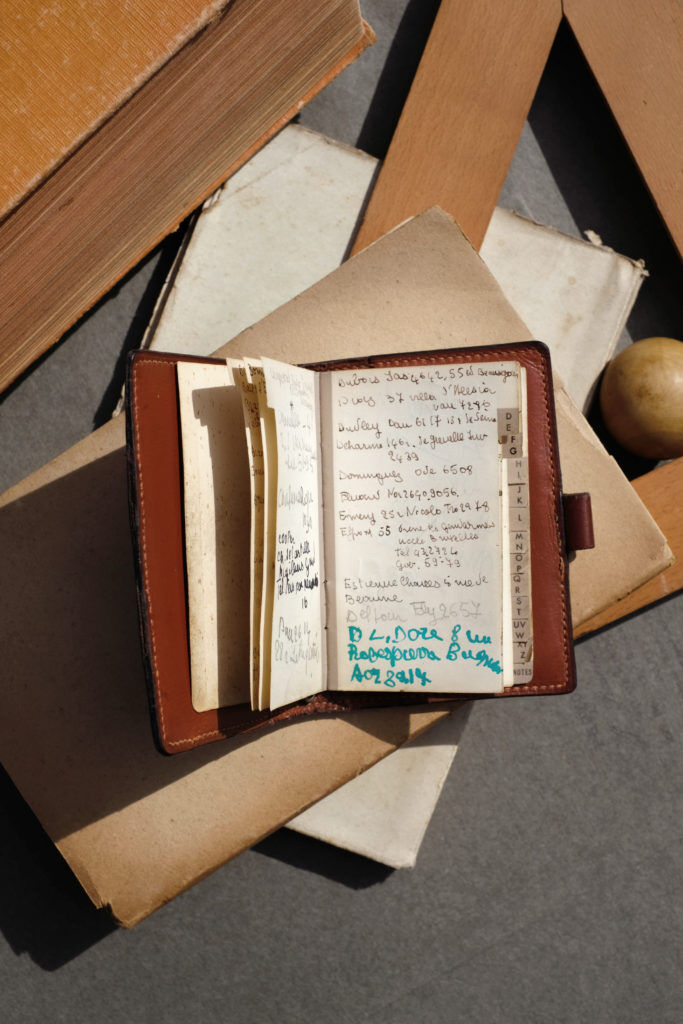
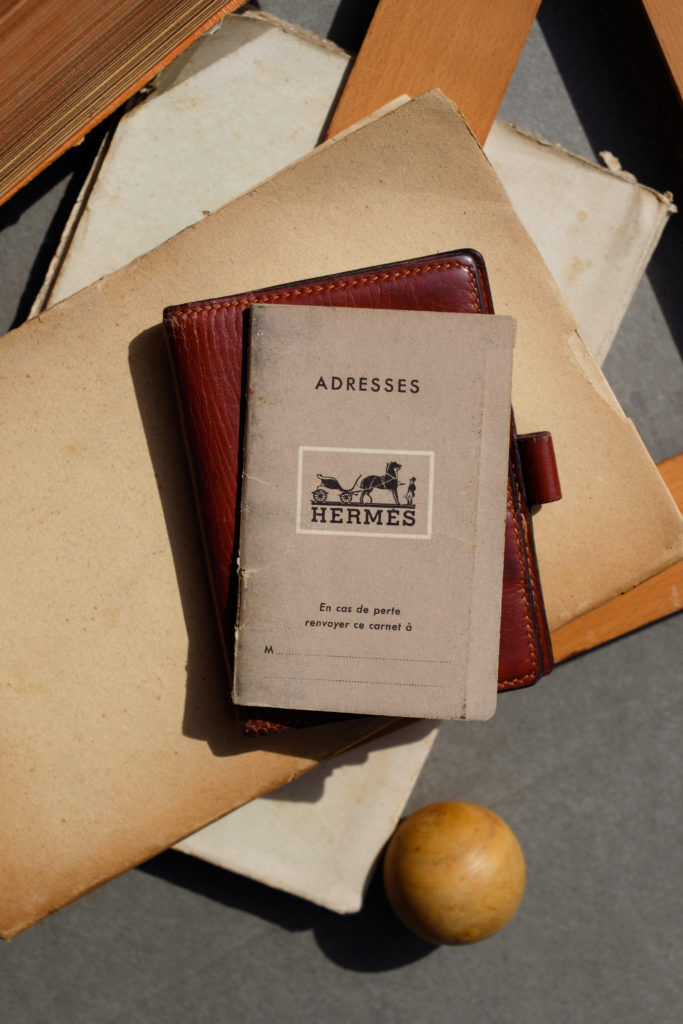
Imagine buying a vintage Hermès address book on eBay and then realizing it belonged to Dora Maar, the artist and poet who is best known for having been Picasso’s mistress and muse! Brigitte Benkemoun, the author of Finding Dora Maar, describes her process of deducing the address book’s origins:
A-B: The first entry is illegible because it is partly blotted out with black ink. The second might be ANDRADE, then AYALA. On the fourth line is the first familiar name: ARAGON! Followed by a few contacts that call up nothing for me: ACHILLE de MÉNERBES, BERNIER, BAGLUM . . . Then a few entries for whom he or she listed an address as well, perhaps because they were closer friends: BRETON, 44, rue Fontaine; BRASSAÃ, 81, rue Saint-Jacques; BALTHUS, château de Chassy, Blismes, Nièvre.
For the letter C, COCTEAU is the first entry: 36, rue de Montpensier, RIC 5572, or 28 in Milly. But are the first entries always the closest friends? And this poet was such a figure on the Paris social scene that everyone must have known his number. Followed by the painters COUTAUD, 26, rue des Plantes; CHAGALL, 22, place Dauphine . . .
After going through the address book, recognizing many famous names and deciphering other details, she realizes that there’s only one person who could have owned it:
Of course, it must be her! Everything fit, it all matched, up to Picasso’s absence at the letter P. In 1951, six years after their breakup, she did not copy his address or his phone number into her new address book, not being able to erase him in any other way. Maybe this wasn’t “a Picasso.†But it was the address book of Dora Maar that I held in my hand!
Such a cool story, and such a gorgeous little address book!
A recent piece on the Elle magazine website compiles the thoughts of 4 women on how keeping a diary has affected their lives and their writing. Unfortunately there were no photos of any of their diaries, but below are a few excerpts from the article:
Now I record everything, from dialogue I overhear to things I feel and interesting characters I meet. It’s not a daily habit, but if I’m going through something emotional, I’ll always write it out. Importantly, I’ve realised my notebooks help me understand the seasons of my life. I have a huge fear of death, and I work through that by expressing and reflecting on the passage of time. I think that’s why I’m so nostalgic.
I met the first boy I ever fancied when I was 12 on a family holiday in France; his name was Xavier. Unfortunately, he didn’t feel the same, so I went to the local supermarket and bought a brown chunky book that French kids used for their school agendas. I started writing about my unrequited love, beginning each entry with ‘Dear Xav…’ and on the first page, I made a vow to write in my diary every day. I’ve kept my word ever since.
I have a fireproof safe filled with 80 journals. I care less about remembering things; it’s more for mental-health reasons, like keeping myself in check and telling myself I’m OK. Every time I freak out, I’m able to journal myself to a place of sanity. It’s a superpower. It started at school when I read Harriet the Spy and would write about my classmates and teachers in a notebook.
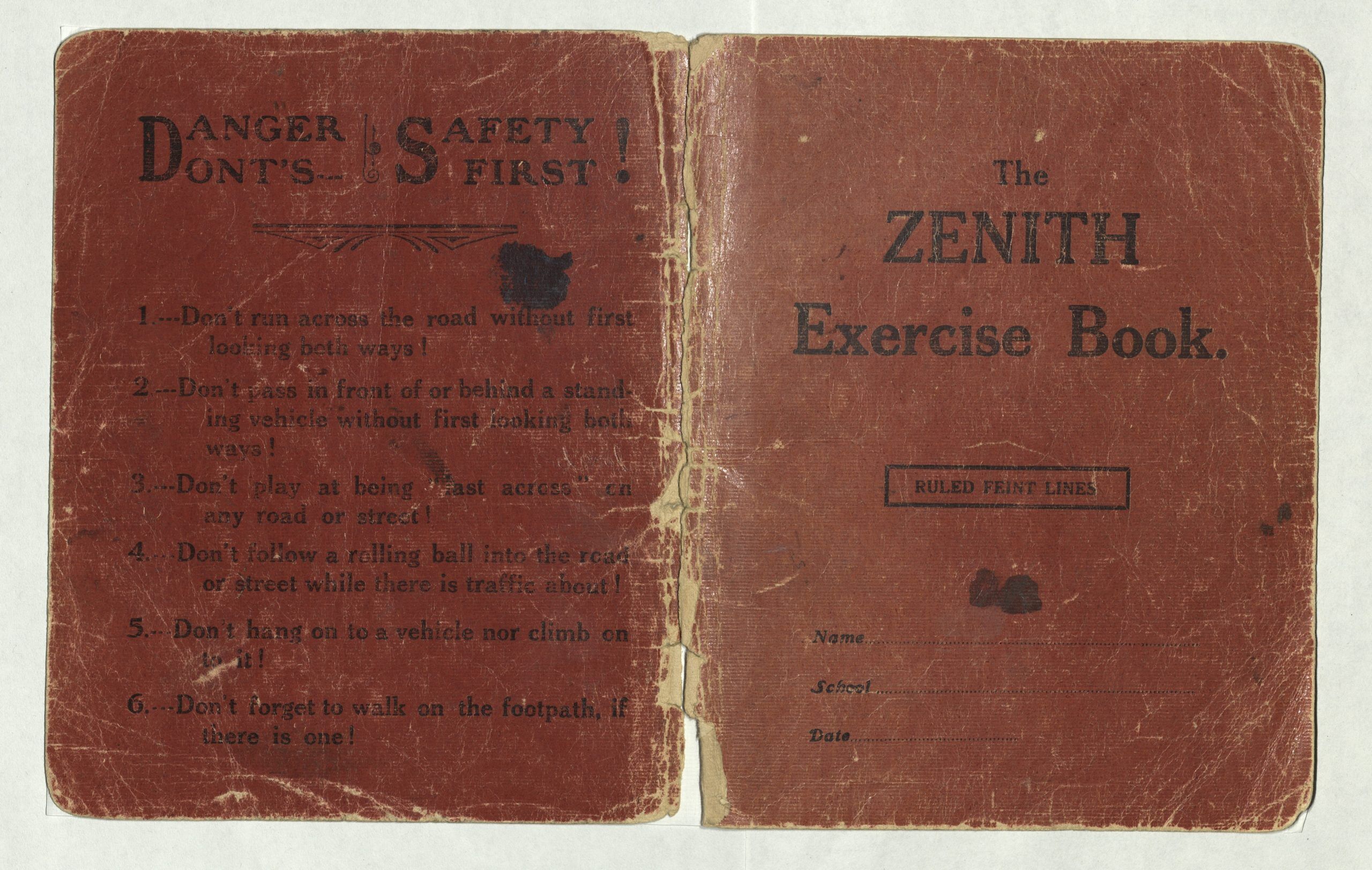
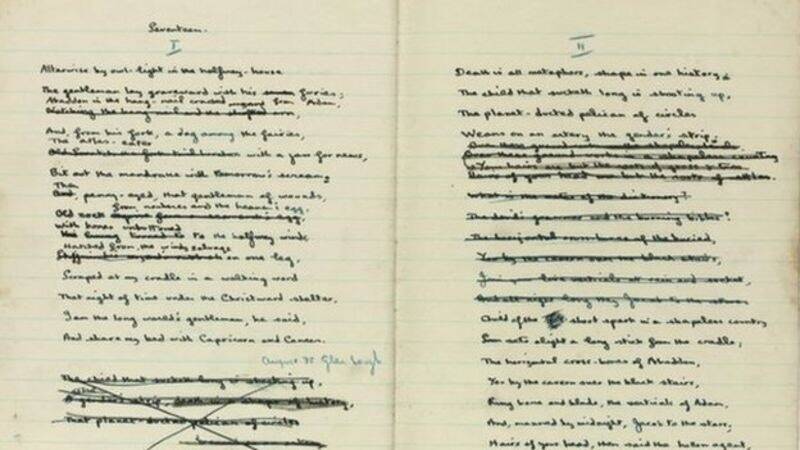
The poet Dylan Thomas held on to some of his school notebooks from his youth, and mined their contents for his adult work. For many years, only 4 notebooks were known of, but in 2014 a fifth came to light. John Goodby, the professor who edited it for publication, tells its story in an article at The Conversation.
From April 1930, aged 15, Thomas began copying his completed poems into a series of school exercise books….
In a letter of 1933, Thomas referred to an “innumerable†number of such notebooks. And, unlike most poets, he hung onto his juvenilia, carrying them around with him and raiding them for material until 1941. At that point, in the darkest days of the second world war, hard up and with a family to support, he sold the first four, which run from April 1930 to April 1934, to the library of the State University of New York at Buffalo…..
The fifth notebook’s extraordinary nature as an object is matched by the story of its survival. Two notes contained in the Tesco’s bag in which the notebook was found allowed us to establish this. The first, a brief description by Thomas himself, shows that the last time he was in possession of it was early 1938.
After marrying in summer 1937, [Dylan Thomas] and Caitlin Macnamara lived with Caitlin’s mother at her home in Hampshire until early 1938. The second note – by Mrs Macnamara’s maid, Louie King – revealed that after Dylan and Caitlin’s departure she was given the notebook, with other “scrap paper†they left behind, to burn in the kitchen boiler. King, however, withheld the notebook from its fiery fate – out of curiosity, sentiment, or for some other reason we know nothing about. When she died in 1984 the notebook passed to her family, who kept it, still a secret to the outside world, until 2014.