Gavin Snider’s Sketchbooks

Some lovely urban sketching, in NYC’s Tribeca neighborhood and beyond. I will have to keep an eye out for this guy, as I’ve sketched from some of his spots myself!

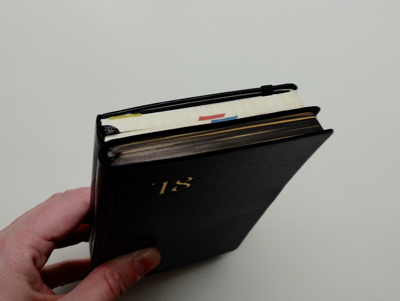
Gavin Snider loves to draw, as you can see from the work he posts on Instagram and Twitter. Of local note: A series of drawings of buildings in the area, which he photographs held up in front of the buildings….

What do you draw with?
For my on-site drawings, I use a ballpoint pen, sharpie and Chartpak Ad markers in a hardbound sketchbook.

Why hold up the drawing in front of the scene rather than just post the drawing?
I think that it’s the best way to share that experience with others, rather than simply posting my interpretation of it.

Read more at: Tribeca Citizen | The Sketchbooks of Gavin Snider

Notebooks from a Mental Hospital

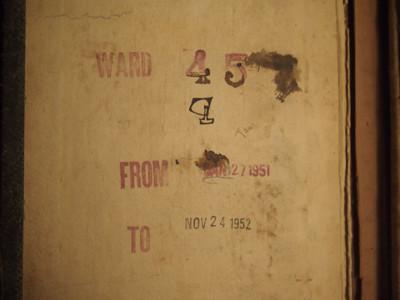
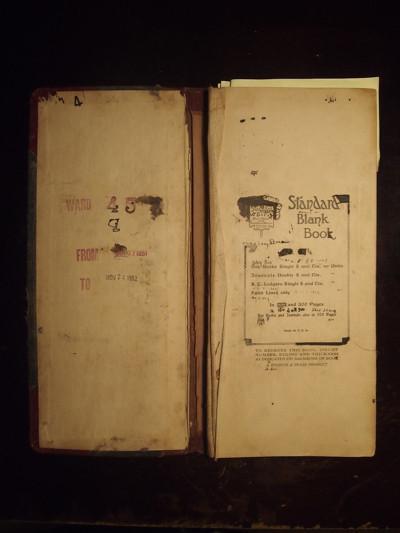
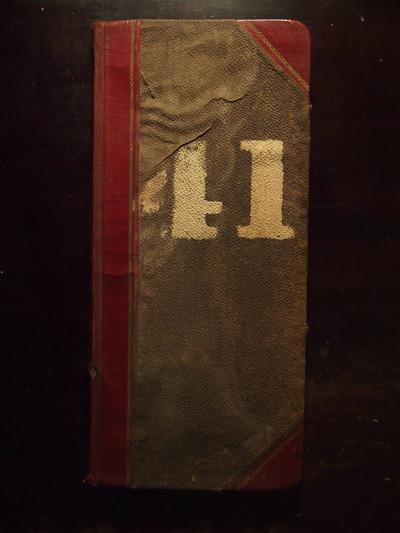
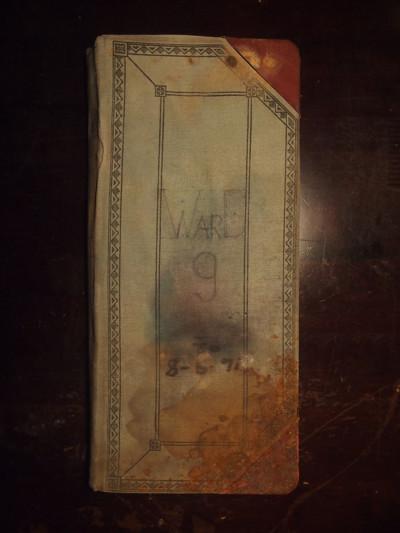
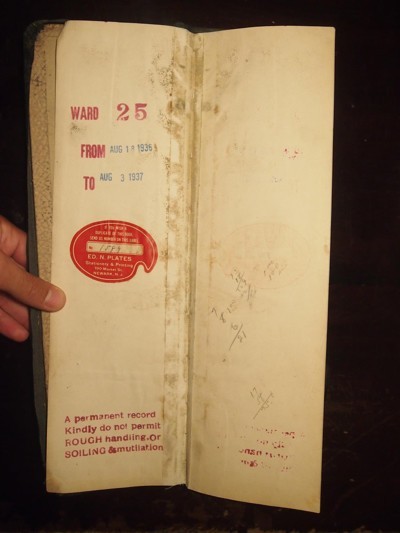
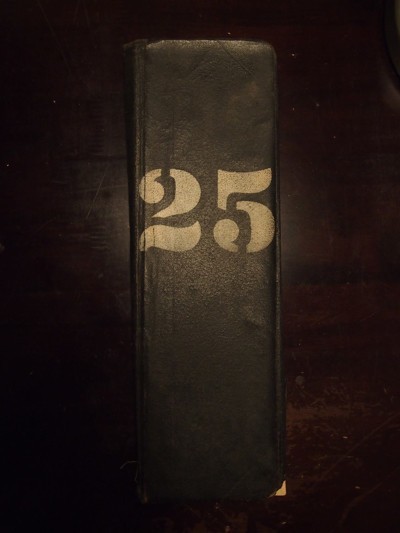
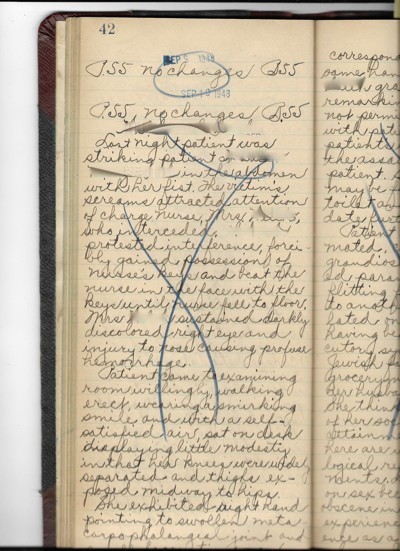
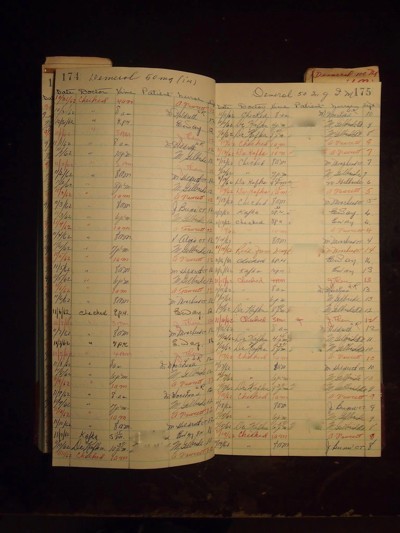
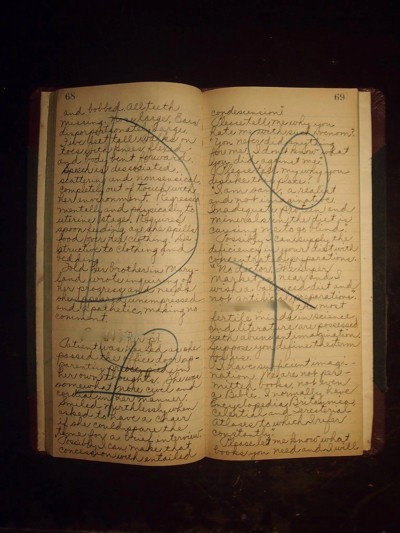
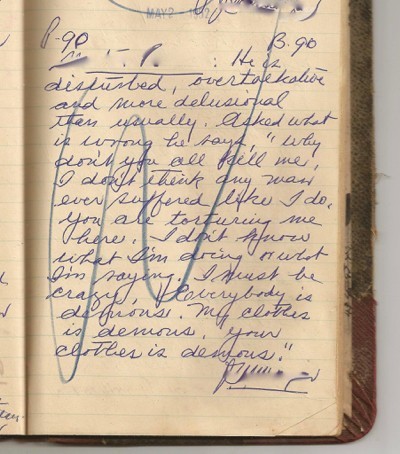
I go through phases of being extremely disorganized as a blogger. People email me cool tips and sometimes I don’t get to them for a while, and then sometimes I am not sure whether I’ve used them or not. And in the case of this post, someone emailed me all these great photos, which I saved on my computer desktop. But now that I’ve found them, I can’t find the email they came in! If memory serves me, the person who sent them salvaged them from an old asylum that was being torn down, and the notebooks are ledgers recording information about the patients. They are quite fascinating, and rather sad.

If you are the person who sent these to me, please shoot me another message so I can update this post to give you proper credit! Thank you, and my apologies for being such a flake!

[UPDATED: when I originally posted this, I didn’t think there was anything legible enough in the photos to pose a privacy concern, but as a couple of commenters pointed out, there were some names and dates that could be read. I’ve replaced the interior images with edited versions after removing any identifying details.]


Review: Peninsula Notebook

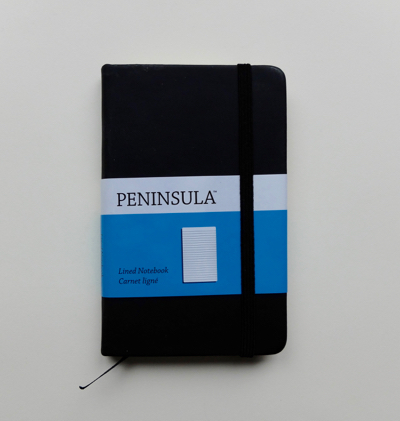
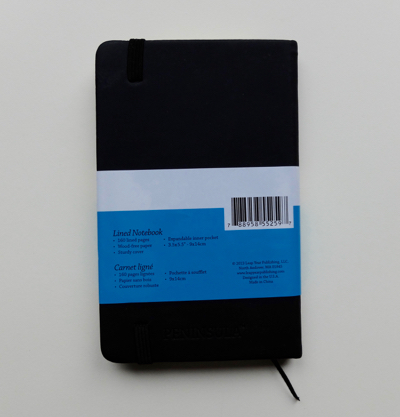
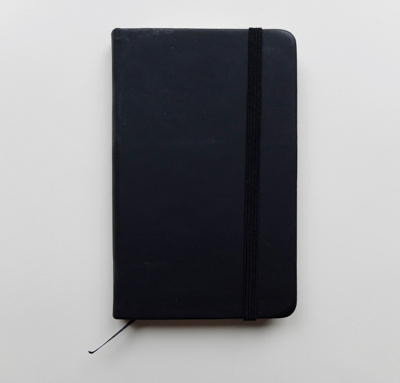
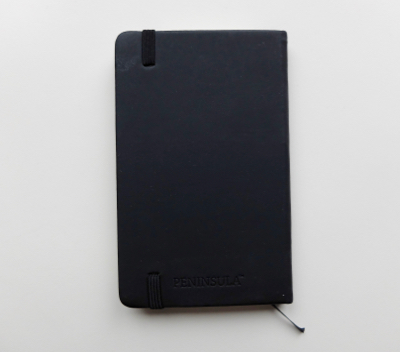
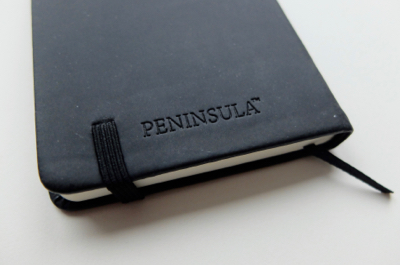
I don’t usually feel compelled to buy every cheapo notebook I see but every now and then I do find something at the supermarket that seems worth a try– this Peninsula notebook was one.

Peninsula Notebook - 1Peninsula Notebook - 2Peninsula Notebook - 3Peninsula Notebook - 4Peninsula Notebook - 5

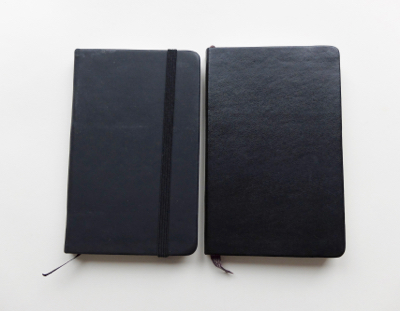
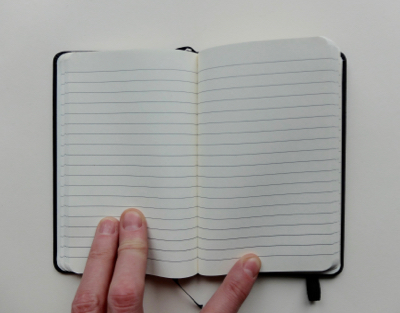
I’ve seen these at Giant and Stop & Shop supermarkets, and I believe I paid $5.99 or $6.99 for this pocket size journal. (I bought mine in 2015, so the prices may be different now.) It is the typical 3.5 x 5.5″ size, and for once really is exactly 3.5 x 5.5″ when I measured with my ruler. I have found that Moleskines are actually 3 5/8 x 5 9/16 to 5 5/8″ for comparable pocket size hardcovers. (And someday I’ll do a comparison on the wildly varying measurements of notebooks that are claimed to be “A6” size!)

Peninsula Notebook - 6Peninsula Notebook - 7

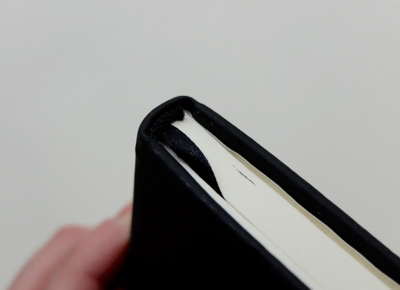
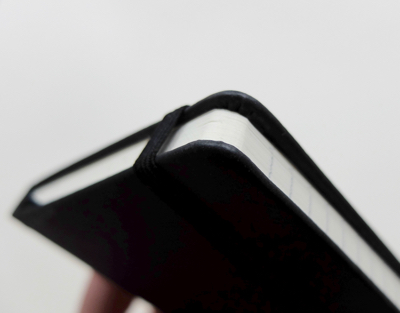
When I bought this notebook, I seem to remember looking at the 3 or 4 examples they had on the shelf to try to find the one that was least wonky in terms of uneven covers. This one is still a little uneven and not quite square. And there are some marks on the cover that seem like they could be from extra glue. Not really surprising for a made-in-China product in this price range. But otherwise it feels fairly solid. The cover is made of a smooth material that feels a bit rubbery– it seems to attract dust and won’t slide easily into all pockets.

Peninsula Notebook - 8Peninsula Notebook - 9

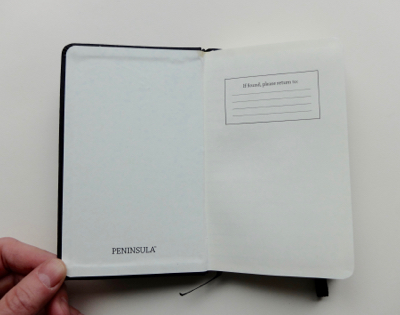
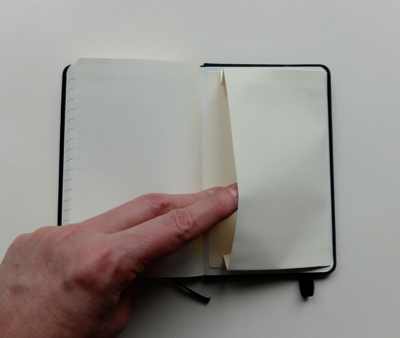
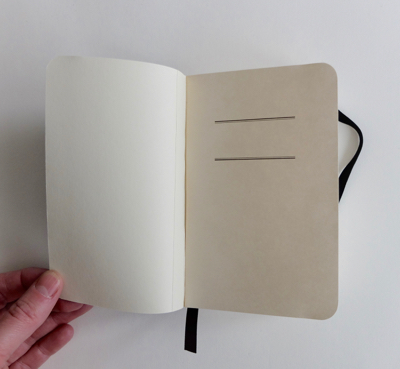
Inside, the usual spot for contact info, and a smallish back pocket made of paper. The binding is a little too tight to open completely flat– it only has 5 signatures for a total of 160 pages, vs. a comparable Moleskine usually having 12 signatures for a total of 192 pages. The lines on the pages are quite dark.

Peninsula Notebook - 10Peninsula Notebook - 12Peninsula Notebook - 11

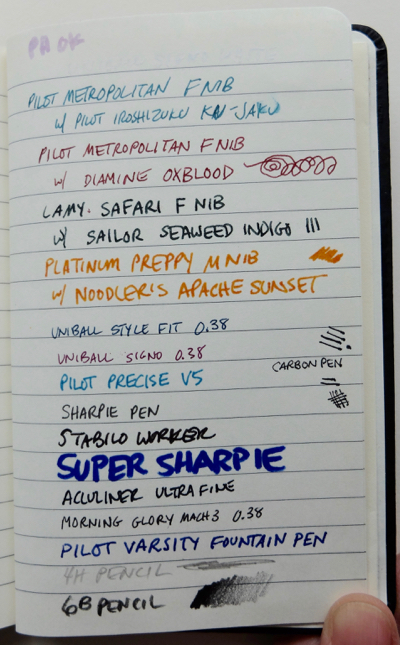
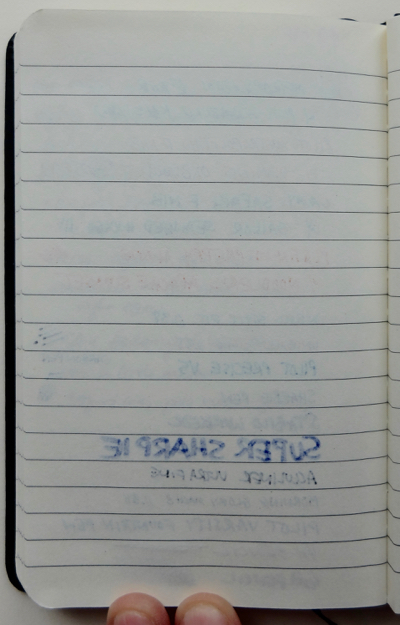
The ivory-toned paper is not particularly smooth, but feels good with fine-point pens and feathered less with fountain pens than I expected it to. (The texture is similar to that of the Shinola notebook I recently reviewed, but the Shinola showed more feathering.) Wetter pens did bleed a little but most of my fountain pens did not bleed, except for the M nib Preppy filled with Noodler’s Apache Sunset, and the Carbon ink pen. Show-through is average.

Peninsula Notebook - 13Peninsula Notebook - 14

Peninsula notebooks are designed by a company called Leap Year Publishing, which is based in the USA. I was surprised to see that they actually  make a lot of other products such as kids art supplies and toys and games.

The nice thing about the Peninsula notebook is that it’s really cheap, and you might be able to grab one at your local supermarket. (There are also some available on Amazon, though the prices are much higher.) It’s pretty solid and the paper is better than you’d expect. There may be some minor quality issues and you should inspect them carefully before buying, but it’s not a bad little notebook for the price.

Notebook Addict of the Week: Susannah Conway

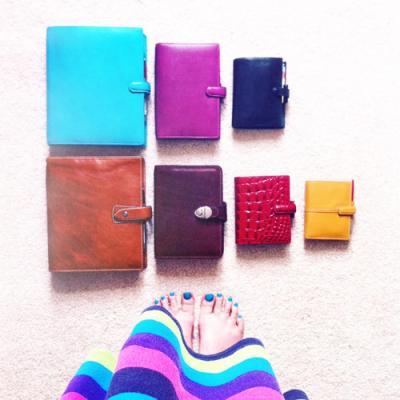
Here’s an addict I found via Pinterest: Susannah Conway, an author, photographer and teacher. I love how her Filofax collection is so varied colorful, and her Moleskines are so monochrome and orderly!

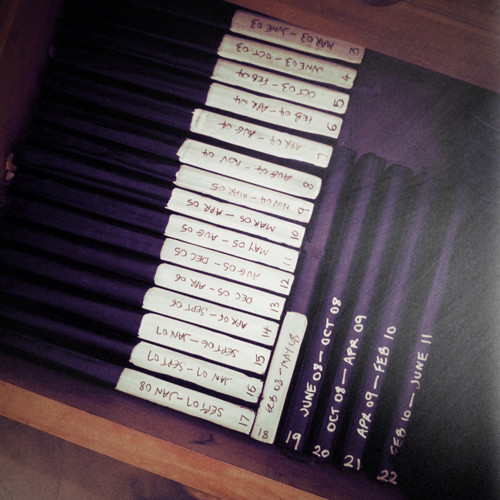
These are my journals dated 2003 – 2011. All large ruled Moleskines. They are the first things I would try to save if my house was on fire. I also use Moleskines for book notes and other writing projects; the Filofaxes are for biz project organisation, diary, addresses and admin.

Read more at: Re: yesterday’s post | SusannahConway.com

Questions from Readers

Here’s the latest batch of questions from our readers:

Hillary loved the Writersblok Planner, but they aren’t making one for 2018. (The company is hoping to bring it back in the future.) She is looking for an alternative. What are your favorite planners to recommend? I am loving my Japanese Nolty planner and totally recommend it, but the brand is not easy to find.

Nolty 2018 Diary Planner - 2

Fatima is looking for a 5-year journal. I haven’t used the Shopsin 5 Year Diary but I’m always tempted by them when I see them in stores:

This one from Levenger also looks nice:

From Damien:

Within the last week I have begun my final year studies in Interior Design at the Art school and was looking for (in my head) the perfect sketchbook/ journal to play with and sketch the thoughts roaming around my head.
After must research I came across the idealistic Nanami ‘CrossField’ Journal, edition 1. Now the edition one has a dotted layout, and is no longer in production where Edition 2 although available has a grid ( which I’m not fond of).
Is there anyway you know how to grab a 1st edition, or have one you are willing to part with at a price? I would be interested in chatting.

I unfortunately don’t have any source for the first edition. Any readers out there want to sell one to Damien? In searching for alternatives, I’m not sure what would meet all the same specs (A5, 480 pages, dot or cross grid, Tomoe River paper) I found this A5 size dotted Tomoe River notebook by Taroko Design on Amazon, but it is not as thick as the Crossfield.

From Edie:

I’m in the market for a new notebook. I have been using Poppin’s Medium Spiral Bound Notebooks, but they don’t make them with the number of pages I need (a lot of pages). Can you recommend something similar, with hard covers, a small size, and a good amount of pages? I’d put a link to the one I’m using, but they don’t make it anymore. Here’s something similar, but the one I have is 5″x8″, and 180 pages.

What pops into my head as a possible solution is Miquelrius. They have some thicker spiral notebooks like this one, which has 300 pages, though I’m not sure if the cover is as thick as you are looking for:


From Tamra:

If you have an opinion, I would love the advice, I’m currently shopping for a new fountain pen friendly bujo, and having a hard time. Preferably I’d like a non-white dot grid (boxed would work), not overly crazy abt Leuchtturms lately for some reason or another.

What about a Rhodia Webnotebook? Dot-grid versions are available:

As always, thank you to everyone for your questions, and for your patience with me as I take forever to respond to them! Thanks too to anyone who can help their fellow readers out in the comment section.

Review: Shinola Notebook

Over the last couple of years, I’ve been seeing Shinola notebooks for sale in more and more places. Some stores have a big wooden display rack exclusively for this brand. Shinola is best known for their watches, but they also make bicycles and leather goods. They are also renowned for their commitment to helping revive Detroit by basing their company there and making products in the USA, with American parts wherever possible.

Shinola makes hardcover and softcover journals in various sizes, as well as some leather notebook covers. I picked up a small softcover notebook in a charcoal grey cover. This was actually purchased in 2015, but from what I’ve seen in stores, the same model is still available and presumably is basically unchanged, other than any minor manufacturing variations that can occur.

Shinola Notebook - 1Shinola Notebook - 2

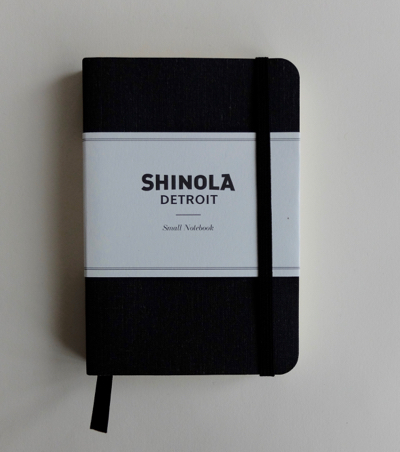
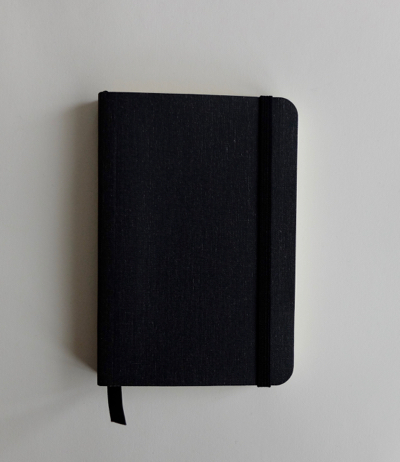
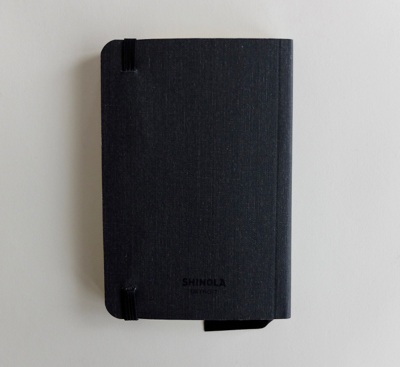
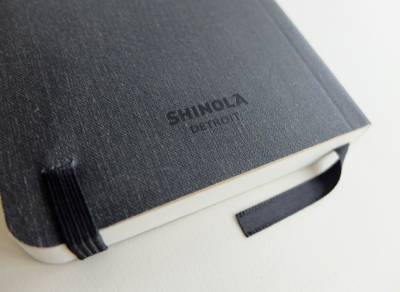
The packaging is pretty standard: shrinkwrap, then a paper band with branding info. The outside of the notebook itself has a cloth-texture which I think is just paper rather than actual linen. The covers are fairly thin– not floppy but not as thick as some other softcovers I’ve tried.

Shinola Notebook - 3Shinola Notebook - 4Shinola Notebook - 5

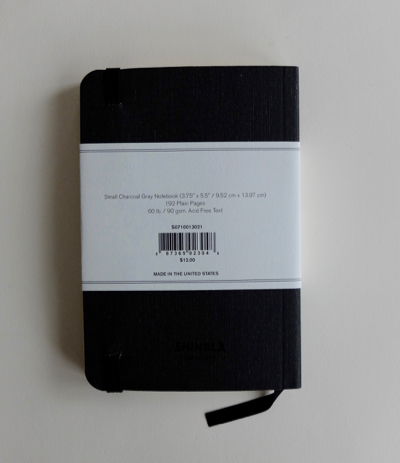
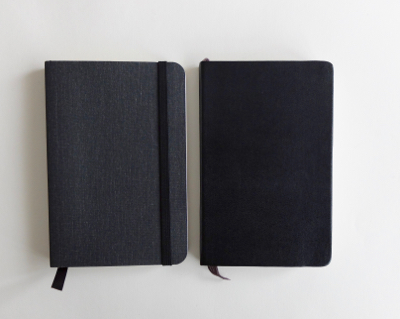
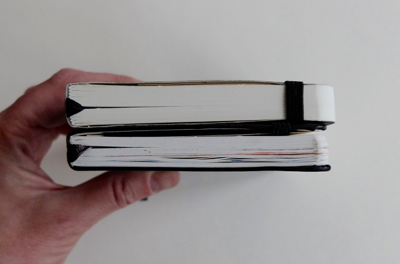
The size is 3.75″ x 5.5″, so slightly wider than a pocket Moleskine (shown below for comparison). Interestingly, on the back of the notebook, they correctly translate the dimensions in inches to 9.52 x 13.97 cm, but on their website, they claim that 3.75 x 5.5″ equals 8 x13cm!

Shinola Notebook - 6Shinola Notebook - 7

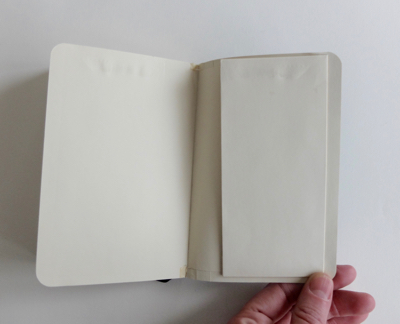
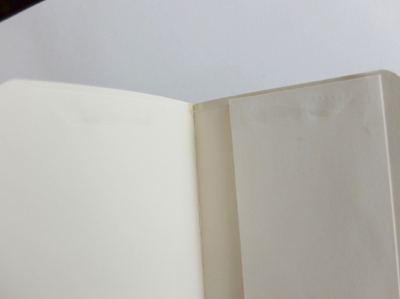
On the inside front cover there is a space for writing personal info. You also see a bit of the tape used to strengthen the binding– in most softcovers this is hidden. The inside back cover has a paper pocket, which seemed a little skimpy to me, as it doesn’t run the full height of the notebook. Mine also seemed to have some extra glue that leaked out in one corner, and an odd texture along the top of both sides of the inside back cover, as if something had been crushed in there when the notebook was clamped shut for trimming, but later removed.

Shinola Notebook - 8Shinola Notebook - 12Shinola Notebook - 10

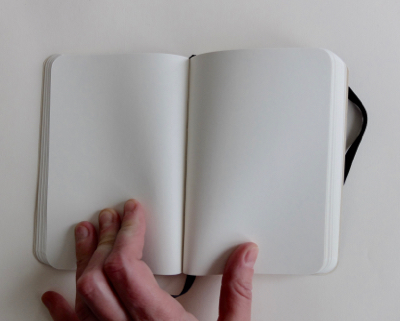
The notebook doesn’t open quite as flat as some, due to a fairly thick layer of glue on the spine to hold the sewn signatures together. Other than the odd mark in the inside back cover, the only quality issue I noticed was that the elastic closure was attached a bit unevenly, which makes it run on a slant across the front cover. Not a huge deal, but I tend to notice whenever anything isn’t square and symmetrical!

Shinola Notebook - 9Shinola Notebook - 15

I chose the unlined paper, which is lightly less buttery in color than Moleskine paper, but still has a warm ivory tone. It is smooth, but not as smooth as Moleskine or Rhodia paper– there is a very slight tooth. It doesn’t feel rough with fine point pens, but wetter pens can feather out slightly. Inks seemed to dry quickly on this paper– the Lamy was dry in under 5 seconds. Show-through was average and bleed-through was a little better than average, though some wider/wetter fountain pens did bleed a little in spots. I would call it ok for fountain pens, but not totally great.

Shinola Notebook - 13Shinola Notebook - 14

That is kind of my overall impression of this notebook: ok, but not totally great. It’s fine, and I really like the color and texture of the cover, but the most exciting thing about this notebook is that it is 100% made in the USA, including all components such as paper, ribbon markers, etc. And it’s only $12, which seems a very reasonable price for a notebook of this quality made in the USA. You can purchase directly from Shinola’s website or at many local stationery/office supply stores.

Holiday Deals at Amazon

At least as of this writing, the items below have some pretty good discounts on them at Amazon. Some of these may be limited time offers, so check ’em out fast!

Notebook Addict of the Week: Shanta

This week’s addict emailed me this photo of some of her complete art journals, which look so beautifully used and overstuffed with creativity!

She writes:

Hi, my name is Shanta Devi Williams.  I am an artist from Los Angeles, CA, USA.  I’ve always had a fascination with books, reading, art making, and writing for as long as I can remember.  I started keeping a diary as a child, and created my own yearbooks in middle school and high school.  Writing and art making have always been outlets and necessary means of expression for me.  I have saved every notebook and sketchbook that I have ever started or completed, and treasure them.

The act of being creative on a regular basis has become a highlight of my days, and I look forward to the time (whether it be 10 minutes or an hour) to write, paint, doodle, etc.  I learned about art journaling (painting/writing/drawing/collage, etc. in some kind of book) in 2008 (from an artist’s art journal at the now closed store, Paper Post), and haven’t looked back since.  I have embraced it as the most authentic form of art for me to express myself.  When I art journal or write, I am able to get in a “zone” where I am able to vent my frustrations, anger, sadness, joy, happiness…anything and everything that I am feeling or going through at that time.

I regularly scan and upload my art journal to my Flickr, website, and Instagram pages.  I love how artists, nowadays, can share images and videos of their sketchbooks online and share processes and ideas with others.  Also, in the event of a natural disaster, I like the idea of having a backup of my art in case I had to leave it behind.

Shanta welcomes comments and/or questions by email at: through.thehand [at] gmail.com, and you can also see more of her work online on Flickr at: flickr.com/photos/shantadevi and Instagram at: instagram.com/shantadevi.

Thanks for sharing, Shanta!

An Interview with José Naranja, Creator of The Orange Manuscript

I’ve been seeing images of José Naranja‘s notebook pages on Pinterest for quite a while, but it is only since joining Instagram that I discovered the full depth of his amazing work.

His notebook pages are incredibly detailed, with writing, drawing, and collage elements– it’s the kind of notebook art where you really wish you could just hold his notebook in your own hands and flip through it. And the good news is, you almost can!
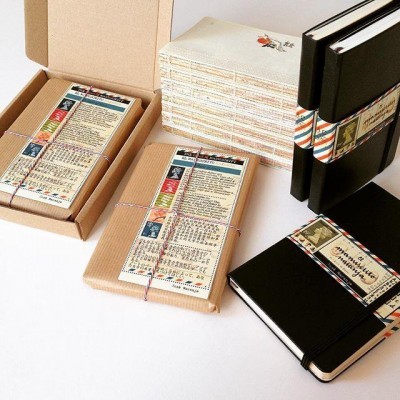
José sells facsimile notebooks containing a selection of his best pages under the title The Orange Manuscript, beautifully printed and hand-bound in an actual pocket-size Moleskine cover. They are expensive (285 Euros, which includes tax and shipping worldwide) but worth it! The Orange Manuscript is truly a work of art, even down to the lovely packaging– I am so glad I bought mine and never tire of looking at it! (I paid full price and have not received any compensation or commission for this review and interview, just to be clear.)

José muses about life, art, travels, imaginary inventions, and about notebooks and pens themselves. He packs so many details and fanciful elements into each page, they are continually fascinating and inspirational.  I really wanted to know more about José and his world of notebooking, so I was thrilled that he was willing to answer some questions. The interview below has been slightly condensed and edited for clarity, and I’ve added a few of José’s images from his blog.

NS: I want to start by talking a little about your art itself, which is so beautiful, with a wonderful sense of color and texture and design. It is very interesting seeing how your pages seem to have evolved from simpler single images to your current style of very dense pages with lots of stamps, writing and multiple images. What is your process for designing and laying out a page? Do you plan it all out in pencil first and then add drawing and writing and paste objects in, and then finish it in ink? Do you work on multiple pages at once, or do you finish a page before starting a new one?

José: That’s been always my fight. I want the pages to be natural and full of freedom. However if I don’t make a plan in advance or do a draft in pencil, the result is not always great. Sometimes it’s actually amazing, but most of the time could be quite bad. I try to find a balance. The notebook has many pages so I can experiment with different styles.

I use a template to write straight and for some pages I do a draft in pencil. Anyways I’m not worried about making mistakes, they make it real and they are welcome. Beauty is in reality. I write one page after another, with many gaps to fill later, so I can say I work in several pages at the same time.

I have noticed references in your art to (among others) Vermeer, Picasso, Velasquez and Leonardo– some of your pages make me think of Leonardo’s notebooks in the way that you are exploring ideas. Are there artists who particularly inspire you with their use of notebooks/sketchbooks (as opposed to their larger paintings or work in general)?

Definitely Leonardo was able to produce magic in each brushstroke. He did notebooks and I consider him one of the most inspirational artists ever. However, regarding notebooks, I have the feeling he did them in order to create a kind of encyclopedia or serious book, not a personal journal. For me the artist who created the most amazing and personal notebooks is Peter Beard. He made an artwork from his life. In general I find inspiration in many places, of course from the greatest painters as Picasso, Velazquez or my favorite Dali.
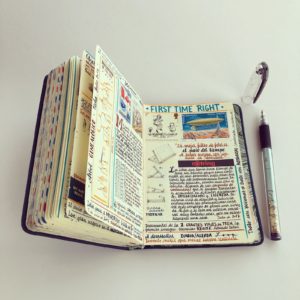
You mention that you worked as an engineer– did you have formal training in technical drawing because of that? (I definitely sense an engineer’s mind and curiosity and inventiveness in other aspects of your work beyond just the precise drawing style…) Did you have any other training as an artist or are you self-taught?

I spent many years studying and working as Aeronautic Engineer. Unfortunately when I started working, drawings were already made by computer so I’ve never drawn any technical thing as part of my job (which I’d wish, btw) or received any drawing or art classes. I just try to do as well as I can, observing and feeling. I guess I can make disappear my technical background. I’m as interested in Science as in Art.

The tricky thing about creating art in notebooks is figuring out how to share it, but you have found a great solution in selling prints and facsimile notebooks.

Yes, you are right. Creating the Orange Manuscript as a facsimile was a brilliant and unexpected solution to share it. The goal is people can feel it in their hands with the same paper, etc. Fully touchable, much more different than watching photos in a screen computer or mobile.

Now let’s talk about notebooks themselves! As important as the art is, I know you really care about the notebook that holds it and I love that you refer to yourself as a notebookmaker.

From looking back at your blog and instagram, it seems like you mostly were interested in photography at first, and then started posting more about notebooks when you started using Moleskines. Did you always use notebooks? What other brands have you used? Do you keep rough notes totally separate so your handmade notebook only holds the fully designed and finished pages? Or do you ever just scribble a casual note in the handmade notebook?

Photography has been always my main passion. I also wrote notes here and there all my life, not always in notebooks. But I never imagined they could be fascinating or something special. I realized that when I post them in Internet and I saw people’s reaction.

When I discovered Moleskine pocket journals in 2005 (the ones with hard cover and elastic around) I was so happy and shocked that I decided everything I write from that moment was in that new amazing format. And it was like so up to now. In the last years I modified the paper and finally the whole notebook, but keeping that format. The rest of the journals I use are as a secondary notebooks for fast notes (Field Notes, Muji or handmade ones). The final work is the handmade notebook, where I put my time and passion. I also write some of the ‘casual notes’ on it, in certain pages.

I was amazed to see that you used to use the plain Moleskine rather than the sketchbook version with the heavier paper. You then started replacing the paper inside Moleskine covers (great tutorial!), and eventually switched to making your own leather-covered notebooks completely by hand. Even back when Moleskine’s quality was better, the paper was thin, and you use a lot of fountain pens– didn’t they ever bleed through the pages? Did you use both sides of the page?

Exactly. I used them during many years but I didn’t use fountain pens or watercolors then. My writing tools were quite simple and my goal is to be simple again. The problem is… who could resist so many great inks and fountain pens? What a temptation!
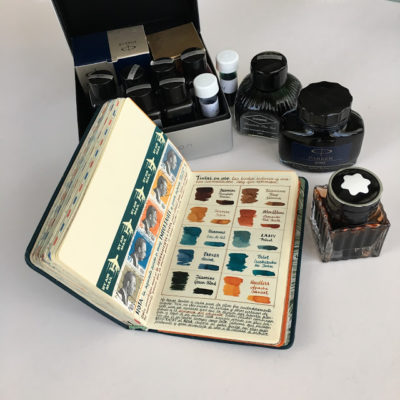
Your handmade notebooks are beautifully made– did you have a lot of trial and error to get them just right? You have made them thicker than Moleskines– are you enjoying using a very fat notebook with lots of pages? When I use a notebook, sometimes I feel like I want to fill all the pages and use it up quickly so I can start a new one. Sometimes I love the notebook I am using so much that I never want to finish it, and I start trying to use every bit of space on each page. Do you like using the same notebook for a long time? The leather covers must age nicely!

Yes, I love using the same notebook for long time. Every day, every word, every sketch and every trip adds more value and ‘spirit’. It goes better with age and it has to be like that. I didn’t have many problems to make the new ‘fat’ notebook since I got a lot of practice making the Orange Manuscript one by one. What was new for me was the leather cover, easier than I thought. Maybe next notebook is even fatter? I have to think about it.
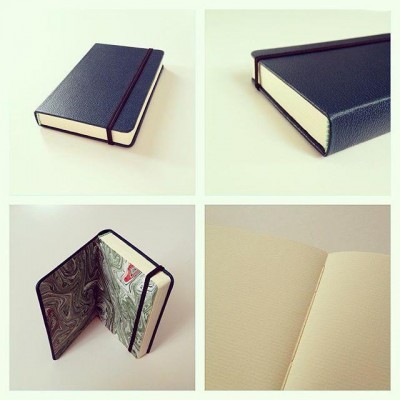
How many notebooks have you filled now? Do you also save all the Field Notes books, and any others, after you use them? Do you go back and read through your old notebooks alot?

I’ve filled 12 notebooks already. I also keep the auxiliary notes but I don’t think they are relevant. I always scan the notebooks and keep them in the computer and mobile, very useful when I travel. So many notes with worth information I really need all the time.

There are lots of other questions I would love to ask about your life, travels, and art supplies but I will just finish with this: will there be an Orange Manuscript Volume 2??? If so, sign me up for a first edition!

Yes, I’m thinking seriously about a second manuscript, with a name to be decided. I have enough stuff to do it but at the same time is a huge work to prepare it, doing print test, etc. But it’s enjoyable time, specially when I see nice people like you who are already interested already in a second volume. Many thanks!

I really do hope José continues to share his amazing imagination and intelligence in facsimile form. His art continues to evolve so that his notebooks are not just a collection of individual pages, but a thought-out whole, with design elements linking the pages together almost like a mystical treasure map, as he shows in the below illustration about the golden ratio motif in his latest notebook.
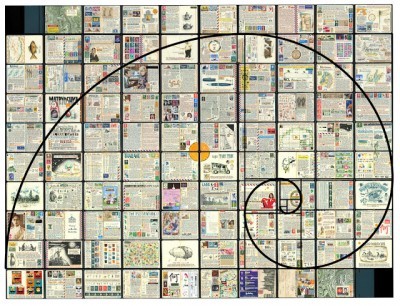
Please check out José’s Instagram feed, and his blog, where you can find out more about the Orange Manuscript and order a copy.  He also sells prints.

My thanks to José for sharing his story with us!

2018 Nolty Diary from Japan

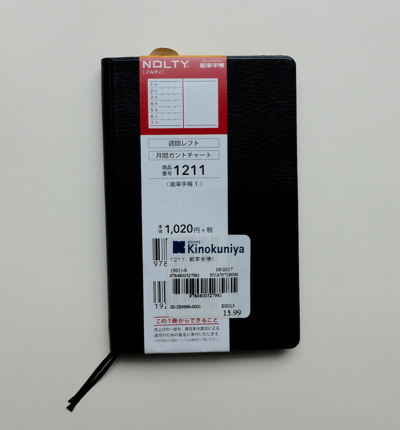
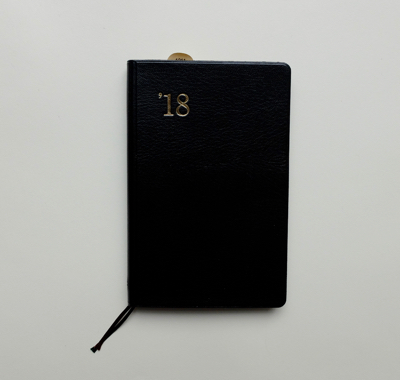
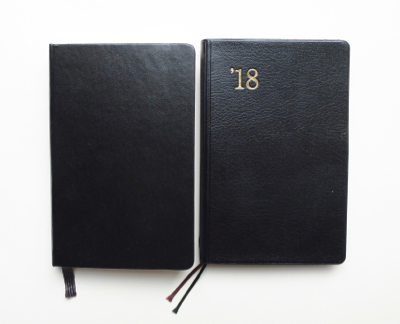
I don’t focus a lot on diaries and planners on this site, mainly because I haven’t used a paper planner myself for many years. But every once in a while, I see something that I have to have. I spotted this pocket size Nolty planner at the Kinokuniya bookstore in NYC, amongst a few other sizes and formats from this brand. I was initially drawn to it by the size, which is just right for me– almost exactly the same as a pocket Moleskine, which is shown for comparison below. But upon looking at it more and more, I realized it actually has some very cool features, so I decided to buy one!

Nolty 2018 Diary Planner - 1Nolty 2018 Diary Planner - 2

Nolty 2018 Diary Planner - 15

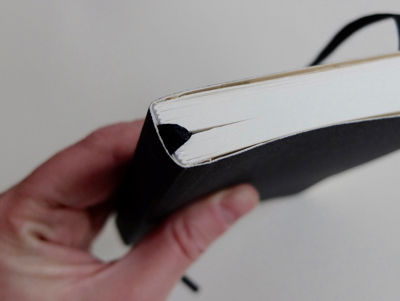
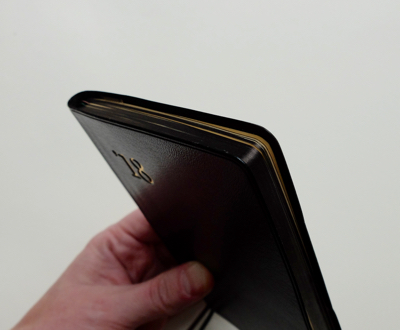
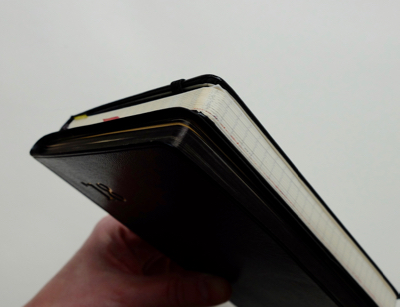
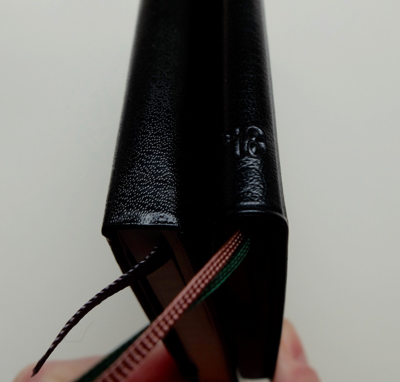
The cover is a thin flexible plastic, glued on– the edges have more overhang beyond the pages that I’d like but there is something very retro about it that I love. (See also the Pilot notebook in this post for a similar cover.) The year (’18) is embossed on the front and spine. The next thing I noticed was the black stained page edges– always a nice touch. There are two slim ribbon markers.

Nolty 2018 Diary Planner - 3Nolty 2018 Diary Planner - 14Nolty 2018 Diary Planner - 16Nolty 2018 Diary Planner - 17Nolty 2018 Diary Planner - 18

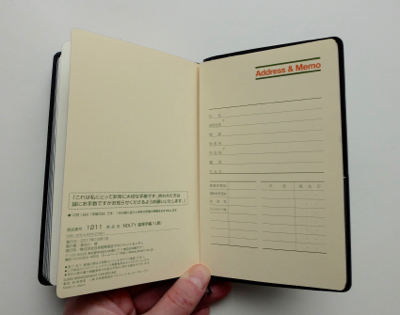
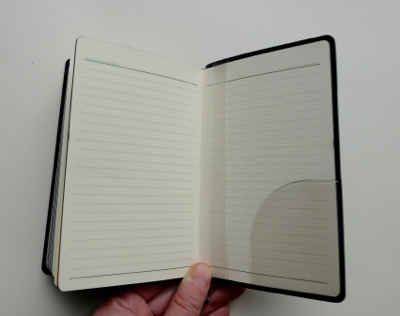
Inside the back cover there is a clear plastic flap where you can tuck a few cards or receipts. There’s also an additional plastic loop that holds in a separate booklet for addresses and telephone numbers– being able to move that info to the next year’s planner is very  handy.

Nolty 2018 Diary Planner - 12Nolty 2018 Diary Planner - 13

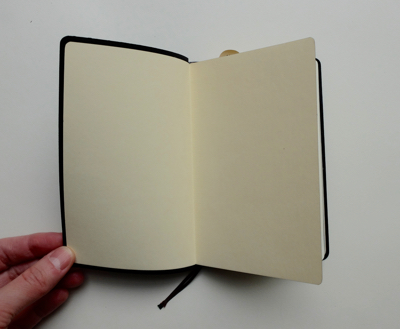
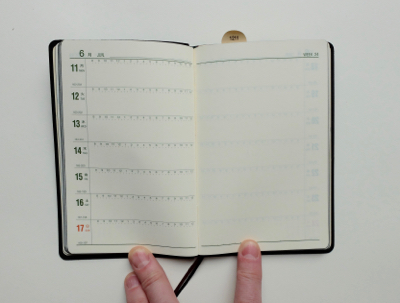
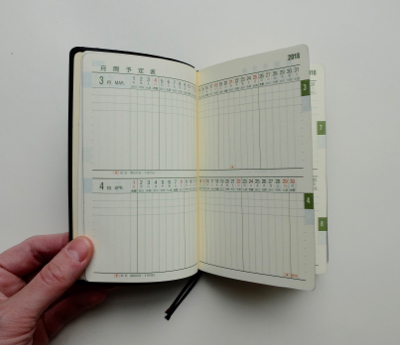
The binding is quite flexible, with stitched signatures that allow the notebook to open flat. The main layout inside has a Monday-Sunday week on the left, and an unlined page for notes on the right. The printing is in two colors, with red noting Sundays and Japanese holidays. You get a few weeks of 2017, and the weekly spreads end with week 1 of 2019. Across the top of each day, there are numbers for the waking hours of the day, 8am to midnight. Noon and 5pm are marked with red lines. The print is very small so it might not be right for anyone who needs reading glasses. But I really love this layout, especially since there are no lines or squares on the blank page, keeping it more free-form for art journaling.

Nolty 2018 Diary Planner - 7

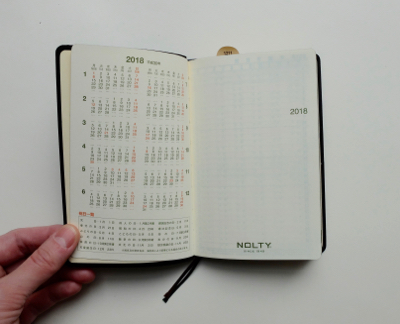
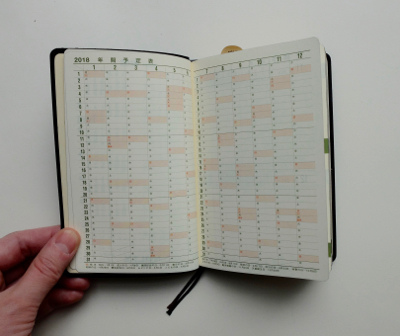
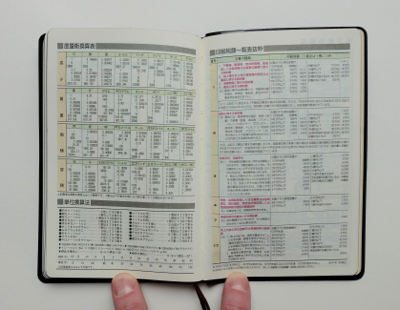
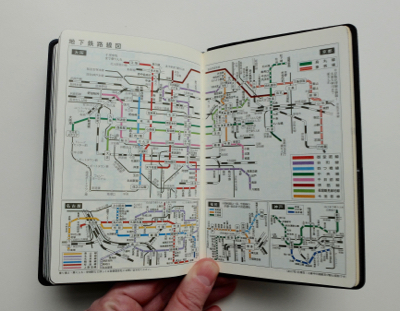
At the beginning of the planner, there is a year-to-view spread, and some 2-months-per-spread pages. These seem like they’d work best with Japanese characters written vertically. At the end, there are some lined and squared notes pages, and a lot of backmatter which seems to include some measurement conversions and transit maps. It is all in Japanese, and looks gorgeous even if it’s not practical for someone like me who can’t read any of it!

Nolty 2018 Diary Planner - 4Nolty 2018 Diary Planner - 5Nolty 2018 Diary Planner - 6

Nolty 2018 Diary Planner - 10

Nolty 2018 Diary Planner - 11

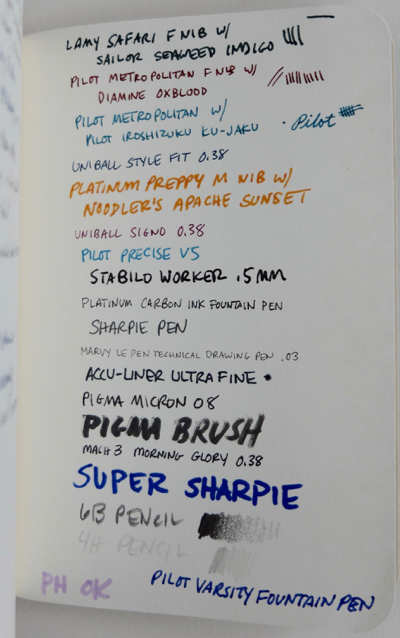
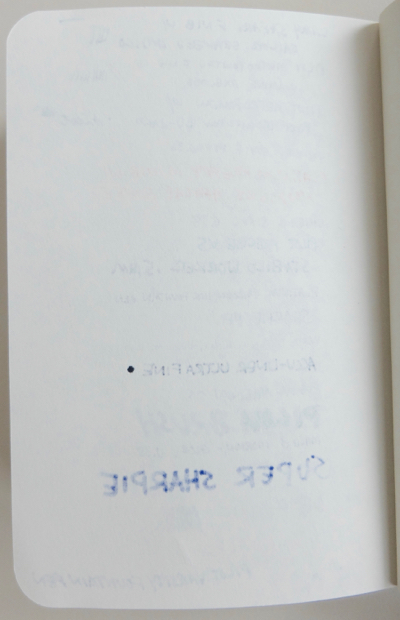
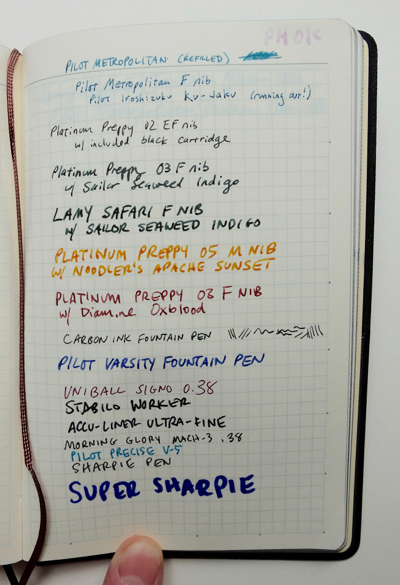
The paper in the diary is thin and very smooth, in an ivory color. And here is what will really excite a lot of people: it is really good with fountain pens! No feathering, and you can see some nice ink shading. Drying time for the Lamy was between 15-20 seconds. The Pilot Metropolitan was dry in 10 seconds. Like other Japanese notebooks, the paper is thin enough that you can see through the page, but only the wettest pens bled through. There was a teensy bit of bleeding with the Carbon Pen, which surprised me since it’s so fine and not something that usually bleeds, but otherwise, even if it is not quite as good as the Hobonichi paper, I think is a very fountain pen friendly planner.

I took all these photos before I remembered that it would also be a good idea to test using a pencil and eraser, since planners tend to contain plans that change! I did try a mechanical pencil and eraser (both on a Uniball Style Fit)  the paper seemed to hold up fine to erasing too.
Nolty 2018 Diary Planner - 8Nolty 2018 Diary Planner - 9

All in all, I just love this diary! It has a lot of useful features and design touches that distinguish it from other notebooks. The paper is great. And it’s only $15.99 at Kinokuniya (which really seemed like a bargain after I saw that they were charging $43 for the Hobonichi Techo!) A comparable Moleskine planner with this layout costs $17.95. If you don’t have access to a Kinokuniya store, you might have trouble finding Nolty products– Kinokuniya’s website shows them as out of stock, and the only other online source in English I could find was Rakuten. They do seem to be listed at Amazon.jp. If anyone is aware of other sources for ordering Nolty planners, please leave a comment!

Notebooks, journals, sketchbooks, diaries: in search of the perfect page…