Reader Question: Seeking A Pocket Sized Daily Planner That Isn’t a Moleskine

Here’s another question from a reader who needs help finding a specific type of notebook:

I’m looking for a pocket-sized daily planner (that’s NOT Moleskine). Something that has a full page for each day, not a planner that has a week layout on two pages. There are a thousand of those and I use them and I like them. But I’m looking for one that has a day to a page. (Ideally I’d also like to have a monthly layout in the planner as well, but it’s not necessary.)

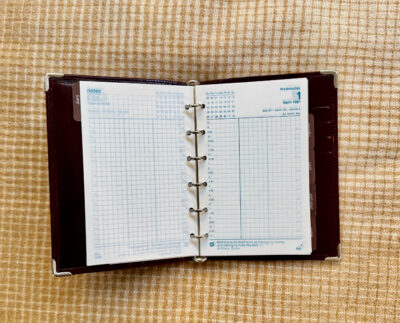
The planner I think comes closest to it is the old Marquette planners you wrote about here:

I’m sure this reader isn’t the only one who has this question. I remember that last year, Kathrin Jebsen-Marwedel, one of my favorite notebook artists, was looking for alternatives after finally deciding she couldn’t live with the decline in Moleskine’s paper quality anymore. After 24 years of keeping an illustrated diary in a daily pocket Moleskine, she switched to a Leuchtturm daily planner, and it sounded like she was happy with it. Leuchtturm’s size is 3.5 x 6″ vs. Moleskine’s 3.5 x 5.5″, but if you can handle an extra half inch in height, Leuchtturm is probably the closest design to Moleskine’s in every other respect. The 2026 version is now available.
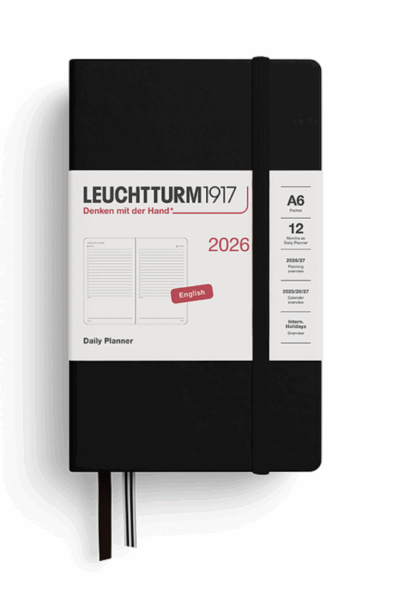
leuchtturm daily planner 2026
leuchtturm daily planner layout

If you are open to an undated daily planner, Nolty‘s Dailybook is something to consider. It has the 3.5 x 5.5″ format, and the pages are laid out with a header where you can put the date, and then a section with a light grid pattern. The paper is a creamy color, super smooth and fantastically fountain pen friendly. I reviewed the original limited editino 2020 dated version of the Nolty Dailybook here and the undated Dailybook here. The undated Dailybook was also produced in a leather covered “Gold” version for Nolty’s 60th anniversary. It’s still available here.

The only problem with the Nolty Dailybook is that it might be expensive to order from Japan– I’ve found that shipping can be around $25 and up. It’s available via Nolty’s online shop, which has an English-language international purchasing service built in. I also noticed an Etsy seller offering these.

undated nolty daily book vs. 2020 version
nolty daily book thickness
nolty dailybook page layout
Undated Nolty Dailybook on left, vs. 2020 dated version on right

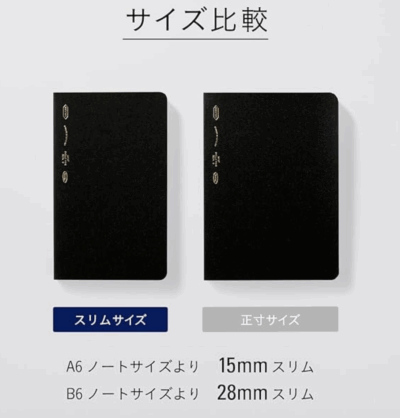
Another undated option is Stalogy. I reviewed the Stalogy Editor’s Series 365 Day Notebook a few years ago. At the time, the only “pocket” size option was a true A6, but they have now introduced an “A6 Slim” size that measures 3.5 x 5.8″– close to the size of the Leuchtturm diary. Here too the pages have a header space and a squared layout. The smooth, lightweight paper is fountain pen friendly.
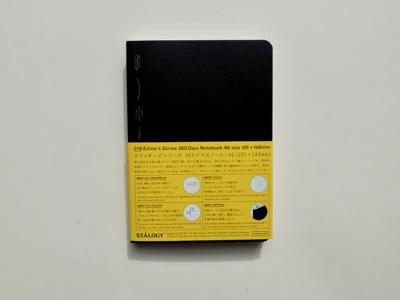
stalogy notebook
A6 Stalogy I reviewed
stalogy slim size notebook
Stalogy slim vs. regular size comparions

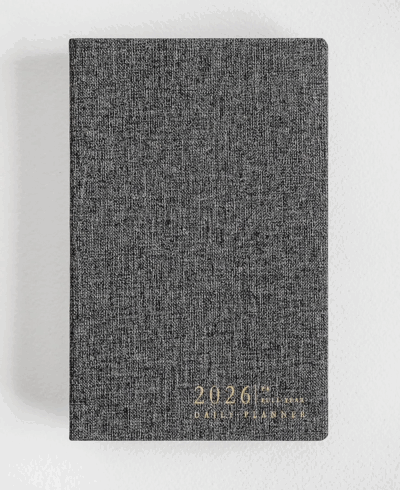
Then there’s Sterling Ink. I reviewed some of Sterling Ink’s plain pocket size notebooks and was very impressed by the quality. Their planners also seem to be very popular, and a 2026 pocket size daily planner is available. (Or it was when I started writing this post, anyway. These seem to have now sold out, but other sizes are still available.) In addition to the daily pages, there are yearly, quarterly and monthly layouts, and some plain notes pages.
sterling ink pocket daily planner
sterling ink daily planner layout

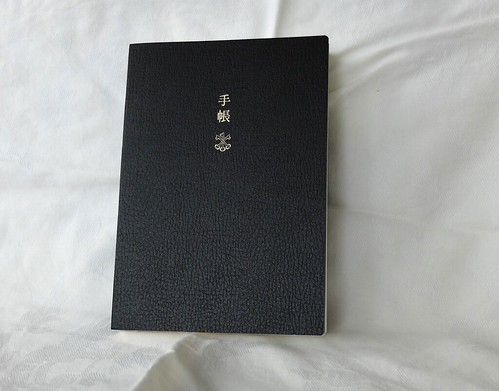
If you’re open to a standard A6 size, there is of course the Hobonichi Techo. I reviewed the 2014 Hobonichi Techo when they first launched the English language version in the US. They’ve since become wildly popular and branched out into loads of options, but my favorite is still the classic version with the black cover.
hobonichi techo

As for brands I haven’t reviewed, here are a few that look promising:

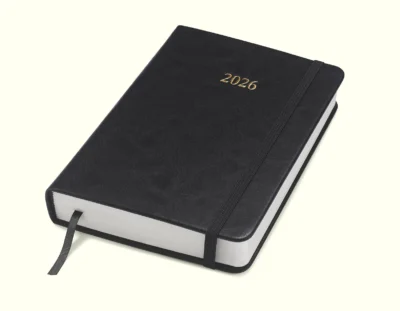
Wykehams is a relatively new British brand that I’d never come across until now. Their “Executive Journal” planners have a traditional style, and the 2026 diaries come in various sizes and page layouts including an A6 daily diary, which is surprisingly affordable at $22.00, marked down from $24. The price even includes free shipping from within the US. This may have the closest format to the old Marquette diary, even if it’s a bit chunkier.
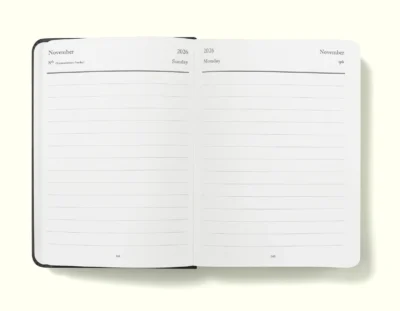
wykehams daily planner a6
wykehams daily planner layout

The Laconic Pocket Log Diary is a little smaller than a Moleskine, measuring 3.5 x 4.7″. The layout (undated) may not be free-form enough for some users, but others may enjoy having some structure. The other potential drawback is that there are only enough pages for 6 months, so you’d have to buy two a year. There’s a detailed review at The Pen Addict. Jet Pens sells it (as did Yoseka, but they’re out of stock). It’s also listed on Amazon but not currently available there.

laconic pocket log diary
laconic pocket log diary layout

The Prism 365 Days Daily Planner is a Korean diary available from Mochithings. It comes in various colors and at 5.94 x 3.86 x 1.06in. it’s close in size to the Leuchtturm daily planner. I had not heard of this brand before, but I found a review on YouTube that seems to have some concerns about the quality of their bindings.
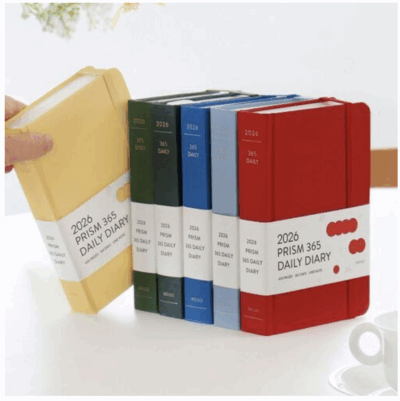
prism 365 days daily planner
prism 365 days daily planner page layout

There are some other options if you are open to a larger size like 5×7″. To me that’s not really “pocket” size any more, but if you have big pockets, check these out:

The At-A-Glance Standard Diary is a classic. The smallest version is about 5 x 8″, unfortunately. Weirdly, they are crazy expensive if you buy them directly from At-A-Glance’s website ($71.27!) but heavily discounted from a lower price on Amazon (currently $27.60, 54% off the $60.39 list price).
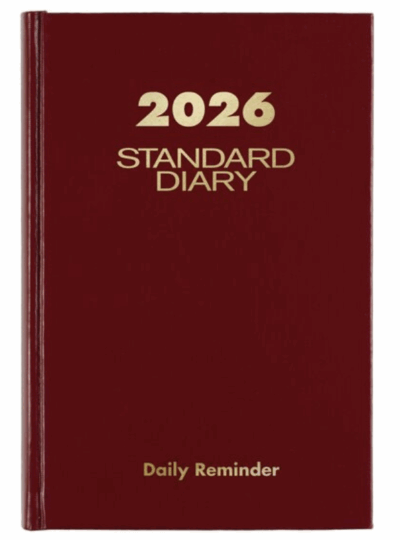
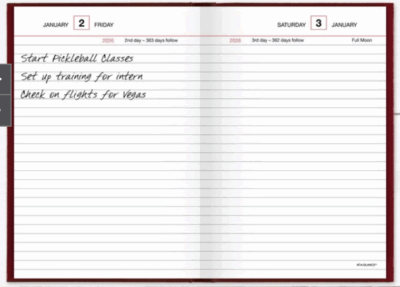
at a glance standard diary daily planner
at a glance standard diary daily planner layout

The “pocket” size Full Focus Planner comes in a 4.5 x 7 inch size so it’s a little more pocket friendly than the Standard Diary. The grey linen cover looks attractive. The pages here have a format that is designed to work with the Full Focus system of productivity and goal achievement which aims to “help high achievers live their best lives,” via selling them planners and corporate coaching. It all seems a bit intense but the planner looks nice. However, it stays slim by only having enough undated daily pages for 3 months, so you’ll be spending over $100 to cover a full year. Other sizes are also available.
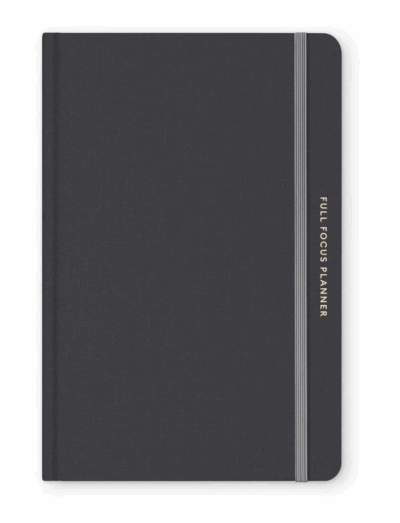
full focus planner pocket
full focus planner pocket layout

Well, I’ve given it my best shot! I hope one of these options will fit the bill. I’d love to hear from other readers who are using pocket size daily planners too!

This post contains affiliate links from which I may earn a small commission on purchases.
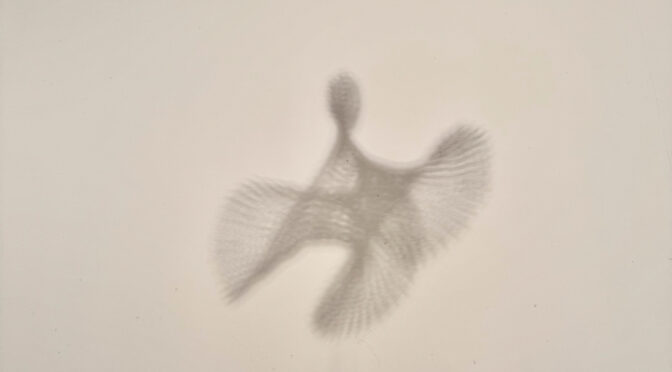
Ruth Asawa’s Sketchbooks

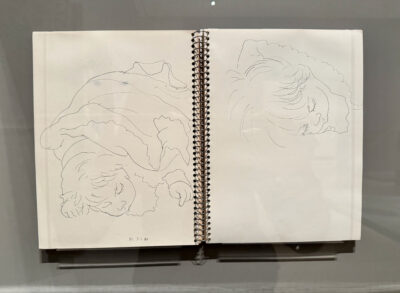
There’s a fabulous retrospective of the artist Ruth Asawa on view now at MoMA in NYC, through February 7, 2026. Asawa is best known for her hanging sculptures made of woven wire (the header photo of this post is the shadow of one of them), but this exhibition really opened my eyes to the breadth of her work and the way she developed as an artist. I was also happy to see quite a few sketchbooks on display!

She seems to have mostly used spiral bound sketchbooks in a few different sizes, around 8.5 x 11″ or a little bigger or smaller. Some were displayed on the wall, and some were in a large glass case.

ruth asawa sketchbook drawing
ruth asawa sketchbook spread

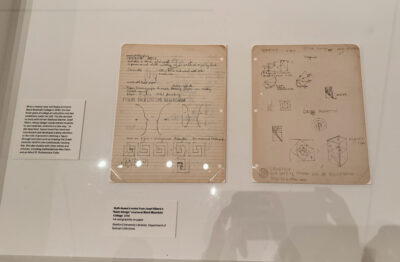
There were also some sheets of 3-hole punched looseleaf notebook paper that contained drawings and notes from her classes at Black Mountain College.

ruth asawa notebook pages

I enjoyed the exhibition so much, I walked through it twice, and the catalog of the exhibition is now on my Christmas list– I didn’t have a chance to look at the book much at the museum but it sounds like the sketchbooks are included in it. Check it out if you can’t make it to MoMA for the show!

Moe Berg’s Notebooks

I recently read the book The Catcher Was a Spy, a fascinating account of the life of Morris “Moe” Berg. Berg was a catcher for several major league baseball teams from the late 1920s to the early 1940s. While his record as a player wasn’t that great, he was one of the most quirky and interesting people ever to play baseball. He graduated from Princeton University and Columbia Law School, then worked for the OSS (the precursor of the CIA) during World War II. He was addicted to reading multiple newspapers a day, and spoke several languages. He studied in Paris for a time, and visited Japan and South America, all of which gave him the reputation of a globe-trotting intellectual among his fellow baseball players at a time when few of them shared such pursuits. It also gave him plenty to write about in notebooks!

The author of the book, Nicholas Dawidoff, notes that Moe Berg saved lots of the papers he accumulated during his life, including documents, menus, and ticket stubs. Dawidoff’s research for the book relied on various personal papers, letters, notebooks and photographs. Some of these materials are owned by private collectors but many are in archives, including 25 boxes at Princeton, which include notebooks, and other papers at the Columbia Law Library , the New York Public Library, and the Center for Jewish History.

A couple of his notebooks also ended up in auctions in recent years. The blue Pen-Tab notebook below was listed for sale twice, once when it didn’t sell and in a later listing that says it sold for $2,000. (I have a few Pen-Tab notebooks in my own collection of spiral notebooks, but their cover design is different.)

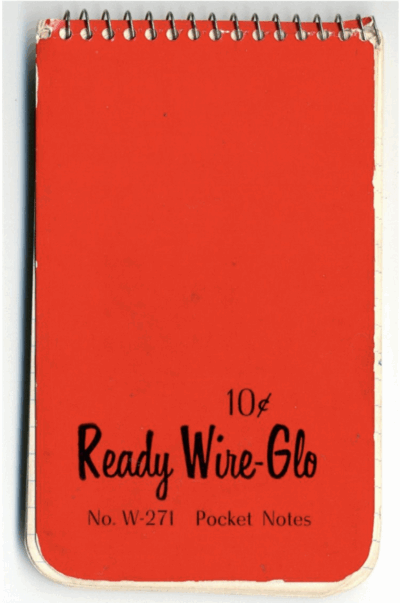
The red notepad below was also part of an auction lot. “Ready Wire-Glo” is a brand name I hadn’t seen before. There don’t seem to be any traces of it via Google search either…

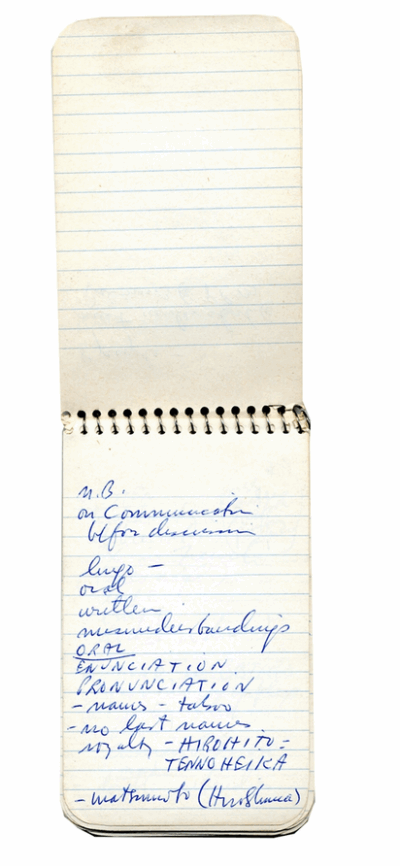
It’s a bit hard to read Berg’s handwriting but apparently a lot of the notes related to his interest in languages and linguistics, as well as baseball, and his work for the OSS.

The Catcher Was a Spy is definitely worth reading if you enjoy baseball and/or unusual biographies. The notebooks are mentioned here and there in the book, but not shown– that’s what got me googling to see what I could find out about them! Another book called My Time with the Catcher Spy, Morris Moe Berg supposedly shows full color images of one of Berg’s notebooks, but I haven’t read it and couldn’t find any pictures of the interior online. But I’ll be keeping an eye out for any more auctions!

See my other posts about baseball-related notebooks.

Reader Question: A Notebook to Track Several Employees

Here’s a question from a reader:

“I just took a job managing several employees. I’d like to keep a notebook that will have a section for each employee (roughly about 10). I have a travelers notebook and thought about several inserts for them but as much as I was addicted to travelers notebooks, I am no longer so. I even thought about a good old fashion mead college ruled notebook with dividers (ugh). Any suggestions?”

This is a great topic, and can expand to any situation where you need to track multiple subjects or ongoing projects in a notebook, not just employees.

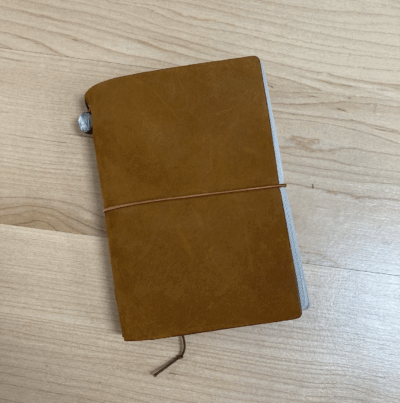
I wouldn’t use a Travelers Notebook for this purpose. While having a separate insert for each employee might seem like a good idea, ultimately I don’t think it’s flexible enough. Each insert has a finite number of pages, so there might be too many pages for one employee and too few for another.

passport size camel travelers notebook

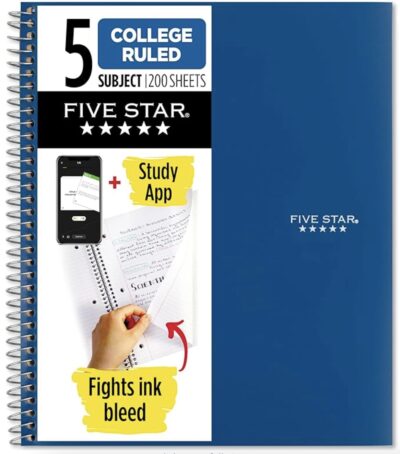
The good old fashioned Mead college ruled notebook has the same problem, but even worse– while it offers a way to keep each employee in one section, what happens when you run out of space in one of the sections? Then the rest of the notebook will go to waste, as you can’t add pages or replace a single section.

mead five star college ruled notebook 5 subject
Screenshot

To me, the obvious solution here is a refillable loose-leaf notebook of some sort. In a loose-leaf binder, you can add and remove pages and dividers, and arrange them however you like. You could have a section for each employee, and then even have pages for different topics within each section, such as running notes from one-on-one meetings with that employee, a list of future projects and goals for that employee, a tracker of that employee’s vacation and sick days, and notes for the employee’s next performance review. You could keep a lot of other information in that loose-leaf notebook too, such as notes relating to your own work schedule, tasks, and goals.

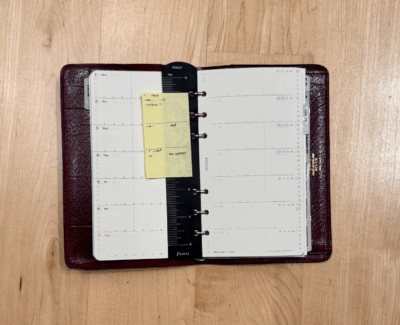
My own work notebook is pretty much an example of what I’m suggesting. I’m now closing in on my first full year of using a loose-leaf system and it’s been working really well– I have a section for my own weekly calendar and to-do list, a section for general notes, and a section called “Projects” where I have sub-sections for my boss, the person who reports to me, and various committees I’m on. Whenever I have those meetings, I just flip to the relevant tabbed section and make sure I review any notes already there and add new ones as needed. I can move pages from the general notes to the calendar section or the projects section, and I never have to worry about running out of space. At the end of this year, I’ll file away the calendar and anything relating to projects that are now finished, and add a fresh calendar for next year. If a new committee or project arises, I’ll add a new section. I don’t know why I spent so many years using wire-bound notebooks for work!

filofax gloucester 1980s

I’m using a vintage personal size Filofax Gloucester, shown above, and covered in more detail in this post. A Filofax is a great option if you want to have a nice leather binder, but there are lots of other loose-leaf notebooks and organizers that would work just as well. It just depends what size you want and how much you want to spend. You could buy a brand new Filofax or Plotter organizer and all their branded inserts if you want to go high end. MeePlus is another option that is a somewhat less expensive, and there are many similar options on Etsy and Ebay. You could search your local stores like TJ Maxx or Marshalls or even thrift stores, where you can sometimes find Filofax and other organizer brands at reduced prices. And for even less, you could buy a very basic, generic, inexpensive ring binder and set it up with plain paper and some tabbed dividers. (My one caution about some of the cheap binders is that the rings can be kind of chintzy– loose or misaligned rings can be very annoying to use. Ideally, you should look for a brand with Krause rings, as these have a reputation for the best quality.)

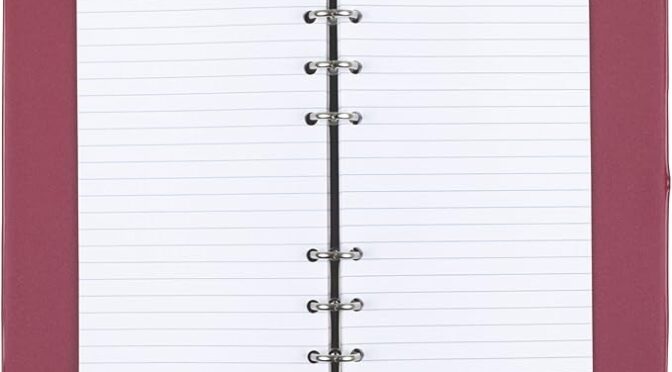
loose leaf notebook

Most loose-leaf notebooks and inserts fall into standard sizes and ring spacing, so don’t be afraid to mix and match different brands of inserts and binders– just confirm the measurements are what you want, as one brand’s “pocket” may be another brand’s “personal” or “mini.” My work Filofax has a mix of vintage and contemporary Filofax dividers, a Plotter calendar, and RayMay Davinci blank pages for notes. My pocket size MeePlus notebook is filled with a mix of Plotter and Filofax inserts, as well as some hand-made tabbed dividers that I cut out of heavy weight paper.

meeplus slimpad notebook
meeplus slim pad notebook with plotter inserts

The beauty of any loose-leaf system is that you can change your mind so easily! If you set something up and don’t love it, you can swap out covers and rearrange inserts and let it evolve until you find what works for you.

For more ideas, see some of my other posts about loose-leaf notebooks.

This post contains affiliate links from which I earn a small commission on any associated purchases.

Moglea Notebook Review

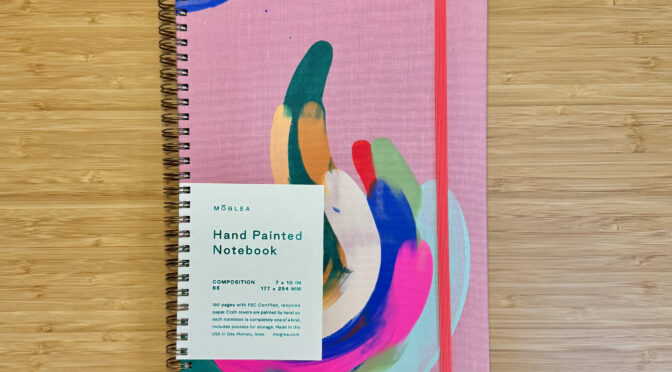
I’ve been seeing Moglea notebooks in upscale gift stores and museum shops for a while. The hand painted covers are colorful and striking. But I was also struck by the prices, which are rather high! So I was pleased to receive one of these notebooks as part of a family Secret Santa holiday gift exchange. Now I get to review it for free!

moglea hand painted notebook

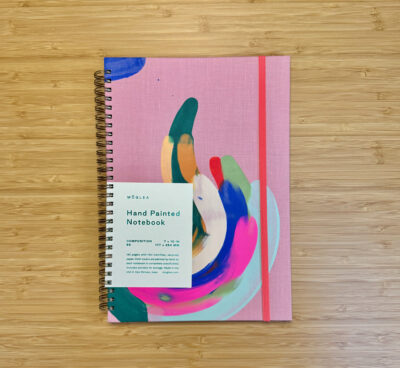
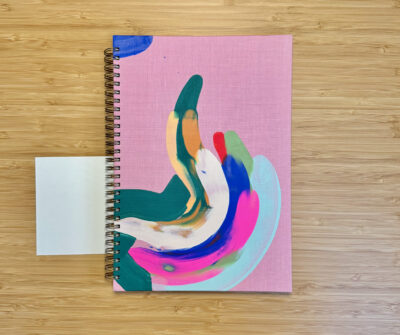
The design of the Moglea notebook is really nice– the branding and product information is mostly on a removable card bound into the wire-o binding. The covers are a substantial paper board covered with cloth, onto which an abstract splash of paint has been applied. It’s not just a printed design, you can really feel the texture of the paint.

moglea notebook hand painted front cover

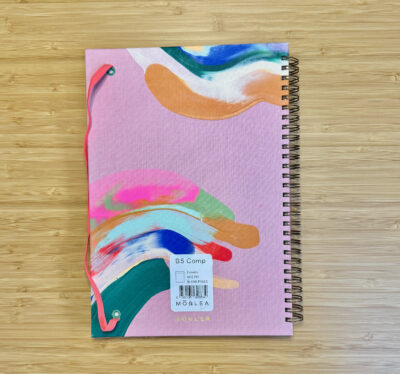
The paint continues to the back cover, where a removable sticker has some more product info and a bar code, and below it is the Moglea name stamped in metallic gold ink. The wire-o binding is a sort of bronze color, and green rivets hold a pink elastic closure in place. I always tend to gravitate towards plainer notebook covers in more neutral colors, but I do find this whole package pretty snazzy.

moglea notebook hand painted back cover

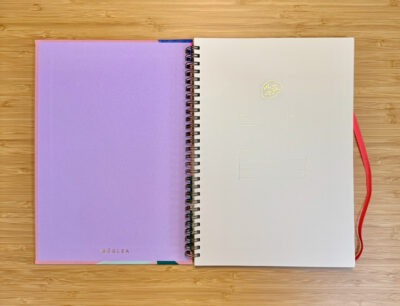
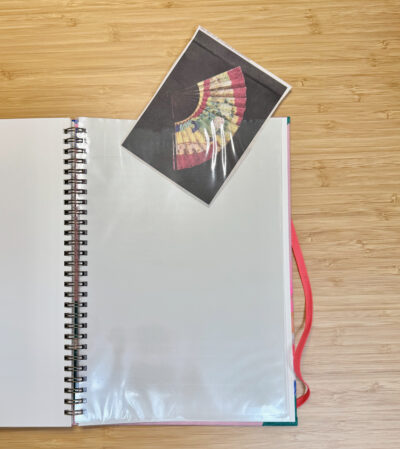
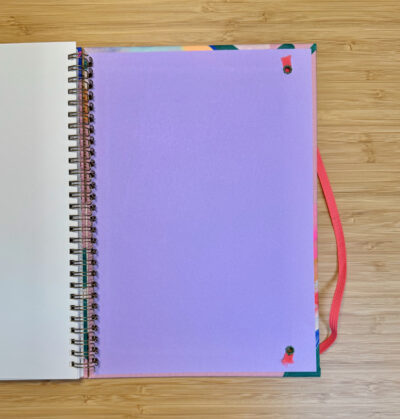
Inside, there are lavender endpapers, and a front cover page stamped in gold ink with a logo and space for some personal details. This page is made of a heavier paper than the rest of the pages. A blank page of similar weight ends the notebook. Just before that final page is an unusual feature: three clear plastic top-opening envelopes. These would be a very handy spot to store clippings or receipts or other odds and ends. The clear plastic sleeves are a nice alternative to the more typical expanding paper pocket on an inside back cover.

moglea notebook inside front cover
moglea notebook page layout
moglea notebook plastic pocket
moglea notebook inside back cover

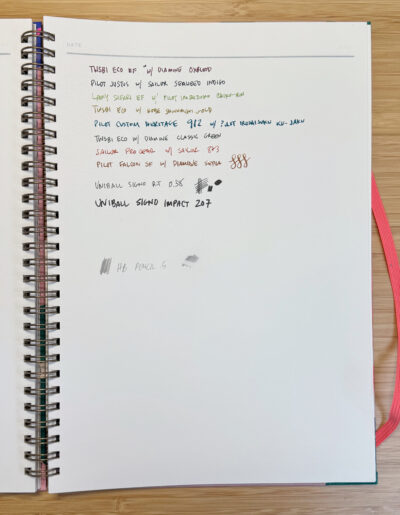
The paper inside the Moglea notebook is a plain creamy white, with a header line where you can note the date. The paper feels very smooth and pleasant to write on with a fine gel ink pen. It doesn’t feel super-thin, but no paper weight is specified. I had high hopes for how it would work with fountain pens, but I was sorely disappointed. Show-through is about average, but there was lots of bleed-through and feathering. Even a bolder gel-ink pen bled through a little bit.

moglea notebook fountain pen test
moglea notebook pen test back of page with bleed through

As I noted, Moglea notebooks are not cheap. They are made in the USA and the hand work on the covers justifies a higher price to some extent, but this B5 size notebook was priced at $52.50! A similar A6 sized Moglea notebook is $30. (Other sizes and designs are available on their website.) I have seen similar prices for some Japanese notebooks that did not involve any hand-painting, and even a Moleskine hardcover in size XL is now $33, but I can’t help finding $52.50 a bit hard to swallow. (See some of my other posts about notebook prices and the effect of tariffs.) This notebook was a lovely thing to receive as a gift, but I would not be willing to spend my own money on another one, especially with paper that isn’t fountain-pen friendly.

Erik Satie’s Notebooks

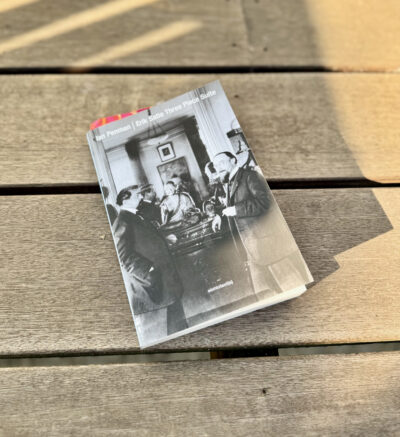
book Erik Satie Three Piece Suite by Ian Penman

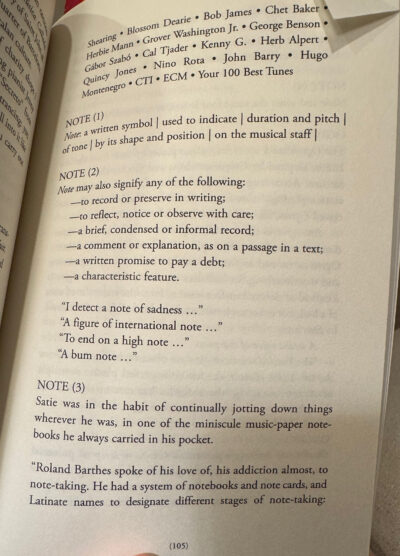
I recently read the book Erik Satie Three Piece Suite by Ian Penman. It’s not exactly a biography of Satie, a composer who is best known for some lovely pieces he called Gymnopédies. It’s more of an offbeat appreciation of Satie and music in general–a quirky book with a non-traditional structure, parts of which are almost like a dictionary or index of alphabetical references. Here’s a couple of pages from the section covering the word “note”:

page from Erik Satie Three Piece Suite by Ian Penman

I was was of course excited to hear that Satie was a habitual note-taker, and wanted to know more about the “miniscule music -paper notebooks he always carried in his pocket.”

Unfortunately, it’s hard to find much information! There is an archive of Satie’s papers at Harvard which is described as mostly consisting of “autograph notes, drafts, and fragments of musical compositions such as piano works, ballets, incidental music, entr’actes, songs, and a mass. They are notated in 29 small composition books as well as on loose sheets.” But while the archive is catalogued in detail online, there are no photos.

I couldn’t find any other images of Satie’s notebooks, but he’s known to have done a few sketches on letters, and perhaps also in notebooks. (You can see one of them at this link, and some of his beautiful handwriting here.) I’ve even been to the Erik Satie Museum in Honfleur (which is odd and delightful) but if I saw any of his notebooks there, I don’t remember and didn’t take a photo.

moleskine music notebook

The mention of the small notebooks with music-paper of course made me think of Moleskine’s music notebooks. I also thought I remembered having an older Moleskine whose paper band mentioned Satie as one of the supposed historic users, amongst the other usual call-outs of Hemingway, Chatwin, VanGogh, Picasso and/or Matisse. I searched through my stash of spares but couldn’t find anything mentioning Satie, so I’m not sure if it’s a figment of my imagination. If anyone else remembers seeing Satie’s name on a Moleskine, please let me know!

MeePlus SlimPad Notebook Review

I’ve had my eye on MeePlus for a while, after seeing lots of positive mentions of them on Instagram and Reddit. So when they contacted me to offer a sample of one of their MeePlus SlimPad notebooks for review, I jumped at the chance!

MeePlus is a Hong Kong-based small business run by husband and wife Lora and Toby. MeePlus has only been around since 2023 but it seems like they’ve accomplished a lot in a few short years, offering a growing line of leather ring binder notebooks and accessories. So let’s take a look at what they sent me. There’s a lot to talk about!

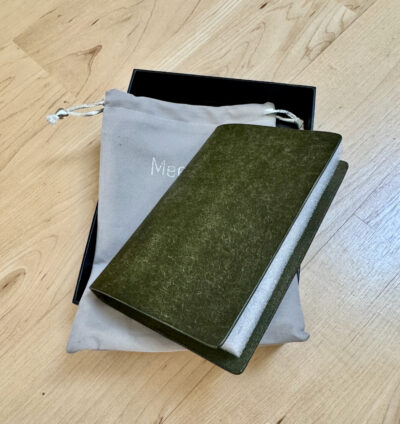
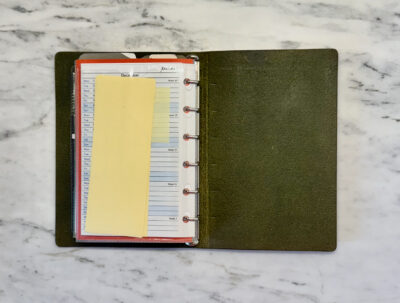
First impressions: The MeePlus notebook arrived nicely packaged in a gifty box, with the notebook in a cloth bag. It came with padding inside to protect the rings. The Krause rings are good quality– well-aligned and nice and snappy.

meepllus slimpad unboxing
meeplus slimpad notebook
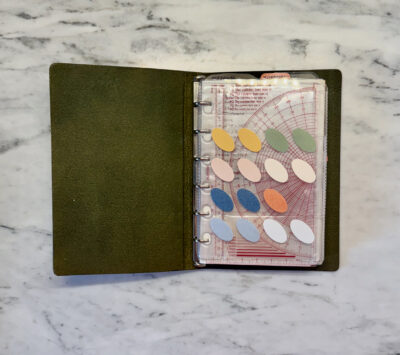
meeplus slimpad notebook with plotter and filofax inserts
MeePlus notebook shown with my own inserts, which are a mix of Plotter, Filofax, Suatelier Design stickers, and home-made index tabs.
meeplus slimpad notebook with plotter and filofax inserts
meeplus notebook
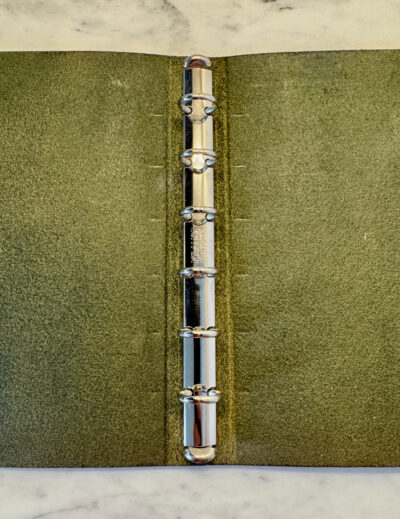
meeplus slimpad krause rings

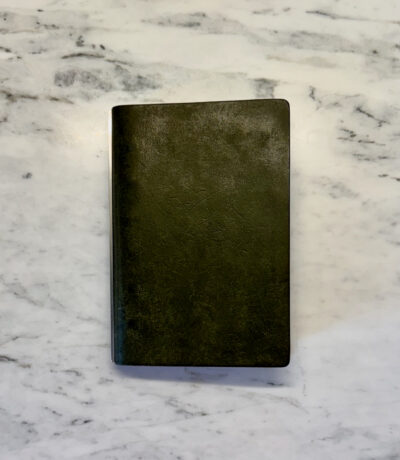
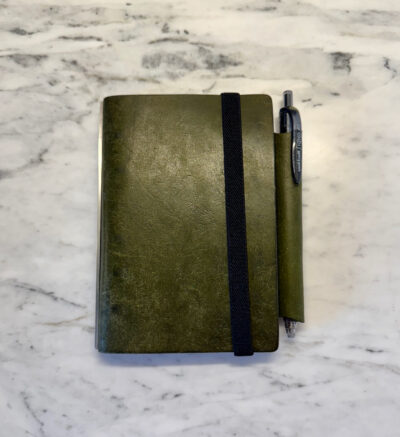
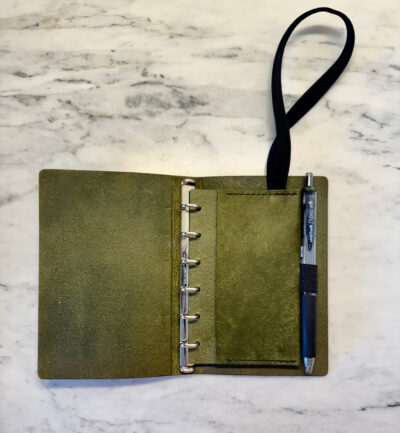
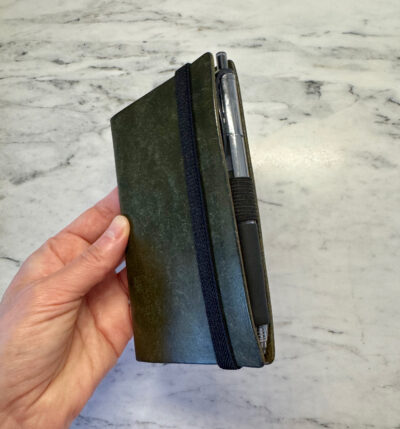
MeePlus offers a variety of leather types and colors, as well as various sizes. I chose a pocket size Pueblo leather notebook in olive green. The green color is beautiful and it’s the perfect size! (3.86 x 5.59″, or 98x142mm) MeePlus is willing to make custom sized notebooks and I was almost going to ask them to make a special size for me. But when I realized that their standard pocket size notebook was already a bit narrower than a Plotter mini 6 notebook, I decided to give it a try, and I’m glad I did!

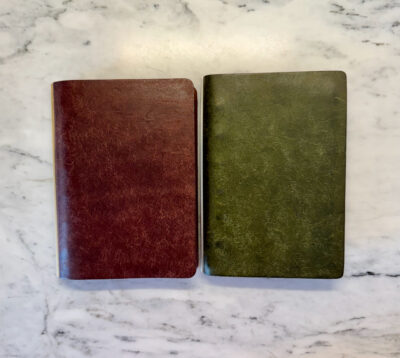
meeplus vs. plotter notebook

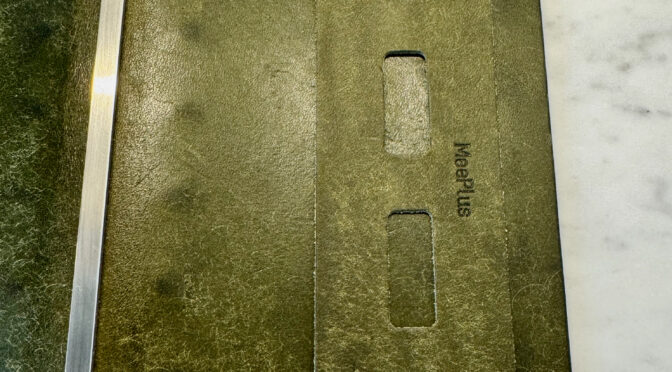
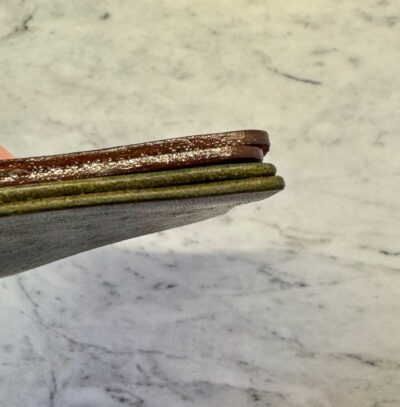
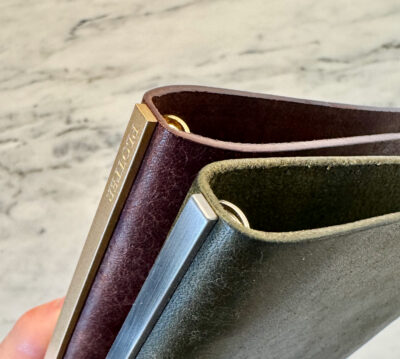
The pueblo leather is almost the same as Plotter’s, but it’s a little thinner and more flexible, which I like. It lies flat with no breaking in. The edges are less polished than Plotter’s, but they still look clean and tidy. The corners on the MeePlus notebook are rounded to a tighter diameter than Plotter’s. The interior texture is also a little different, but it has a similarly pleasant leather smell. There are no brand markings inside or out, so you can flip it front to back if one side pleases you more– it has the normal variations you’d expect in leather, with the same sort of scuffy texture as Plotter’s pueblo. It can scratch easily but if you rub it with your fingers, the scratches will fade and blend in to the overall patina. Over the couple of months I’ve been using it, it’s darkening, becoming a bit more shiny, and showing marks where it’s molding to the rings below. Many people use ring protectors to minimize this wear, but I don’t mind it.

meeplus olive pueblo leather patina
The ring protector shows the texture of the Pueblo leather when new, vs. the notebook which has been in use for about 2 months.
meeplus vs. plotter notebook
MeePlus vs. Plotter
meeplus vs. plotter notebook

Plotter was the first brand I saw using this type of metal spine– MeePlus has the exact same design, but without any branding engraved on it. The metal spine is a striking detail and it allows the spine to be more rounded, not squared off in a way that makes it much thicker than the rings themselves. The metal bar is nicer looking than round rivets, which would be the only other way to attach rings to a single layer of leather, at least that I know of. But I have never seen 11mm rings that attach by rivets anyway– usually rings this small have a thin, curved backplate that is designed to be sandwiched between two layers of a cover, and clips onto the ring base at the top and bottom. In any case, I can’t help wishing the exterior was all leather– if you use your notebook on a wooden surface, you may need to be careful about scratching the wood, even though MeePlus does slightly round off the edges of the metal so they aren’t too sharp. But I do like how this attachment method allows the spine to be more rounded, not squared off in a way that makes it much thicker than the rings themselves.

meeplus vs. plotter notebook leather thickness
meeplus vs. plotter notebook metal spine

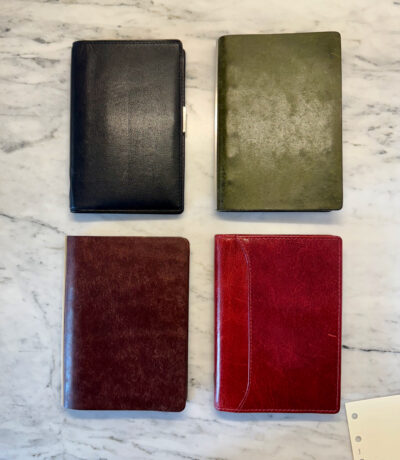
Despite a bit of extra width added by the metal spine, the MeePlus SlimPad feels nicely slim and flexible overall. It just feels good in the hand and would be more pocketable than most ring binders. It’s not quite as narrow as the Filofax Guildford Extra Slim, but it’s one of the closest I’ve seen, and the slight extra width gives it a little more versatility in allowing the use of index tabs: standard Filofax tabs stick out of the Guildford. The MeePlus notebook is just a bit narrower and taller than the Filofax Lockwood Pocket Slim, which to me, gives it better proportions. And despite having the same size rings, the minimal construction of the MeePlus makes it less bulky than the Lockwood.

meeplus vs. plotter and filofax guildford lockwood notebook
Note index tab sticking out from Filofax Guildford Extra Slim at top left.
meeplus vs. plotter and filofax guildford lockwood notebook

Most of the other looseleaf notebooks I’ve used are Filofax organizers with various configurations of pockets. The minimal design of the MeePlus SlimPad notebook might sometimes make me miss having pockets but unless I’m using the notebook as a wallet, I don’t find myself using the pockets that much anyway. MeePlus and other companies make a variety of accessories you can use to add pockets, so it’s easy to adapt to your own personal preferences. I added some old Filofax accessories to mine– a plastic card holder and sleeve. (Not the current version of the plastic sleeve, which is wider– it just barely fits the Lockwood, and sticks out slightly from the MeePlus.)

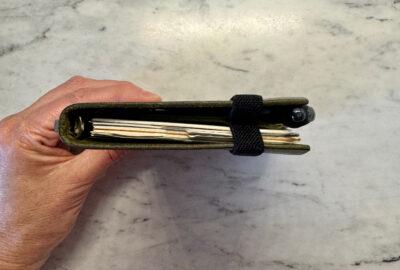
MeePlus sent me some of the accessories they sell separately. I like the idea of adding a pocket but this card holder seems a little small to me, and I’d have preferred it without the pen loop. The other pen holder has a wide leather sleeve that will accommodate bigger pens. I never use pen holders but in this case, I prefer the leather sleeve as it doesn’t interfere with the inserts and closure of the notebook. It’s nice that the accessories are offered in matching leather.

MeePlus also included an assortment of their own refills. I was amazed at how many layouts they sent me, and there are even more on their website. Most are undated, but they have a few 2026 options that have just become available.

meeplus refills

There’s a weekly layout that would function very much like what I enjoy using in my Nolty planner– a week on a page with a free-form facing page, in this case with squares.

meeplus weekly refill

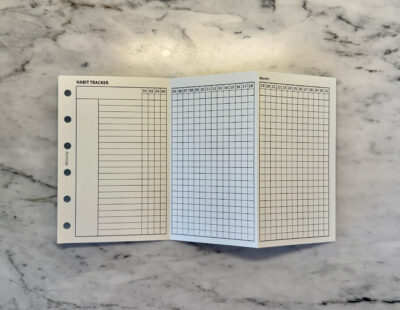
The foldout habit tracker is nice– plenty of space to track up to 22 habits in one layout.

meeplus habit tracker refill

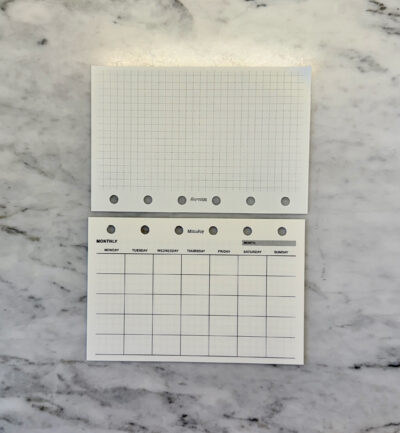
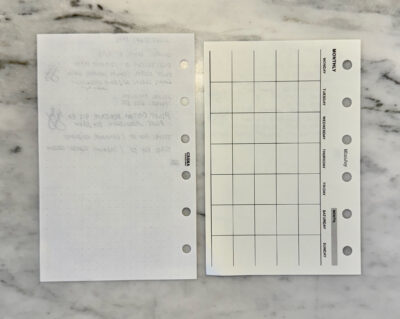
I don’t recall seeing a horizontal monthly layout like this before– the days of the month fitting on one side, with an open grid layout facing.

meeplus month horizontal refill

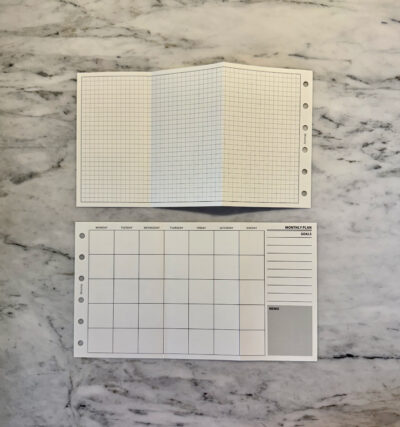
If you need a little more space you can use a foldout monthly plan, which has a grid on the back.

meeplus monthly plan refill

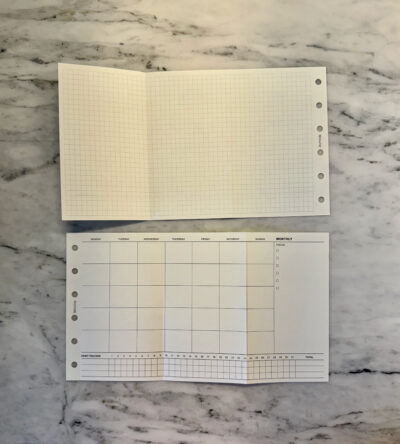
And there’s also a combo monthly foldout that has a few habit tracker lines on the bottom, with a grid on the back.

meeplus monthly plan and habit tracker

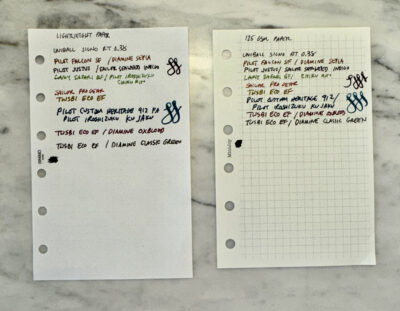
I won’t describe all the others– they almost deserve their own post! Most of the refills I received are a heavy, creamy, 120gsm paper, except for some basic dot grid sheets that use their “lightweight” paper, which is said to be made using a similar process to Tomoe River paper. Both perform extremely well with fountain pens– the lightweight paper has show-through, but nothing bleeds.

meeplus lightweight paper and 120gsm pen tests

It’s impressive to see what a wide range of formatted and basic refills MeePlus has available— I don’t know if any other planner brand offers so many pocket size refill options, other than Filofax at their heyday in the 80s/90s! I actually counted, and Filofax currently offers 46 pocket size refills (not counting out of date calendars). Meeplus offers 8 lightweight, 28 basic, 28 colorful, 6 daily, 18 monthly, 12 weekly, and 8 yearly. Not counting a few that were crossed out, so presumably out of stock or discontinued. The prices seem very reasonable, but you have to pay attention to the sheet count– for instance, the week-on-two-pages layout is $7.00, but the pack size is only 40 sheets, so you’ll need two packs to cover a whole year. That is still cheaper than Plotter’s dated version at $15.00.

Plotter’s Pueblo binder in the comparable size is $145. The MeePlus SlimPad I received is $109. That’s not “cheap,” but I think it’s a great value given the comparable quality. They are also offering free shipping on orders over $50, and they are including all tariffs and duties in the price. For those of us in the US, that makes it an even better value vs. ordering directly from PlotterUSA, as Plotter’s free (domestic) shipping doesn’t kick in until your order is over $185. MeePlus also ship directly to Europe, where it can be a hassle to order Plotter.

The MeePlus Slimpad is a fantastic notebook that feels simple but luxurious. The slim, minimal shape will please anyone who’s been looking for alternatives to Plotter or Filofax’s Pocket Slim size notebooks. I’ve been happily using mine for a couple of months now and plan to continue. I can’t help wanting to try another one in a different color or size too, despite my large collection of other small looseleaf notebooks! But for something I enjoy using as much as the MeePlus SlimPad, I always want a spare.

I received free products from the manufacturer for this review, but all opinions are my own and I have not been compensated in any other way.

Zero-Effort Journaling©

Sometimes it seems like there are so many systems and methods for using notebooks– Bullet Journaling is the most famous, I suppose. And then there is GTD, though that doesn’t have to be notebook-based. I also saw a link recently to the “Life at a Glance System” of journaling (via The Pen Addict).

Some of these systems are all about productivity, but I can’t help wondering how productive it is to have to figure out all these rules and symbols and pages recapping weeks and months and years. I think we’re all attracted to the idea of a system that will somehow optimize our performance, but to me it seems like if we’re always searching for systems, we might be losing our focus on the end goals. Do note-taking methods and journaling systems just over-complicate things?

Then there’s the aesthetic considerations: Bullet Journaling has a sub-set of users for whom it seems to be all about the set-up and decoration of the pages (and displaying them on Instagram). And it’s not just Bullet Journalers– many other notebookers use a variety of inks and pens, stickers, calligraphy, drawings and doodles, vintage stamps and ephemera to give each page a colorful, highly-designed look. Using a shitajiki, aka pencil board or writing board, is also popular– this is a guide with lines that can be laid under a blank page to make it easier to keep your handwriting aligned.

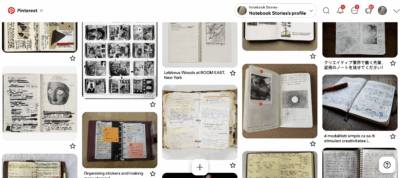
I do get the attraction. I have a whole Pinterest board dedicated to “Beautiful Notebook Pages,” and many of the images there are of colorful, decorated, precisely organized pages that have taken some effort. But my attention is also grabbed by notebook pages that look interesting by accident, because they are densely scribbled or beat up or just somehow infused with personality and purpose.

notebook stories beautiful notebook pages pinterest page screen shot

As for my own notebooks, I use some colored inks, and I sometimes paste in images or play with attempts at calligraphy, but most of my pages don’t look beautiful at all. My handwriting can be tidy and attractive when I want it to be, but often it’s just an uneven scrawl. Even in sketchbooks where I do drawings I’m proud of, I often think the pages don’t look as well-composed as they do in other artists’ sketchbooks I see.

four open journals with writing drawing and sticker
Random non-beautiful, non-systemized notebook pages from my own journals.

But I’m actually a pretty productive and well-organized person anyway. My notebooks work for me, and I enjoy using them. So rather than admit I’m just not that good at making them look pretty, I’ve decided I have to proselytize about my own notebooking method, which I’ve decided to call “Zero-Effort Journaling©.” The rules for this system are very simple:

  • Rule 1: Write stuff down in notebooks whenever you feel like it
  • Rule 2: DGAF about how it looks
  • Rule 3: two rules are enough

I guarantee this method will make you more productive than spending all those extra hours coloring little pumpkins on your October spread with 3 shades of orange markers.

If you want to learn more in order to truly optimize your use of the Zero- Effort Journaling© system, you may be over-thinking it! But I will consider going full internet-guru and maybe sell downloadable PDF guides with further instructions, or setting up some symposiums, or even offering one-on-one consultations with me for what I’m sure you’ll consider a very reasonable hourly rate.

In all seriousness, though, I don’t mean to suggest that there’s anything wrong with being creative and artistic in your notebooks. Maybe Rule 3 should actually be “if you enjoy spending time making your notebooks look pretty, go for it!” But then Rule 4 would have to be “don’t let it get to the point where you feel stressed and inadequate because your notebooks don’t look pretty enough.” If your goal is to use a journal for mindfulness, productivity and record-keeping, you may find that the Zero-Effort Journaling© approach is all you need.

This post contains Amazon affiliate links, from which I earn a small commission on purchases.

Vintage Succes Seven Star Diary

Most of my collection of vintage looseleaf notebooks is either basic black ring binders from the first half of the 20th century from makers like Marquette and Wilson Jones, or Filofax organizers from the 1980s and 1990s. I don’t have that many other brands, so I was happy to add this Succes organizer to my collection.

succes organizer packaging
succes organizer in box

That isn’t a typo– the brand is Succes, with one S. (Well, two Ss but only one at the end!) Succes is a Dutch company that has existed since 1928, first as the publisher of a business magazine, then branching out into producing leather agenda covers in 1932. They are still in business today, selling their own and other brands of organizers.

success organizer

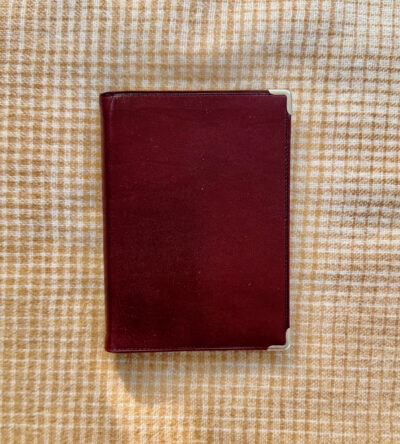
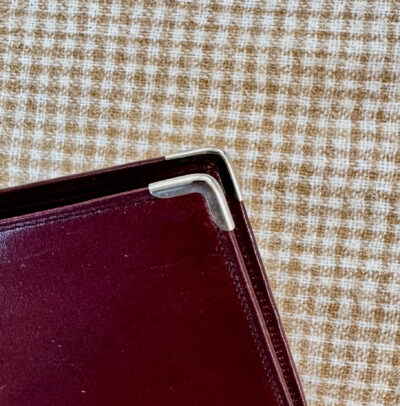
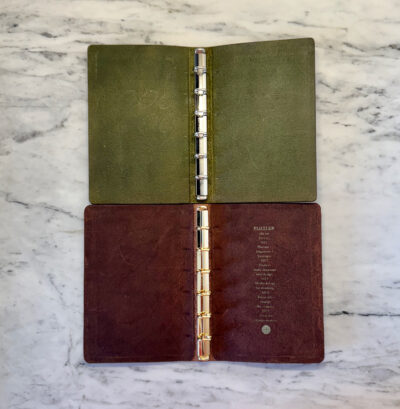
My Succes organizer dates to 1981, based on its calendar insert. It does not appear to have ever been used. The leather is a lovely cordovan or oxblood color, with a smooth, slightly shiny texture. It looks like the texture imitated by the faux-leather covers of Moleskine notebooks, except that it also has some slight lines or creases along it. The cover has metal corner protectors, in a silver metallic color to match the rings. I’m not usually a fan of these corners, mainly because they usually seem to be in a gold or brass color, but they do give the Succes notebook a somewhat more formal look, and should keep the corners from getting bent and scuffed. There is a small Succes logo on the back cover. The size and no-fastener design are very similar to many of the pocket slim Filofaxes I’ve reviewed.

metal corners on succes organizer
succes logo on back of organizer

Inside, there’s a nice arrangement of pockets that make this a good wallet– on the left a secretarial pocket with another pocket on top, and on the right a full-length pocket and slots for 4 cards. The pockets have a contrasting liner in fabric and leather, while the spine behind the rings is backed with leather.

succes seven star diary 1981
succes organizer pockets

The rings are about 1cm in diameter from side to side– they have a slight oval shape which allows for less wasted space than a perfectly circular ring. They have a nice snappy mechanism and close without any gaps.

succes organizer metal rings

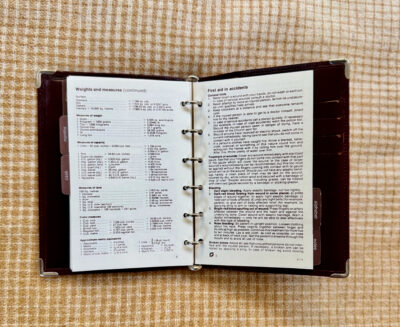
The Succes organizer came with what must be only part of its original inserts, which show the brand name Seven Star Diary. This was apparently the sub-brand Succes used for marketing a Filofax-type organizer system. The front page has space for contact details, and also serves as the index tab for the “diary” section. The other tabs are labeled “months,” “cash,” “alphabet,” and “notes.” It’s interesting that they have an “alphabet” tab– unlike Filofax, where they label it “addresses,” this tab acknowledges that you might file other information alphabetically too.

Each tab serves a double purpose, with yearly calendars, lists of holidays, weights and measures, first aid tips, and space to fill in with “personal memoranda” facts like clothing size, insurance info, and what model typewriter and binoculars you own! The narrow area designated for “train or bus service” with “to/from” columns puzzles me– I’m not sure how you’d fit much useful information there. But I love this concept overall– why should divider tabs be blank when you could pack them with useful information you might want to refer to?

success organizer divider calendar diary page
success organizer agenda page
succes organizer seven star diary index tabs

The calendar only has pages for a couple of months, so I’m guessing that the original system here was designed to have you only carry the daily pages for a couple of months at a time, and then note longer-term items in monthly pages. There are month-on-two-page spreads for all of 1981 and through March 1982. I love the use of the square grid across the daily and monthly calendar pages– nice and flexible while also helping you keep things neatly aligned.
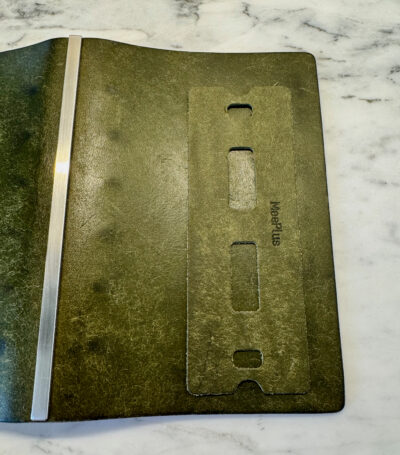
success organizer seven star diary monthly

The daily pages have a column with the half hours from 8am to 10pm, and then grid space at the side. It might not work for people with larger handwriting, but to me, this is a very functional and attractive layout. I also love the retro digital-clock look to the date numbers, and the little quotes and aphorisms at the bottom of each page. At the end of each month, there is a notes page before the next month’s days begin– or at least there is one between March and April, which are the only months I have!

success organizer seven star diary daily agenda diary calendar

This little organizer is quite lovely on its own, but it also came with a bonus: a matching jotter. It’s just slightly smaller than the organizer, and is a simple folder with a secretarial pocket on the left, and a full length pocket on the right, on top of which are strips of leather that will hold a few sheets of paper– four sheets with a square grid were included. This would be a handy item to keep in one’s pocket for quick notes which can later be filed in the organizer.

succes leather jotter

I had never even heard of Succes or the Seven Star Diary brand until I bought this, but I’m sure some readers will remember them. There are various mentions of this system online, often in the context of people talking about organizational systems like Franklin Planners, Dayrunners, Filofax and GTD. The brand seems to have been distributed primarily in Europe, Japan, Israel, and British Commonwealth, but I don’t know if it ever appeared in the US market. If I’d come across this Succes Seven Star Diary in 1981 when I was a kid, I would have been over the moon about it! And many of its design elements are still appealing and inspiring today.

Vintage Journal Ethics

What are the rules around selling and collecting old notebooks that belonged to other people? I’ve recently been wondering about this after seeing certain items for sale on various sites, including a diary with very intimate thoughts and full names included. Nothing was blurred out in the listing, so I was able to google the people and it seemed like they are still alive. One even seems to be kind of a public figure, though not a celebrity or household name.

I don’t think what I found was just coincidental: the names are unusual enough, and the time span matches ages closely enough that there don’t seem to be a lot of other possibilities. Do these people know or care that their personal lives from 40 years ago are out on the internet for public consumption? There were several listings for journals and diaries, with several pages shared for each. Even if the person who wrote the diaries doesn’t care that other people are reading them, what about the other person who is the subject of some entries? They might not have known they were being written about in the first place.
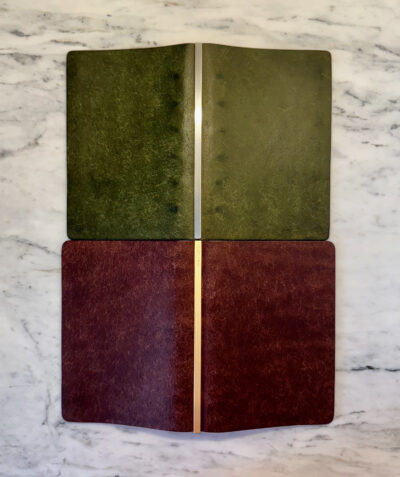
I can’t help feeling like some line has been crossed by that seller. If I had ever lost or thrown out some of my old diaries and they somehow ended up with a reseller, I would hope that person might try to contact me and let me at least try to buy them back. I don’t have a particularly unique name, so it might not work, but I’d be mortified if my private musings were posted publicly without my consent. Maybe the seller did manage to contact the original owner of the diaries I saw for sale and that person didn’t care? But unless permission was given for full exposure by all parties mentioned, I think the names should have been redacted from the listing. Whoever bought the diaries would still see the names, but at least they wouldn’t be out there on the internet for everyone to see.

In my own collection, I have a number of “other people’s notebooks” that still have names in them. I think they’re all old enough that those people are dead, but I have still taken care not to include identifying information in my posts other than the occasional name or innocuous details about people who don’t seem to have any current digital footprint. None of my “other people’s notebooks” have contained any embarrassing details, but I also have one notebook that I bought on eBay that was said to be a sort of diary and sketchbook– it turned out to be mostly diary, seemingly written by someone with serious mental illness. I’ve never even posted about it because it just seemed disturbing and somehow wrong to use it as blog content.

I guess if someone is already a public figure, there may be different ideas about what’s considered fair game– some of Joan Didion’s old diary entries have just been published in a book, and there is some controversy about whether this should have been done without her explicit consent. But some of her published writing was already highly personal, and she must have known that any writing she produced and saved would have been fodder for publication and study after her death unless she gave explicit instructions otherwise.

I guess “consent” and “instructions” are the key words here… maybe in addition to the space for contact details and the “reward if found,” notebooks should should come with checkboxes for “ok to read/sell/publish after my death” and “destroy after my death!”

box full of notebooks and sketchbooks and diaries
Just a fraction of the many notebooks I don’t want exposed on the internet after my death!

Notebooks, journals, sketchbooks, diaries: in search of the perfect page…