Moleskine Monday: A Hand-Crafted Cover

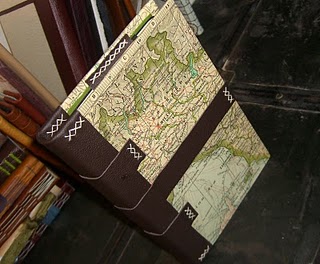
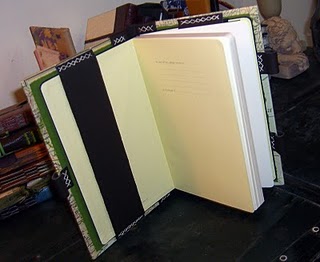
I was very impressed by this beautifully crafted Moleskine cover, made by an artist named Jennifer, as a birthday present for her husband. What a great gift!

Read and see more here: a Red Pumpkin Studio: Happy Birthday Moleskine Cover.

It’s a shame Jennifer doesn’t sell Moleskine covers like this one, but you can see other items including journals at her Etsy shop

Drawn In: A Peek Inside Favorite Artists’ Private Sketchbooks

Drawn In: A Peek into the Inspiring Sketchbooks of 44 Fine Artists, Illustrators, Graphic Designers, and Cartoonists is the latest addition to my growing collection of books featuring artists’ sketchbooks, notebooks and journals. It’s always inspiring to see the best of what people create in notebooks, and to learn what kinds of notebooks they prefer.

Read more about the book in this review: Drawn In: A Peek Inside Favorite Artists’ Private Sketchbooks – Maria Popova – Life – The Atlantic.

Review & Giveaway: Lost Crates

Lost Crates is a monthly stationery subscription service. As with Rad and Hungry, you sign up, pay a monthly fee, and get a box of surprise goodies every month. But while Rad and Hungry offers a selection from a different country each month, Lost Crates aims to give each subscriber a personalized, “curated” selection.
When you sign up, you take a quiz: it asks you your birth year and gender, and then asks you to pick an image that corresponds to your answer to various questions:
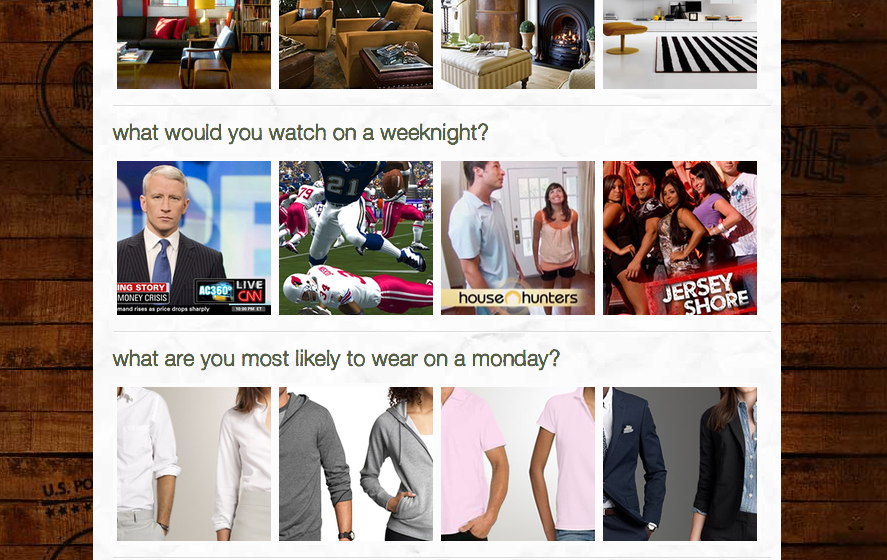
I guess you could argue that the quiz might not be that informative and doesn’t show a ton of diversity– the “what would you wear” choices in particular looked to me like “Do you shop at Banana Republic, Banana Republic, Banana Republic or Banana Republic?” But other questions might show more insight into your design preferences, and the Lost Crates folks use that information to select your stationery items.

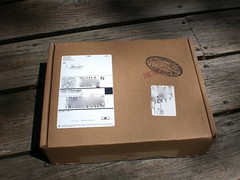
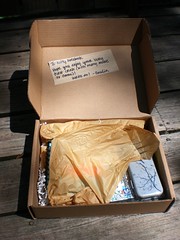
Lost Crates invited me to review their service for free, so I signed up and answered the quiz as truthfully as I could. Here’s the result:
lostcrates1

lostcrates2

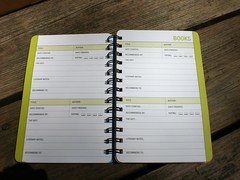
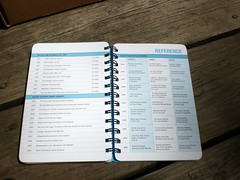
Your “crate” is a nice sturdy box. When you open it, there’s a greeting on the inside of the lid, and your products are nicely wrapped and cushioned in shredded paper. (Not styrofoam peanuts, thank goodness!) They tuck in a card that tells you what’s included.
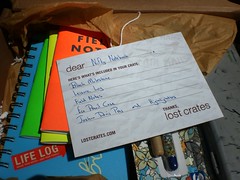
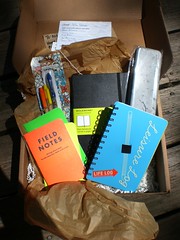
lostcrates3

lostcrates4

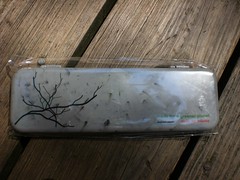
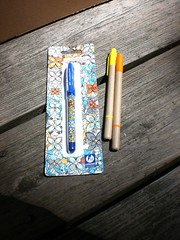
I was very pleased with my selection. I prefer blank and squared notebooks to lined ones, and that’s what I got. I’m not a huge fan of Field Notes, but only because I find their branding a bit much. And I would not buy the pens or the Leisure Log for myself, but I did like them. (The flowered pen is a rollerball that writes quite nicely, the cardboard ones are regular ballpoints, which I don’t love, but the highlighter end is great.) There really wasn’t anything in the crate that made me say “ugh, that’s not me at all!”
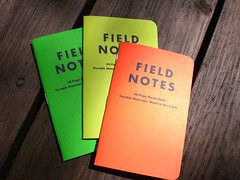
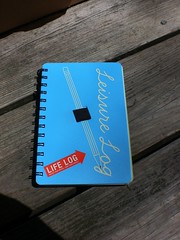
lostcrates6
lostcrates7
lostcrates8
lostcrates9
lostcrates5
lostcrates10

Of course, given that I write this blog where I very publicly describe all my quirky notebook preferences, it’s not exactly a fair test of their ability to match products to people. I was tempted to sign up again under a friend’s name and answer all the questions differently to see what I’d get, but I didn’t feel like spending $38! That is the monthly cost, which seemed a bit steep to me– you have to be a pretty committed stationery freak to want to spend that much every single month on products you may or may not like. There is no “satisfaction guaranteed” promise– if you don’t like your stuff, you are asked to send them feedback and consider retaking the quiz. They don’t accept returns, but you can cancel any time (it has to be by the first of the month to avoid being billed for that month’s crate).
But on the flip side, $38 probably was a good price for what I received. The Moleskine lists for $17.95, the Leisure Notebook has a list price of $12.24 according to Amazon, who sell it marked down to $9.04. A Field Notes 3-pack is $9.95. So right there you have about $40 worth of stuff without counting the pens and pencil box. And the shipping is included, within the US.

I might not be the best target customer for this service– though I am definitely a stationery addict, I have pretty particular tastes. I also live in New York City, where I have access to stores with a huge selection of stationery that I can look at and touch before buying it. (And I’m also a reviewer who needs to keep some space free for samples that arrive frequently!) But if you are a stationery addict who likes surprises, and if your local shopping options don’t offer a lot of excitement, it’s certainly worth a try. I’d love to hear from others who have received a crate or two– did the quiz accurately reflect your tastes? (And what kind of stationery do you get if you say you watch Jersey Shore?!)

I’m going to give away some of these goodies to a randomly selected reader. You can enter in any or all of these ways:

On Twitter, tweet something containing  “@lostcrates” and “@NotebookStories.”

On Facebook, “like” the  Notebook Stories page and post something containing the words “Lost Crates” on my wall.

On your blog, post something containing the words “Lost Crates” and “NotebookStories” and link back to this post.

The deadline for entry is Friday August 26 at 11:59PM, EST. Good luck everyone!

Notebook Addict of the Week: Laurie

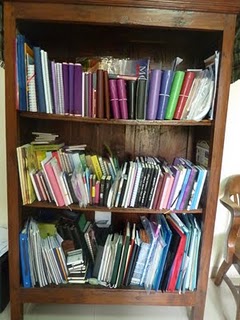
This week’s addict is a blogger you all should know: Laurie from Plannerisms. Check out her fabulous collection, comfortably (but crowdedly)housed in its own bookcase:

She points out:

Note that this bookcase is nearly 6 feet tall. Also notice most shelves are two rows deep.

Man, that’s a lot of notebooks and planners! One of those shelves is actually sagging!
Read more at Plannerisms: My collection, where Laurie shows close-up photos of each shelf, and provides details on the various brands.

Thanks for sharing your collection, Laurie!

Moleskine Monday: A Review of “Niche” by James Harkin

A few months ago, I posted a link to a book called Niche, by James Harkin. I’d noticed the book because it includes a chapter about Moleskine… and then the book’s author noticed my post and kindly offered to send me a copy to review!

With the subtitle “Why the Market No Longer Favours the Mainstream,” the book poses the argument that companies can no longer try to be all things to all people, and that success will be found by defining one’s niche and focusing on it, as well as learning how to exploit the enthusiasm of a niche audience. The author uses a number of companies as examples of success and failure, though I thought they were sometimes used a bit too self-reinforcingly– the now-defunct Woolworth’s is cited as an example of the irrelevance and failure of the all-purpose general store, but the author talks briefly about Wal-Mart without really explaining how their decidedly un-niche-y, very mainstream success fits into his thesis. Woolworth’s wasn’t killed by specialist boutiques, it was killed by suburban stores like Wal-Mart doing a bigger, better job of offering something for everyone and drawing shoppers away from “Main Street” downtown shopping areas.

But Harkin gives a very compelling example in his discussion of the Gap, whose sales have declined as they’ve struggled to figure out who their target customers are, vs. the “if you’re over 30, stay away” approach of Abercrombie & Fitch. Starbucks is another interesting example– they got their start by targeting the niche of coffee snobs vs. the mainstream Maxwell House drinkers, but now that they’ve become a mainstream coffee behemoth, they’ve had some struggles with their identity and profitability, though I think they’d still be considered a success by any measure. I think my issue here is that the subtitle of the book suggests that mainstream= loser and niche=winner, which is misleading (and the content of the book is certainly more nuanced). Moleskine is certainly a fantastic example of a niche success, but that doesn’t mean that Mead is a mainstream failure. Same with Apple vs. Windows (and I have to note that although Apple is mentioned on the cover, the coverage of the company consists of one brief mention 3 pages away from the end of the book).

Let’s get away from the question of winners vs. losers: the book does give a lot of great ideas and inspiration for how niche-oriented businesses can succeed. The Moleskine part of the book comes in a chapter about people “sorting themselves into flocks.” Moleskine is the perfect example of envisioning a product that would appeal to a certain type of person– a type that can’t be linked to any particular demographic group, but rather to a shared mindset. Instead of marketing a generic notebook for generic users, Moleskine linked their product to a rather amorphous idea of art, travel and European culture– and then they let their users run with it. The product itself hit a sweet spot in terms of size, aesthetics, quality and paper options, and the “history” and “identity” behind the brand clicked with how a certain kind of people wanted to define themselves as creative, cosmopolitan, and “different.” The internet then allowed the fans to build communities like the Moleskinerie blog and Flickr groups (and the blog you are now reading). Moleskine subtly helped these grow and flourish but the “fans-speaking-to-fans” aspect made it feel like a club people wanted to join. (What’s not covered in the book is that as Moleskine has grown as a company, they’ve gotten more corporate about managing their brand, with draconian policies on using the trademarked Moleskine name on fan websites, and by taking over the Moleskinerie blog and arguably ruining it in the process.)

And as for the notebooks themselves, here’s my favorite quote from the book:

In [1996], Modo & Modo trademarked their brand as Moleskine (with a capital ‘M’) and located a manufacturer located in China capable of assembling notebooks to their detailed design specification. The first Moleskine notebooks arrived from China to be hand-finished in Milan in 1997: that year Modo & Modo sold five thousand of them to their Italian distributors, and the following year it shifted thirty thousand.

There you have it, in case there was any doubt that Moleskine notebooks were ALWAYS made in China. Maria Sebregondi and Francesco Franceschi of Moleskine were interviewed for Harkin’s book, so this is pretty much from the horse’s mouth. It’s fascinating to me that the user community they’ve cultivated is so passionate about the product and invested it its mythology that many of them are convinced that Moleskines used to be made in Europe, and “aren’t as good any more now that they’re made in China.” And there’s Harkin’s message again– as Moleskine approaches more “mainstream” status selling tens of millions of notebooks a year, they can’t control their production quality quite as closely, their core audience may become disillusioned, and the marketing magic might begin to fade. Moleskine already seems like a mainstream Goliath when you look at upstart challengers like Field Notes or Doane Paper who are carving out their own even smaller niche.

There’s lots more food for thought in this book, with examples from all sorts of industries. It’s an entertaining read, and I found myself scribbling lots of notes in the margins. Though it was published in the UK, most of the companies cited are American (and global), so it’s very relevant for anyone with an interest in business and marketing. If you’re not in the UK, Amazon is probably your best bet for finding a copy.

Notebooks, journals, sketchbooks, diaries: in search of the perfect page…