Zero-Effort Journaling©

Sometimes it seems like there are so many systems and methods for using notebooks– Bullet Journaling is the most famous, I suppose. And then there is GTD, though that doesn’t have to be notebook-based. I also saw a link recently to the “Life at a Glance System” of journaling (via The Pen Addict).

Some of these systems are all about productivity, but I can’t help wondering how productive it is to have to figure out all these rules and symbols and pages recapping weeks and months and years. I think we’re all attracted to the idea of a system that will somehow optimize our performance, but to me it seems like if we’re always searching for systems, we might be losing our focus on the end goals. Do note-taking methods and journaling systems just over-complicate things?

Then there’s the aesthetic considerations: Bullet Journaling has a sub-set of users for whom it seems to be all about the set-up and decoration of the pages (and displaying them on Instagram). And it’s not just Bullet Journalers– many other notebookers use a variety of inks and pens, stickers, calligraphy, drawings and doodles, vintage stamps and ephemera to give each page a colorful, highly-designed look. Using a shitajiki, aka pencil board or writing board, is also popular– this is a guide with lines that can be laid under a blank page to make it easier to keep your handwriting aligned.

I do get the attraction. I have a whole Pinterest board dedicated to “Beautiful Notebook Pages,” and many of the images there are of colorful, decorated, precisely organized pages that have taken some effort. But my attention is also grabbed by notebook pages that look interesting by accident, because they are densely scribbled or beat up or just somehow infused with personality and purpose.

notebook stories beautiful notebook pages pinterest page screen shot

As for my own notebooks, I use some colored inks, and I sometimes paste in images or play with attempts at calligraphy, but most of my pages don’t look beautiful at all. My handwriting can be tidy and attractive when I want it to be, but often it’s just an uneven scrawl. Even in sketchbooks where I do drawings I’m proud of, I often think the pages don’t look as well-composed as they do in other artists’ sketchbooks I see.

four open journals with writing drawing and sticker
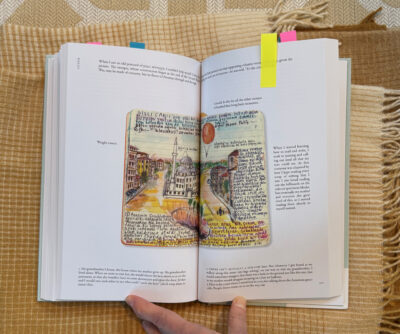
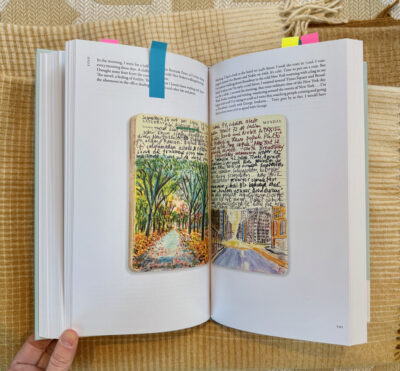
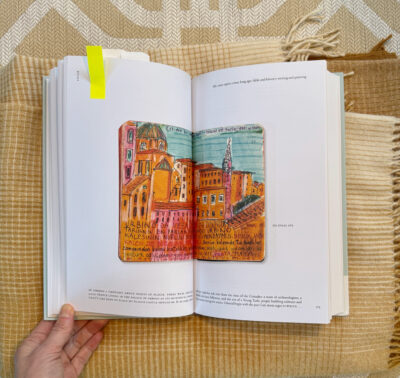
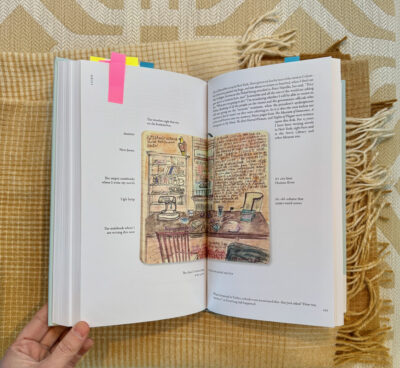
Random non-beautiful, non-systemized notebook pages from my own journals.

But I’m actually a pretty productive and well-organized person anyway. My notebooks work for me, and I enjoy using them. So rather than admit I’m just not that good at making them look pretty, I’ve decided I have to proselytize about my own notebooking method, which I’ve decided to call “Zero-Effort Journaling©.” The rules for this system are very simple:

  • Rule 1: Write stuff down in notebooks whenever you feel like it
  • Rule 2: DGAF about how it looks
  • Rule 3: two rules are enough

I guarantee this method will make you more productive than spending all those extra hours coloring little pumpkins on your October spread with 3 shades of orange markers.

If you want to learn more in order to truly optimize your use of the Zero- Effort Journaling© system, you may be over-thinking it! But I will consider going full internet-guru and maybe sell downloadable PDF guides with further instructions, or setting up some symposiums, or even offering one-on-one consultations with me for what I’m sure you’ll consider a very reasonable hourly rate.

In all seriousness, though, I don’t mean to suggest that there’s anything wrong with being creative and artistic in your notebooks. Maybe Rule 3 should actually be “if you enjoy spending time making your notebooks look pretty, go for it!” But then Rule 4 would have to be “don’t let it get to the point where you feel stressed and inadequate because your notebooks don’t look pretty enough.” If your goal is to use a journal for mindfulness, productivity and record-keeping, you may find that the Zero-Effort Journaling© approach is all you need.

This post contains Amazon affiliate links, from which I earn a small commission on purchases.

Vintage Succes Seven Star Diary

Most of my collection of vintage looseleaf notebooks is either basic black ring binders from the first half of the 20th century from makers like Marquette and Wilson Jones, or Filofax organizers from the 1980s and 1990s. I don’t have that many other brands, so I was happy to add this Succes organizer to my collection.

succes organizer packaging
succes organizer in box

That isn’t a typo– the brand is Succes, with one S. (Well, two Ss but only one at the end!) Succes is a Dutch company that has existed since 1928, first as the publisher of a business magazine, then branching out into producing leather agenda covers in 1932. They are still in business today, selling their own and other brands of organizers.

success organizer

My Succes organizer dates to 1981, based on its calendar insert. It does not appear to have ever been used. The leather is a lovely cordovan or oxblood color, with a smooth, slightly shiny texture. It looks like the texture imitated by the faux-leather covers of Moleskine notebooks, except that it also has some slight lines or creases along it. The cover has metal corner protectors, in a silver metallic color to match the rings. I’m not usually a fan of these corners, mainly because they usually seem to be in a gold or brass color, but they do give the Succes notebook a somewhat more formal look, and should keep the corners from getting bent and scuffed. There is a small Succes logo on the back cover. The size and no-fastener design are very similar to many of the pocket slim Filofaxes I’ve reviewed.

metal corners on succes organizer
succes logo on back of organizer

Inside, there’s a nice arrangement of pockets that make this a good wallet– on the left a secretarial pocket with another pocket on top, and on the right a full-length pocket and slots for 4 cards. The pockets have a contrasting liner in fabric and leather, while the spine behind the rings is backed with leather.

succes seven star diary 1981
succes organizer pockets

The rings are about 1cm in diameter from side to side– they have a slight oval shape which allows for less wasted space than a perfectly circular ring. They have a nice snappy mechanism and close without any gaps.

succes organizer metal rings

The Succes organizer came with what must be only part of its original inserts, which show the brand name Seven Star Diary. This was apparently the sub-brand Succes used for marketing a Filofax-type organizer system. The front page has space for contact details, and also serves as the index tab for the “diary” section. The other tabs are labeled “months,” “cash,” “alphabet,” and “notes.” It’s interesting that they have an “alphabet” tab– unlike Filofax, where they label it “addresses,” this tab acknowledges that you might file other information alphabetically too.
Each tab serves a double purpose, with yearly calendars, lists of holidays, weights and measures, first aid tips, and space to fill in with “personal memoranda” facts like clothing size, insurance info, and what model typewriter and binoculars you own! The narrow area designated for “train or bus service” with “to/from” columns puzzles me– I’m not sure how you’d fit much useful information there. But I love this concept overall– why should divider tabs be blank when you could pack them with useful information you might want to refer to?

success organizer divider calendar diary page
success organizer agenda page
succes organizer seven star diary index tabs

The calendar only has pages for a couple of months, so I’m guessing that the original system here was designed to have you only carry the daily pages for a couple of months at a time, and then note longer-term items in monthly pages. There are month-on-two-page spreads for all of 1981 and through March 1982. I love the use of the square grid across the daily and monthly calendar pages– nice and flexible while also helping you keep things neatly aligned.

success organizer seven star diary monthly

The daily pages have a column with the half hours from 8am to 10pm, and then grid space at the side. It might not work for people with larger handwriting, but to me, this is a very functional and attractive layout. I also love the retro digital-clock look to the date numbers, and the little quotes and aphorisms at the bottom of each page. At the end of each month, there is a notes page before the next month’s days begin– or at least there is one between March and April, which are the only months I have!

success organizer seven star diary daily agenda diary calendar

This little organizer is quite lovely on its own, but it also came with a bonus: a matching jotter. It’s just slightly smaller than the organizer, and is a simple folder with a secretarial pocket on the left, and a full length pocket on the right, on top of which are strips of leather that will hold a few sheets of paper– four sheets with a square grid were included. This would be a handy item to keep in one’s pocket for quick notes which can later be filed in the organizer.

succes leather jotter

I had never even heard of Succes or the Seven Star Diary brand until I bought this, but I’m sure some readers will remember them. There are various mentions of this system online, often in the context of people talking about organizational systems like Franklin Planners, Dayrunners, Filofax and GTD. The brand seems to have been distributed primarily in Europe, Japan, Israel, and British Commonwealth, but I don’t know if it ever appeared in the US market. If I’d come across this Succes Seven Star Diary in 1981 when I was a kid, I would have been over the moon about it! And many of its design elements are still appealing and inspiring today.

Vintage Journal Ethics

What are the rules around selling and collecting old notebooks that belonged to other people? I’ve recently been wondering about this after seeing certain items for sale on various sites, including a diary with very intimate thoughts and full names included. Nothing was blurred out in the listing, so I was able to google the people and it seemed like they are still alive. One even seems to be kind of a public figure, though not a celebrity or household name.

I don’t think what I found was just coincidental: the names are unusual enough, and the time span matches ages closely enough that there don’t seem to be a lot of other possibilities. Do these people know or care that their personal lives from 40 years ago are out on the internet for public consumption? There were several listings for journals and diaries, with several pages shared for each. Even if the person who wrote the diaries doesn’t care that other people are reading them, what about the other person who is the subject of some entries? They might not have known they were being written about in the first place.

I can’t help feeling like some line has been crossed by that seller. If I had ever lost or thrown out some of my old diaries and they somehow ended up with a reseller, I would hope that person might try to contact me and let me at least try to buy them back. I don’t have a particularly unique name, so it might not work, but I’d be mortified if my private musings were posted publicly without my consent. Maybe the seller did manage to contact the original owner of the diaries I saw for sale and that person didn’t care? But unless permission was given for full exposure by all parties mentioned, I think the names should have been redacted from the listing. Whoever bought the diaries would still see the names, but at least they wouldn’t be out there on the internet for everyone to see.

In my own collection, I have a number of “other people’s notebooks” that still have names in them. I think they’re all old enough that those people are dead, but I have still taken care not to include identifying information in my posts other than the occasional name or innocuous details about people who don’t seem to have any current digital footprint. None of my “other people’s notebooks” have contained any embarrassing details, but I also have one notebook that I bought on eBay that was said to be a sort of diary and sketchbook– it turned out to be mostly diary, seemingly written by someone with serious mental illness. I’ve never even posted about it because it just seemed disturbing and somehow wrong to use it as blog content.

I guess if someone is already a public figure, there may be different ideas about what’s considered fair game– some of Joan Didion’s old diary entries have just been published in a book, and there is some controversy about whether this should have been done without her explicit consent. But some of her published writing was already highly personal, and she must have known that any writing she produced and saved would have been fodder for publication and study after her death unless she gave explicit instructions otherwise.

I guess “consent” and “instructions” are the key words here… maybe in addition to the space for contact details and the “reward if found,” notebooks should should come with checkboxes for “ok to read/sell/publish after my death” and “destroy after my death!”

box full of notebooks and sketchbooks and diaries
Just a fraction of the many notebooks I don’t want exposed on the internet after my death!

Notebooks I’m Using Now: Summer 2025

It’s been ages since I updated my “using now” photo, and while some things have stayed the same, there have been some changes along the way.

I’m still using my Nolty Gold diary/planner to log exercise, meals, to-do lists, and grocery lists, as well as noting appointments and keeping track of habits. More details here: How I Use My Nolty Gold Planner

nolty planner 2025 on gravel background

I still have a Moleskine sketchbook going at all times. I go through phases when I draw a lot, and then phases when I don’t. I’m in a mostly not-drawing phase right now, so my current sketchbook has been in use since March.

My journal tends to alternate between squared Moleskine and plain or dotted Bindewerk Linen Travel Journal. At the moment, I’m actually using a plain Moleskine. I do find myself missing the squares! I’m not good about keeping my handwriting aligned on the page, so squares or dots are helpful. I’ve also thought about using some sort of guide sheet under the page but I don’t have anything and am not sure I care enough to bother.

two pocket moleskine notebooks, sketchbook and journal
Moleskine sketchbook and journal
moleskine journal spread with a quote and images
Prettier-than-average page in my Moleskine journal

For the last couple of years, I’ve also had a fourth notebook in the mix. In my 2024 post Every Day Carry Notebooks, I talked about how I’d added the Filofax Guildford Extra Slim, despite finding it somewhat redundant. Since then, I’ve swapped in various other refillable notebooks from my collection, including some that were featured in my History of the Pocket Slim Filofax series of posts. It’s easy to just swap the contents from one notebook to another, so I’ve tried at least 5 or 6 in the past year, some for very short periods of time. The one that stuck the longest other than the Guildford was the Filofax Grosvenor whose modification to larger rings I documented in this post: Vintage Filofax Modification. I really loved using it, despite feeling like I should find a better way to attach the rings! But I recently made yet another swap to a MeePlus notebook that I received as a sample for review. I’ll be doing a full review soon, but spoiler alert: I really like it!

I use this refillable looseleaf notebook for longer term lists and notes that I know I’ll want to refer to beyond the timeframe of my journal (about 3 months) or my yearly diary/planner.

meeplus leather refillable looseleaf notebook
MeePlus notebook

So that’s a quick look at my most frequently used notebooks. I’m also still using and loving my personal size Filofax Gloucester that I use for my job. Details here: My New Work Notebook: A Surprise Filofax. I am also using a Field Notes notebook for my French class, a Moleskine watercolor book for the occasional dabbles with paint, a Nebula Casual Note as a desktop scratch pad, and a Nolty #1221 for my weekly image diary. I also continue to use a Louise Carmen notebook— sans actual notebook– as a wallet.

So that’s the update! I often feel like I should be trying to use some of the other brands from my collection, but I’m a creature of habit, and I’ve found a routine that works for me.

Nolty, Moleskine and Meeplus notebooks

Vintage Master-Craft Loose Leaf Notebook

Today we’ll take a look at another item from my collection of vintage notebooks, a Master-Craft loose leaf binder. At first glance, it looks quite similar to some of the other pocket size loose leaf notebooks I own but there are a couple of interesting differences.

vintage master-craft notebook

This Master-Craft notebook was quite well-used. The exterior is scuffed in various places, and you can see impressions of the rings where the leather finish started to wear thin. There’s even some kind of crusty substance stuck on the back cover. But I’m sure this notebook was quite handsome when it was new. The cover seems to be made of leather, with a pebbly grain on the outside and an inner texture that resembles the tiny dimples on Moleskine’s faux-leather covers. The front cover has a debossed border around 3 sides, while the back cover has a stitched border. The original owner’s name is stamped on the front cover. The notebook measures about 3-1/2″ x 5-7/16″ x 9/16″ thick.

master craft notebook moleskine size comparison
Master-Craft notebook vs. pocket Moleskine

The spine of the Master-Craft notebook is one of the unusual details. There seems to be a separate strip of leather that runs down the spine, wrapping over the top and bottom edges. My guess is that it was made this way to hide whatever fastening mechanism secures the rings onto the cover. But it also looks nice, and seems to reinforce the ends.

master craft notebook leather spine
master craft notebook spine

Inside the front cover there is a gold-stamped brand logo reading “Made in the shops of Master-Craft” and the model number 5010 1/4.

made in the shops of master-craft loose leaf

Inside the back cover is a nice curved-edge pocket, the attachment of which is the reason for the stitching on the outside.

master craft ring binder

The rings are rather dulled with age, with some spots of rust, but they still open and close with a satisfying snap. I love that the rings are oval, not circular. The “1/4” in the model number may refer to the ring diameter being about 1/4 inch if measured from the metal plate that covers the ring mechanism. The diameter side to side is more like 3/8 inch.

This notebook came with lovely black end sheets with a striated texture. Many of the lined sheets are blank, but the ones with writing seem to have phone numbers, a list of some religious books, and notes about different models of water heaters.

master craft notebook interior end sheet
master craft notebook interior page with notes

The coolest thing about this notebook is that it includes a 1937-1938 calendar page that was probably included when it was originally purchased. The calendar page also mentions the Master-Craft brand, and reminds the owner how to open the rings correctly. I love knowing that this notebook is at least 88 years old!

I found some information about Master-Craft here, as part of a history of an industrial building in Kalamazoo, MI. Master-Craft came into existence in 1929, as a descendant of the Remington-Rand Company, which in 1927 had merged with the Loose Leaf Binder and Equipment Co. That company had previously been called The Kalamazoo Loose Leaf Binder Company, and was said to be the largest loose leaf binder manufacturer in the world. I had found another eBay listing for a notebook where the brand logo said “Made in the shops of Master-Craft, Kalamazoo, U.S.A.” but since Master-Craft moved out of Kalamazoo in 1935, my notebook doesn’t mention that location. Yet another eBay listing shows the company name as “The Shaw-Walker Company, Master-Craft Division, Kalamazoo, Mich.”

I don’t know where they moved to when they left Kalamazoo, but I found a business listing for MasterCraft of Seattle which notes that they make loose leaf binders and other office supplies. I can’t tell if they are still active, as their last Facebook post was dated 2015, and as of this writing their website doesn’t seem to be working. I don’t think there is any connection to the MasterCraft Boat Company or the MasterCraft home building company.

I would love to know more about the history of Master-Craft. It sounds like it was a big employer in Kalamazoo for quite a while, as my online searches also turned up various obituaries of people who had worked there. I wasn’t able to find out much else about C. A. Seiple either, other than that someone of that name died in the 1950s. So this is yet another old-fashioned black loose leaf notebook with tantalizing links to the past, but whose full history will remain an enigma.

Do Notebooks Destroy Memorization Skills?

In Roland Allen’s The Notebook: A History of Thinking on Paper, there’s a mention of how Socrates disapproved of writing things down because he thought it would ruin people’s ability to memorize things. At least I think there something about it in that book… but I can’t find either “Socrates” or “memory” in the index, so maybe I’ve forgotten the true source of that information. This in itself is perhaps an illustration of the point of this post. I didn’t write down a note about the Socrates story, and since I didn’t, I can’t remember where I found it.

I at least didn’t make it up, according to this site. I might also have read about it in Moonwalking With Einstein:The Art and Science of Remembering Everything, a fascinating book about memory and the people who train themselves to accomplish extreme feats like recalling thousands of digits of pi, or the exact sequence of a deck of cards after flipping through it quickly once.

A friend of mine is always saying I’m a freak because I remember so many things– I can tell all sorts of stories about random things that have happened to me from the age of 3 on, can remember where certain college classmates I was never even friendly with went to high school, and can name actors whose movies I’ve never seen when someone else can’t come up with the name. I seem to be particularly good at a certain kind of visual recall, especially for faces– I’ve been known to recognize someone I met once, a decade earlier.

moleskine notebook journal
Moleskine notebook used as a journal

But this same friend who marvels at my memory is amazed that I can’t keep a grocery list in my head or remember to go to appointments if I don’t have them written down in my planner and in my electronic calendar, with an alarm. Though she can’t remember names or faces or childhood stories the way I can, she has no trouble keeping track of her shopping and to-do lists mentally. She’s the person who used to use a Filofax (featured in this post: Filofax Winchester from the Late 1980s) but now doesn’t really use a notebook or paper planner at all. She puts some appointments in her phone calendar, but might not bother if it’s a dinner with a friend a couple of days later. If I don’t write those dinners down, I’ll forget and plan something else!

So obviously different people have different kinds of memory skills. But might our habits of writing things down also have an impact? When I go back through my old notebooks, I sometimes find descriptions of things I don’t remember, or at least hadn’t thought about in years. Did the act of writing them down somehow tell my brain “don’t worry, this is backed up elsewhere, you can delete.” And on the flip side, all those childhood stories, casts of movies, and people I only met once are generally things I have never written about in a notebook.

Age is definitely a factor– there are things I know I used to remember and now don’t, like names of certain teachers and classmates. When I was younger, it never really occurred to me to keep a record of such things in case I forgot them later. Most of us who keep diaries and journals probably aren’t usually doing it for the purposes of reinforcing our memory– often it’s more about just processing feelings and understanding them better by articulating them in writing. I’m reminded of the Field Notes slogan “I’m not writing it down to remember it later, I’m writing it down to remember it now.”

Or it’s just a ritual– the lady who kept a diary for 90 years probably didn’t do it just so she’d remember exactly what happened every day of her life. Though that kind of record-keeping can be handy sometimes– I’ve referred back to my own diaries to answer random questions like “when did I last eat red meat,” which I’d never be able to do with my brain alone. In recent years I’ve become more conscious of trying to add notes about current events and politics to my journaling. The world seems like it is changing very fast, and maybe someday I’ll want to remember how I felt about it at the time, without my memories being colored by hindsight.

nolty diary planner
Nolty diary where I write my grocery lists, to-do lists, appointments, what I ate, etc.

Back to The Notebook, the final chapter is about the idea of the “extended mind,” where certain kinds of thought are only made possible by external tools beyond the brain itself. Allen describes the example of a man named Otto who has Alzheimer’s disease. He writes all new information he learns in a notebook, and refers to that notebook when he needs old information:

So long as one trusts the information stored in the notebook, relies upon it, and uses it, there is — philosophically speaking– no meaningful difference between the notebook and the mind. Therefore Otto’s mind has expanded to include his notebook, and your notebook– if you use it as Otto does– may become a part of yours.

I’d love to know how others feel about this. Has using a planner made you less able to remember what you need to do just using your brain? Do you keep a journal or log of your life to be able to remember the past? Do you consider your notebooks a part of your mind?

This post contains Amazon affiliate links, from which I earn a small commission on purchases.

Papier Platz Notebook Review

It’s really quite dangerous for me to shop for pen refills at Jet Pens– I think I’ll be disciplined and just get what I need, but then I can never seem to resist throwing in a notebook…

…such as this little cutie made by Papier Platz.

papier platz small things notebook front cover

Though the name sounds French or German, this is made in Japan by a small company that “collaborates with artists and illustrators to produce charming washi tapes and stickers.” This notebook is a collaboration with the Japanese artist Eric Small Things aka Erico Matsubara.

papier platz notebook back cover

The Papier Platz notebook is smaller than my usual go-to size, measuring 5-1/8′ x 3-3/8″ x 5/16″ thick. This makes it very pocketable. The outside is a removable plastic cover with clear pockets inside to hold the covers of the page block. There is no branding anywhere except on the back cover.

papier platz notebook

The page block inside is very basic on its own– it’s not meant to be used without a cover but it’s really nicely made with nice grey cardboard end sheets, so it actually looks quite presentable!

papier platz notebook and cover

Inside, there are pale grey endsheets, and a ribbon marker in a beautiful shade of blue. It doesn’t look as nice in these photos, but I love this blue ribbon so much I want to buy a big spool of it and change out all the ribbon markers on my other notebooks now!

papier platz ribbon marker

The construction of the Papier Platz notebook is very refined– I love when there are a larger number of signatures with fewer pages, as you see here– it always seems to make the spine more flexible and the notebook opens more flat.

papier platz notebook opens flat

The paper has a 4mm grid made of dotted lines. No paper weight is specified. It’s super smooth and silky, so it feels great with any pen or pencil. But it’s very thin, so a couple of my wettest pens bled through a bit, and show-through was a little worse than average. The Jet Pens listing calls this fountain pen friendly, and I would agree, as the inks look very vibrant and there’s no feathering, but you’d want to avoid the wettest nibs and anything where you’re applying a little pressure to flex a nib.

papier platz small things pen test
papier platz small things pen test back of page

Jet Pens also has this in a few other colors/designs. Their price is $10.25, which seems a wee bit high given that the sticker on the packaging says the price in Japan is 990 yen, which is about $6.83 right now. But given tariffs and other costs of importation, this may be a normal level of markup these days.

papier platz notebook price in yen

This is a simple but charming notebook–I love the precise craftsmanship and high quality and cute design touches. If you want a small, stylish and fountain pen friendly memo book or pocket journal, I think the Papier Platz notebook is a great choice.

I purchased this notebook with my own funds and have not been compensated for this post.

Technical Update

For anyone who might have been put off by some unwieldy cookie consent banners on this blog, I hope you will now see an improvement. Thanks to a new reader who sounded the alarm, I dug deeper into how to properly set up a consent management system, and changed the default message so it will now allow people to “reject all” in one click. I apologize to anyone who has been annoyed by it in recent months! I’m very much an amateur when it comes to the technical side of running a website, and it’s gotten so much more complicated over the years! But thanks to feedback from the community, I’ve learned a lot and continue to strive to make this site valuable, entertaining, and not infuriating to use.

It takes a village… and notebook people are the best!

How to Use a Notebook When Your Life Isn’t Busy

A few months ago, I wrote about my latest work notebook, a vintage Filofax. It’s working so well for me that I wish I had bought a Filofax in this size years ago to use for this purpose. I can’t help regretting all those wasted decades of using random office supply closet notebooks (as well as some nicer notebooks received as samples or bought since starting this blog)! Now that I have found a satisfying set-up, I think I’ll be sticking with it, but the question is how long will I continue to need a work notebook if I am likely to retire within the next decade? This is just one more indication of my notebook addiction– I’m worried that if I stop working, I’ll have fewer notes to write, and fewer reasons to use notebooks!

filofax gloucester
See My New Work Planner: A Surprise Filofax for more details

But I’m not alone. I recently saw a Reddit thread where someone asked for suggestions on how to fill a Filofax when your life isn’t very busy. Sometimes the desire to use notebooks is greater than the actual need to use notebooks. One of the all-time most visited posts on this site is 10 Uses for Spare Notebooks, where there are 165 comments suggesting ideas: gratitude journal, dream journal, doodle notebook, writing songs, writing down puns and jokes, keeping a food diary, keeping a friend diary, and many many more.

I think my own desire to use notebooks is due to a few different factors:

  • Tactile sensations: A nice pen on a smooth notebook page is just a sensual pleasure, and notebooks with nice shapes and cover textures are just enjoyable to hold. Maybe it’s just my equivalent of a fidget spinner.
  • The brain dump: Some of us just gravitate to writing things down, to work out what’s going on in our lives, or organize ourselves with lists. It’s become more and more of a habit for me over the years.
  • Record-keeping: I like being able to refer back to see what I did at a certain time, where I went on a trip, how I felt about an experience. It’s helpful to have memory prompts.
  • Feeling productive: This can be creative productivity if I’m drawing in a sketchbook or writing an article, but what I think I love even more is having lists of things to do and then crossing them off when I’ve done them.
  • Feeling active: A planner full of events and appointments makes me feel like my life is full– if they’re work appointments, it can tie to the productivity impulse above, or it can mean I’m immersed in cultural events and connected to friends and community.
nolty efficiency notebook planner
(See How I Use My Nolty Planner for more details)

So yes, an empty notebook can be a symptom of … well, I won’t say an empty life, but perhaps a life that is lacking in things that I value. (And that aspiration to a creative, productive, social and cultured life is exactly what most notebook marketing tries to tap into!) But there are other reasons to use notebooks, whether or not you really “need to.” Fill a page with squiggles if you feel like it. Write your grocery list. Track what you’ve watched on TV. Log your sleep. Paste in some pictures. Whatever. If you like notebooks, and want to use notebooks, you’ll be able to find a way.

The History of the Pocket Slim Filofax, Part 4: Oddities and Alternatives

In Parts 1, 2 and 3 of this series, I traced the history of “pocket slim” Filofax models– pocket size, with no snap closure, mostly having smaller rings and no pen loops. But after poring over every catalog in the Philofaxy archives to build up my chronology, there are still some “pocket slim” models I can’t identify.

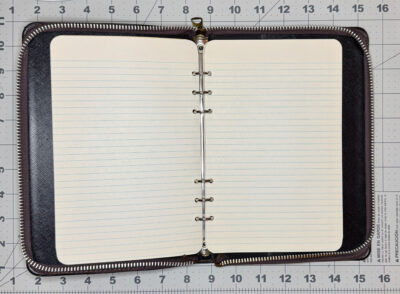
I’ll start with what must must be the oldest one. I found this Filofax on eBay (and know at least one reader also spotted it there!). The exterior is leather, with a texture that reminds me of the faux leather on Moleskine notebooks. It is also pretty similar to the leather of the pocket slim Lincoln Filofax I own. Inside, it is lined with fabric, has 11mm rings, and has no pockets at all. It says it is made in England and has a product code of UIB– not sure if that is a number 1 or capital I, but I haven’t found this model number in any catalog, and can’t even figure out how it might relate to the number/code system they used in the early days– the closest I’ve seen is the A1 and N1 numbering for “Jottas” in the c. 1979 catalog. The rings are just like the ones in my oldest kid leather Filofaxes, so my best guess is that this dates from the 1970s or early 1980s, sometime before they re-introduced their pocket size as a more upscale wallet-style organizer.

filofax u1b uib notebook
filofaz u1b
filofax u1b

This next Filofax caught my eye due to the striking color– the mustard yellow seemed so unusual! The style here is just like the kid leather pocket organizers from the late 1980s, but the leather is a bit different, and it has a stiffer construction, similar to the iguana leather model I covered in part 1. There are no codes stamped inside the pocket, and the inside just says “Filofax England.” This was another purchase from a seller in Japan, so I suspect it was a special model made just for that market, probably around 1990 or 1991. One feature that threw me off was that it has the 6-ring configuration of models dating from 1994 and later, but close inspection shows that this is likely due to the rings having been replaced at some point, as you can see that the backplate has been cut to fit the smaller distance between the tabs. And if you really squint, you can see faint traces of the original 4 rings pressed into the leather.

yellow filofax
yellow 1990 filofax
yellow filofax japan

The final Filofax from my collection is another enigma from Japan. This one just says Filofax on the inside front cover, and there is a debossed “F” logo in an oval on the front instead of on the spine. It’s a lovely design in smooth black leather, with a decorative seam near the spine. Inside there’s a secretarial pocket and a full-length pocket on the left, and a full length pocket with credit card slots on the right. The leather inside has more of a grainy texture. With what seems to be an original 6 ring design, and no “made in England” noted inside, this seemed likely to date to 1999 or later. Not having a model name stamped inside suggested it was pre-1998, but I thought that might have been different for Japanese variants.

I went through all the catalogs trying to match this design up to any of the UK/US models– some candidates that had a seam in the design were the Hamilton, the Durham and Kensington from 1999, the Dorchester and the Hampshire, but I ruled them all out as being too different in leather, pocket designs or other features. My best guess is that this is a variant of the Filofax Richmond from 19981999— some sizes in the Richmond don’t have a side seam, but the Deskfax version did. The A5 Richmond had a side seam and the same kind of credit card slots. The description of the Richmond made it sound like it had a totally different leather with a grainy texture, but I realized that the texture might match the interior of mine. (See Filowiki for the best photos of various Richmonds.) I think the outside probably used to have that texture too, but has worn into a smoother and shinier texture due to many years of use– it’s developed a nice patina, with scuffed corners and areas that were probably compressed from being kept in a pocket. This Filofax has a really nice shape– it’s narrower and taller than any of my others. I was using it for a little while but it’s such a unique part of my collection, I started to feel a little paranoid about losing it! It’s one of my favorites, and I can tell its original owner must have loved it too..

filofax richmond 1998 or 1999
possible filofax richmond
filofax richmond japanese version

So what about other brands? Filofax has never been the only company making pocket size leather looseleaf notebooks. In the 1980s and 1990s, similar notebooks were available from European makers like Succes and Luxindex, among others I’ve seen listed on eBay. And today there are a growing number of alternatives:

Plotter : this brand has gotten a ton of attention in the stationery world due to their snazzy design. Read my Plotter review here. These are expensive, due to high quality leathers, and don’t have the built-in pockets some users might prefer.

MeePlus: their Slim Pad is a Plotter imitator at a lower price. I haven’t tried one but they seem to get good reviews from others.

Raymay/DaVinci : another Japanese brand that I’ve covered in detail: Raymay DaVinci Notebook Review. They make various sizes, some of which are very tiny, slim and pocketable, but won’t work with other brands’ inserts in the typical pocket Filofax or Plotter sizes.

Jillargean: this is a Chinese maker who sells via Ali Express. I saw some praise for these on Instagram, and since the price was under $30, I had to give one a try! I will post a more detailed review soon, but these are a surprisingly good value, at least when there isn’t a huge tariff fee tacked on. Quality may be uneven (I had to return one) but overall I was rather impressed.

If you have a big budget, there are also Japanese brands like Ashford, Kawacoya, Luddite, Knox, and Brelio that offer some very luxurious- looking leather looseleaf notebooks. For US buyers, shopping may be a challenge but eBay or Amazon have some listings. For the last few months, the unicorn in this category has been a special edition “Bindex by Nolty” ring binder notebook– the outside is made of the same leather as the Nolty Gold. This was announced in fall 2024 as an exclusive item only available in-store at the Nagasawa Stationery Center (whose Nagasawa Journal Style webstore is a great place to browse high-end Japanese brands). I just noticed that it is now available on Nolty’s own website, though with shipping and tariffs the cost would probably be over $250. It’s also on Amazon, for the jaw-dropping price of $350 (which at least includes free shipping).

nagasawa stationery center instagram post about nolty ring binder

If you want something cheaper, there are non-leather options like the Pilot and Brunnen notebooks I’ve reviewed: Pilot B7 Binder Notebook Review, Notebook Review: Brunnen Pocket Looseleaf.

The availability of all these other brands makes me optimistic that the “pocket slim” looseleaf notebook format is becoming more popular. I know some people love big, fat, jam-packed planners, and sometimes larger formats are what you need– even I recently started using a personal size Filofax too. But a small, slender ring binder that can be slipped into a pocket will always be a handy and practical companion. I hope you’ve enjoyed this deep dive into the world of pocket slim Filofax organizers and similar alternatives. Let me know in the comments if you have your own favorites or know of other models that I’ve missed!

Other posts in this series:

The History of the Pocket Slim Filofax: Series Introduction

The History of the Pocket Slim Filofax: Part 1

The History of the Pocket Slim Filofax: Part 2

The History of the “Pocket Slim” Filofax Part 3

Notebooks, journals, sketchbooks, diaries: in search of the perfect page…

src="https://www.notebookstories.com/wp-content/plugins/cookie-law-info/lite/frontend/js/gcm.min.js"> -->