Another one to file under “stupid notebook tricks.” But it’s kind of a neat trick! A local news station in Denver, CO demonstrates in a video on their website:
You can glue two notebooks together just by weaving together their pages. Don’t believe us? Science guy Steve Spangler explains how it works.
Spoiler alert: the video does not really “explain” how this works. He just says it is like plywood. But it’s not, as plywood really is glued together. I would guess the reason the notebooks stick together has something to do with the friction of page against page, multiplied by many pages. It would be interesting to experiment with this: does the size of the notebook matter? Does the number of pages matter? Does the type of paper matter? What if you’ve scribbled all over every page with a graphite pencil, or ink? If anyone tries this at home, please let us know your results!
I read a lot of books, and for a brief period, I tried to keep a reading notebook. I didn’t stick with it for long because it seemed kind of boring: it was just a notebook with a list of everything that I’d read. But when I came across this post at Bookriot, I loved the concept of using a book journal as a field book you’re keeping during the expedition through each book’s world. Even if you don’t keep a whole separate journal about books, the linked article gives some nice ideas for how to engage with your reading in your journaling.
I first learned about reading journals from one of my professors. He recommended we keep a notebook to use as a field book of sorts during the expeditions we took through the worlds of books. The journal was not intended to keep track of every book we read with our reviews—I find Goodreads more enjoyable for that. Rather, any memorable quotes we came across while reading could go into the notebook.
My reading journal allows me to carry the words and their power with me after I’ve turned the last page in a book.
Today I’ll take a look at two Oxford notebooks from my collection. I picked these up on my travels in Europe, where the Oxford brand is much more common than it is in the USA. More the pity, as these are some of my favorite finds!
First, the hardcover Oxford Signature notebook. I purchased this in Portugal in 2011 for €6.40. The Signature line seems to be composed of Moleskine alternative type hardcover notebooks in various sizes: this one is a 90 x 140mm pocket size hardcover notebook with ribbon marker, elastic closure and back pocket. (They refer to this as A6 size, but the actual outside dimensions are 91 x 144mm.)
The exterior is not as attractive as the plain faux-leather used in many competing brands, but it’s not totally hideous either. It’s a glossy paper over board cover, with a design that seems typical for Oxford notebooks– a subtle stripe and a curved darker tone at the spine. The Oxford logo is quite prominent on the front, and their web address is printed on the back. Something about this design just says “European school supply/office supply store” to me, I guess because many notebooks I’ve seen in such shops have a similar look. The Signature notebook line comes in two color palettes: a brown/black/blue/grey collection of darker tones, and some brighter pink/purple/red/mauve tones. Someone probably said “let’s do some girl colors and some guy colors.” The construction seems very solid and good quality– there is some overhang, but it is pretty narrow, and the corners are neatly wrapped. The spine is slightly rounded and opens quite flat. The ribbon marker and elastic closure are both narrower than what is used on Moleskine and most other brands.
Oxford Signature notebook compared to pocket Moleskine
I think the notebook may have been shrink-wrapped when I bought it, with a vellum band with branding info. I must have stuck the price and barcode labels inside the back of the notebook after removing the shrinkwrap– if they were stuck directly on the back of the notebook, they didn’t leave any residue. The sticker notes that this notebook was made in China.
Oxford Signature notebook interior
Inside, the endpapers are a plain light brown, including the back pocket. There is no other branding info or guidelines for writing your contact info. The paper is 90 GSM “Optik” paper used in many other Oxford and Black n’ Red notebooks. In this case, the paper is unlined, though lined and squared versions of this paper are also available in various formats. I have tested this paper before, so it was no surprise that it performed wonderfully with all my pens. The bright white makes colored inks really pop, with no feathering or bleed-through except with the wettest markers like the Accu-Liner and the Super Sharpie. The paper is smooth, but gives a bit of feedback, almost similar to a stone paper but not quite.
It is not easy to find pocket sized notebooks with unlined paper like this, and in fact Oxford seems to have discontinued the unlined version in this size, which makes me wish I’d bought more of them! You can see the current Signature notebook offerings on Oxford’s website.
My other Oxford notebook is quite similar in many ways. This one is from their “Essentials” line, which has a wider variety of softcover, staple-bound, and wire-bound notebooks in various sizes. (See the full range on Oxford’s website.) Mine was purchased for €3.99 at a FNAC store in Paris, in 2018. This notebook is a pocket sized softcover (actual dimensions 90 x 140mm), with sewn signatures so it opens flat. The closest comparison I can think of would be some of Clairefontaine’s notebooks, such as a couple I bought in Paris, but those are perfect-bound rather than having stitched signatures. The bright red cover has the same basic design as the other Oxford notebook, but it adds a “Office” logo near the spine. On the back cover, the Oxford logo is repeated and the barcode is printed on. The address of Hamelin, Oxford’s French corporate parent, is also included. (See my review of Hamelin’s Scribzee notebooks.) This notebook is made in France.
Oxford Office Essentials notebook compared to Moleskine and Oxford Signature notebook
Oxford Office Essntials notebook interior
Inside, you have a grey double end sheet in the front and back, with space for contact details. There is no elastic closure, ribbon marker, or pocket. The paper has a 5mm grid in grey lines that some might find a bit heavy compared to the finer lines in some other brands. The “Optik” branding doesn’t appear anywhere and the paper weight isn’t indicated, so I don’t think this is the same paper as the hardcover Oxford notebook. It feels very smooth but maybe just a smidgen less smooth than the Optik paper, and the white is less bright, though it looks very cool and white compared to the yellowish/creamy Moleskine paper, as you can see in the photo above. But it’s still great paper! Excellent with fountain pens though I found that the ink colors were a little less vibrant. Similar performance in terms of bleed-through and show-through.
What’s not to love about these notebooks? They are well-priced, great quality, and a pleasure to write in. The look of the covers might be the only downside, but I kind of like the generic, unpretentious nature of them. These are notebooks that just say “hey, I’m a student or businessperson who needs to write stuff down,” not, “hey, I think I’m the next Hemingway.”
Alas, the other unfortunate thing about these Oxford notebooks is that they aren’t easy to find, at least for those of us in the USA. I’ve posted previously about finding versions of them on Amazon, sometimes in bargain-priced multipacks, but as of this writing, a lot of those listings seem to be unavailable for US shipping. (This may be temporary due to coronavirus disruptions.) But if you search “Oxford Office Essentials Notebook” or “Oxford Signature Notebook,” you may get lucky. If not, it’s a great excuse to book a trip to Europe!
I have received free samples for review in the past from Hamelin, Oxford’s parent company, but the Oxford notebook samples reviewed in this post were purchased by me and I have not been compensated for this post in any way. Links to Amazon are affiliate links and I may receive a small commission from any purchases. All opinions expressed in this review are my own.
From the Minnesota Star Tribune, a profile of a college hockey player who is also a dedicated journaler:
Before and after every practice, every game, the Gophers goaltender hunches over a Moleskine not much bigger than his palm and writes.
Jack LaFontaine has five journals in all, each to collect different thoughts — practice focuses, video review notes, postgame critiques. Pages upon pages stained with blue ink, neatly slanted cursive that his teammates tab “English major-type handwriting.â€
Jack LaFontaine had a breakthrough season for the Gophers and tracked each step of his progress in a series of journals. “If you write it, you do it,” he says.
Writers’ habits don’t just emerge. We cultivate them—they are first aspirational, and then superstitious. If something works once, we hope it will work again. Years ago, in graduate school, I noticed how certain poet friends would casually, but with intent, remove a small notebook from their jacket pocket or bag and jot something down. I noticed it the way you notice how someone smokes—the glamour in the gesture, and how it is referential; it aligns one with a tradition. I started keeping notebooks so I could be a writer who keeps a notebook.
To be honest, I didn’t find that a very promising beginning to this article by Elisa Gabbert, published at Catapault. Someone started keeping a notebook just because it seemed glamorous? But the essay goes on to include some interesting observations about notebook-keeping.
A few pages later: “A journal isn’t about the self, but for it.†Notebooks other the self, exoticize it. This sentiment got translated into a Judy poem: “When I read old entries in my journal, / it’s easy to imagine they were written / by someone else, someone / I’ve grown fond of.â€
The jottings have started to feel foreign to me, unfamiliar, but the notebook isn’t old enough for me to feel fondly toward my thoughts. I want more remove, as much as I have on my high-school calculus tests (how could I have known those things?), philosophy papers I wrote in college. I have no memory of writing the sentences, the arguments, but they sound like me. I used to proudly tell people that I don’t change much, but I’m no longer sure that it’s something to be proud of.
In his recent memoir, I Can Give You Anything But Love, Gary Indiana suggests that reading old notebooks keeps him humble: “If you note things as chaotically as I do, eventually you find that you’ve already written down, months or years earlier, any ‘new’ idea that comes to your mind: on the whole, a deflating discovery.â€
Such an amazing story from the NY Times, with lots of images of the diaries!
Anne Frank listened in an Amsterdam attic on March 28, 1944, as the voice of the Dutch minister of education came crackling over the radio from London. “Preserve your diaries and letters,†he said.
Frank was not the only one listening.
Thousands of Dutch people had been recording their experiences under German occupation since the Nazi invasion four years earlier. So the words of the minister, part of a government trying to operate from exile in England, resonated.
“Only if we succeed in bringing this simple, daily material together in overwhelming quantity, only then will the scene of this struggle for freedom be painted in full depth and shine,†the minister, Gerrit Bolkestein, said.
Frank responded by setting aside “Kitty,†the diary she had created as a personal refuge, and beginning a revised version called “The Secret Annex,†which she hoped to publish.
Other diarists persevered too, and after the country was liberated in May 1945, they showed up at the National Office for the History of the Netherlands in Wartime, with their notebooks and letters in hand. More than 2,000 diaries were collected, each a story of pain and loss, fear and hunger and, yes, moments of levity amid the misery.
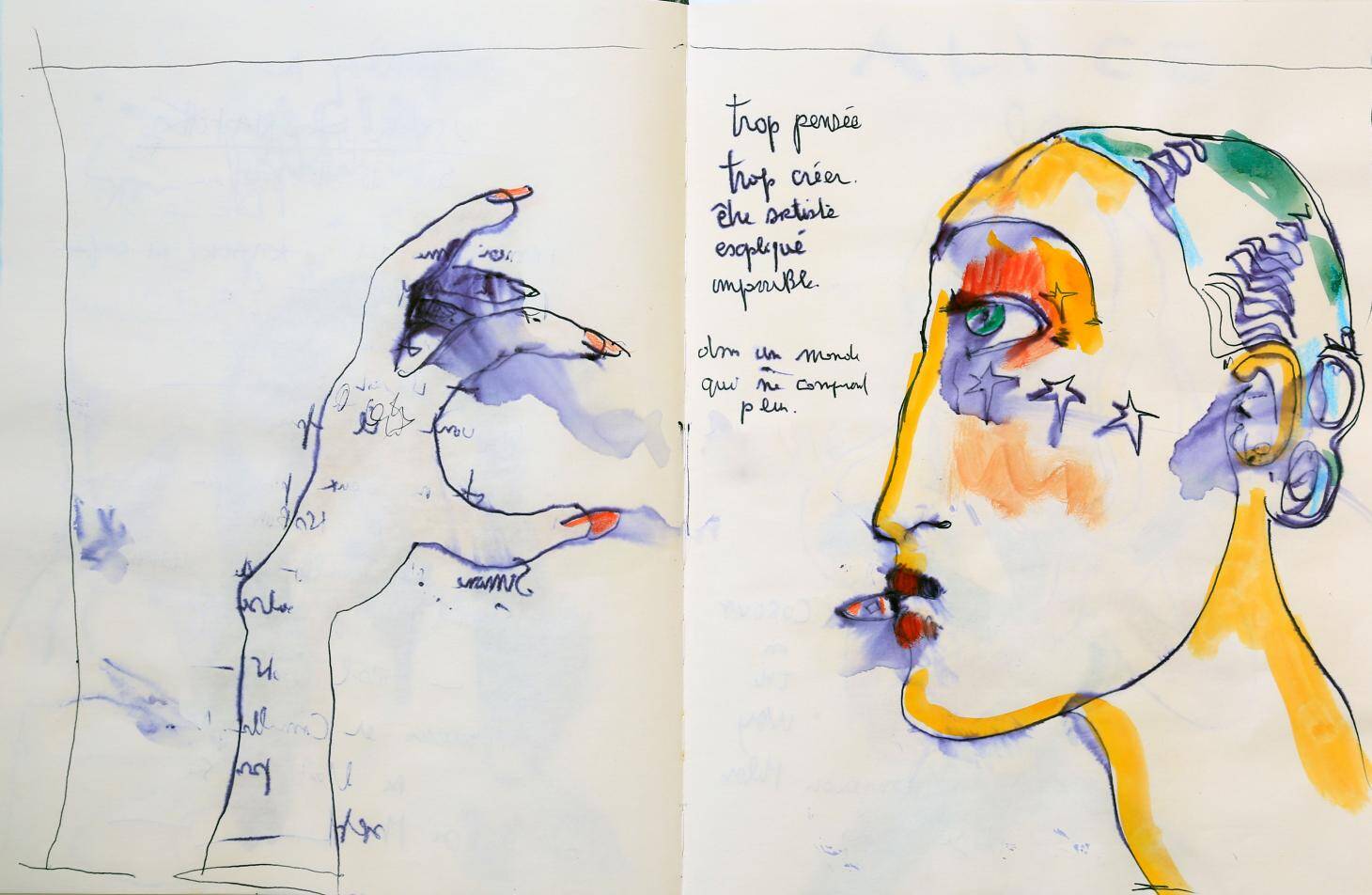
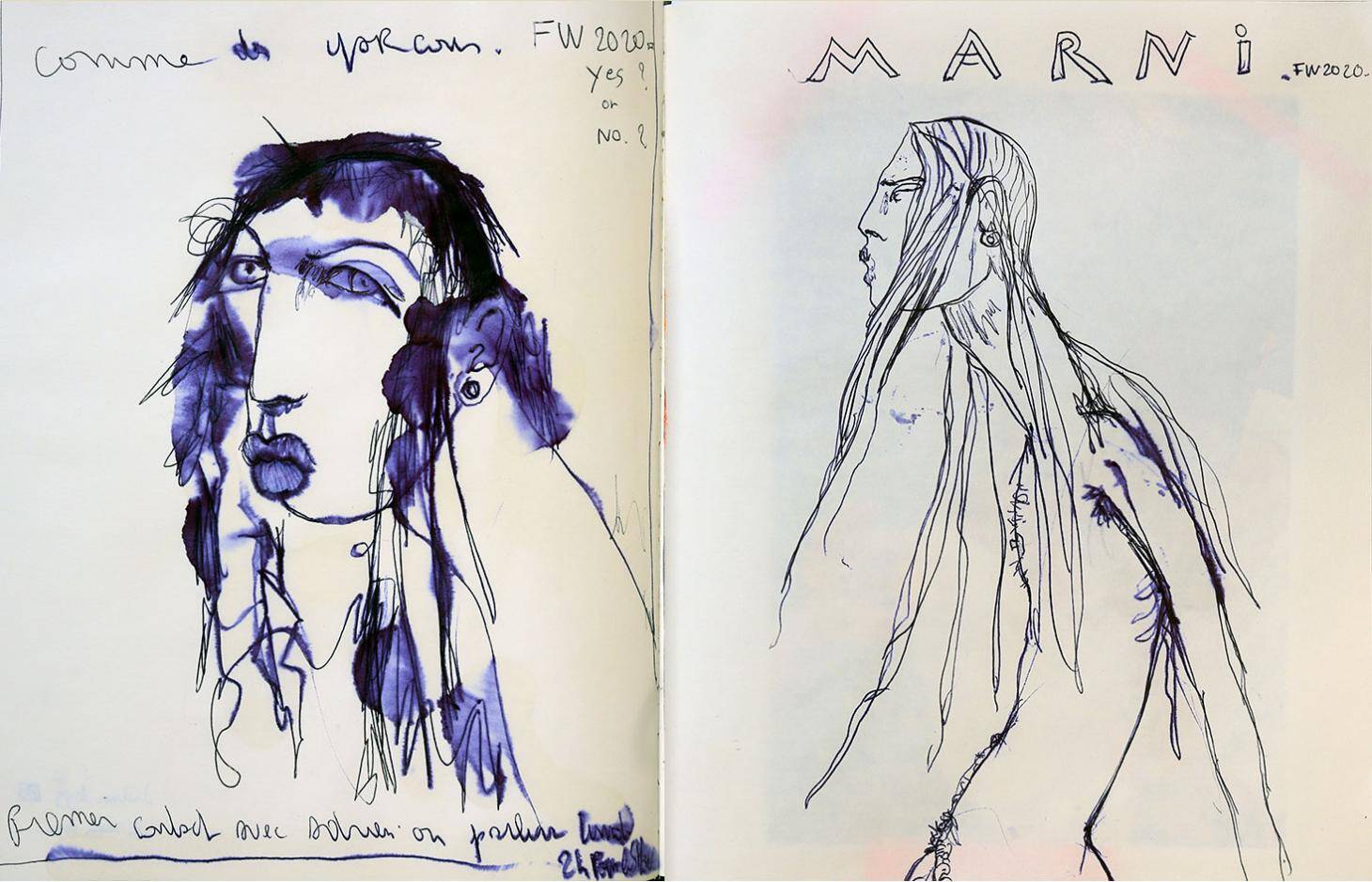
Hair artist Julien D’ys is one person never low on artistic output. Over the years, he has amassed hundreds of notebooks all bursting with sketches, paintings and photographs that have formed the basis of his work with Comme des Garçons, John Galliano, Karl Lagerfeld and Marni, to name a few. ‘My notebook is like my brain,’ D’ys says. ‘I draw, I think, from there I built my idea and bring it in life.’
Maria Faller writes about finding her teenage diaries, written in composition books:
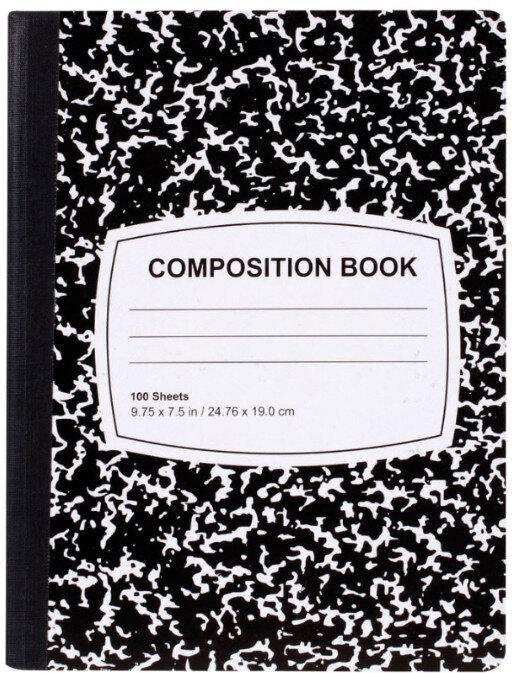
I have journaled on and off for most of my adult life. As a kid, I journaled all the time, but we called it a diary. Keeping a locked diary was one of the cool things to do in the 80s, but it was also something I quite enjoyed. I had many fancy pink, purple and unicorn designed diaries as a child. As a teenager, I wrote in composition notebooks, tracking the details of my friendships, my crushes, family life and everything in between. I must have filled up 20 of these marble notebooks with my thoughts, dreams and feelings.
Until very recently, I had forgotten the content of those journals. Twenty years ago I had given them to a trusted family member for safekeeping because they were full of my most precious and deepest secrets. After selling her house and cleaning it out, my box of journals was found and returned to me. When this treasure arrived on my doorstep, I felt as if I were about to unleash the powers of the Universe. I thought that, somehow, sifting through these books would provide the answers to so many of my adult life questions. I was sweating with anticipation. I sat with my long-lost journals, a cup of coffee and began the momentous reading event.
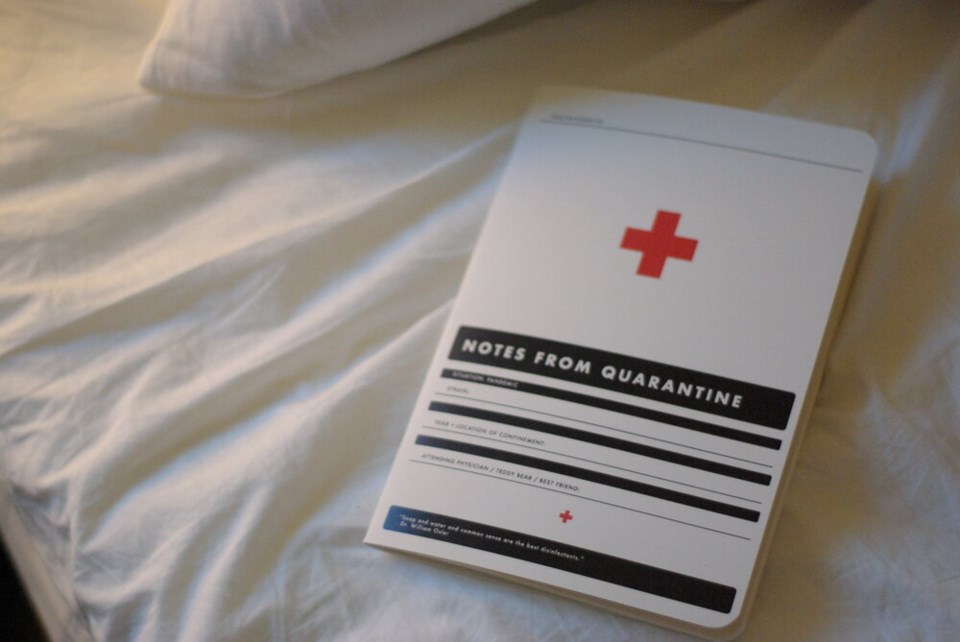
The carbon-neutral packaging company came up with the idea during a brainstorming session.
“We love paper products obviously, and we love good design. Quarantine notebook was suggested pretty quickly so we decided to roll with it,” said Abbi Conners with Georgette Packaging.
The front of the book has a spot for your name, the year, where you are confined and the name of the virus.
“Inside we have tips for staying healthy and protecting those around you, and they are approved by an ER doctor and some ways to stay busy during the quarantine.”
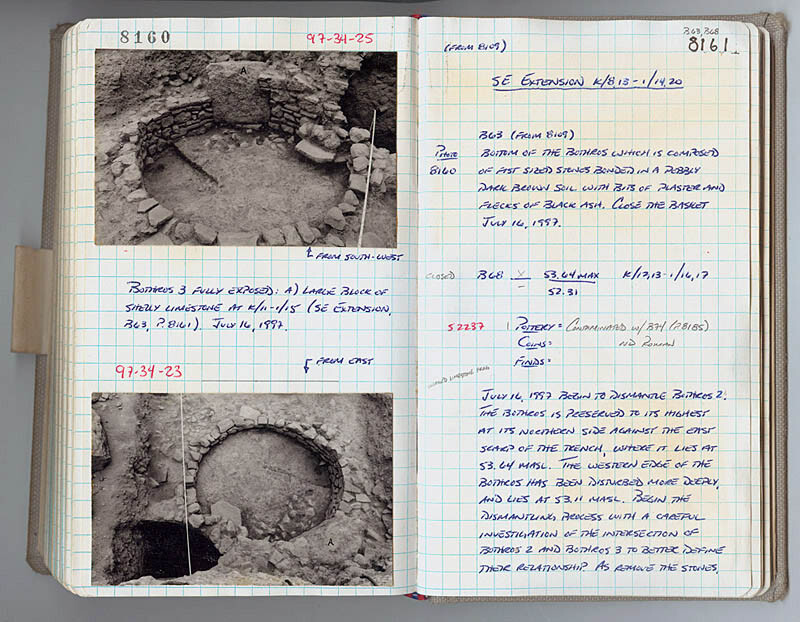
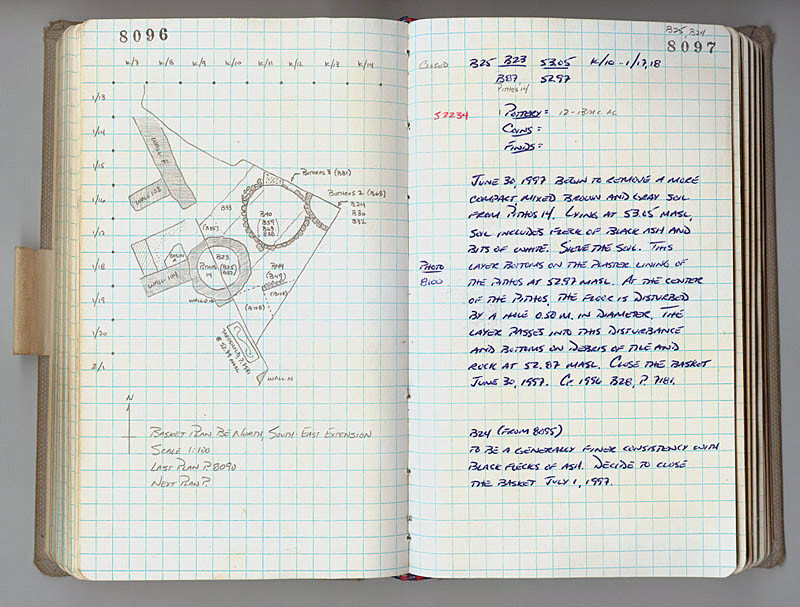
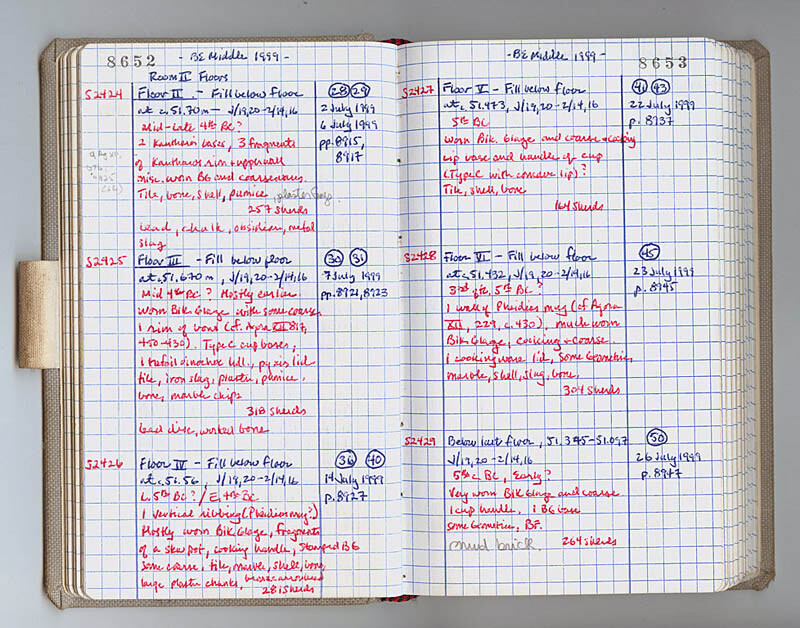
I came across these gorgeous archaeological notebooks on Pinterest, and traced them back to a website about the archaeological excavations of the Athenian Agora being carried out by the American School of Classical Studies at Athens. I’m always fascinated by field notebooks and scientific notebooks like this!
Archaeological excavation in the Athenian Agora is recorded in a series of three separate notebooks: the field notebooks, the pottery notebooks, and the find notebooks.
A field notebook contains a daily diary that records the results of excavation. This notebook contains a textual description of the excavation process, dividing an area into Contexts (independent archaeological contexts such as layers, walls, rooms, etc.). This notebook also contains Photographs, Plans and Drawings, and references to Objects found during excavation.
A pottery notebook contains a list of the material contents from each archaeological context. This notebook organizes the archaeological contexts into chronological and hierarchical structures. It records the pottery and other non-inventoried objects, using these objects to determine a date for each context.
A find notebook contains a catalog of objects found during excavation. This notebook records more detailed information on each inventoried object (such as title, description, date, dimensions, etc.). A catalog card is created for each object based on these initial descriptions.
The images from their card catalog are also pretty cool! The website also notes that “handheld computers” (which based on the screenshot look like really ancient Palm Pilots) are being used to track and catalog the finds at this excavation. I hope they continue to use paper notebooks too, as the handwritten records are so much more interesting to look at!
You can see more of these archaeological notebooks at Agathe.gr. There are also some additional notebook images in the sections of the website titled “The Notebooks” and “Photography.”
Notebooks, journals, sketchbooks, diaries: in search of the perfect page…