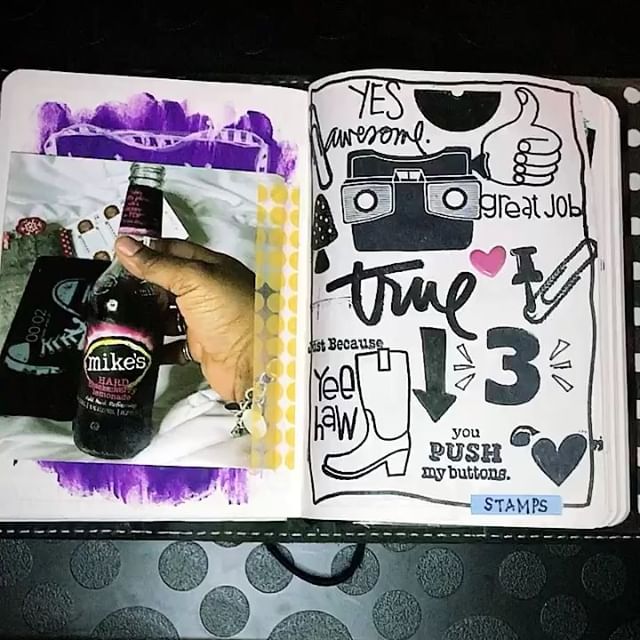
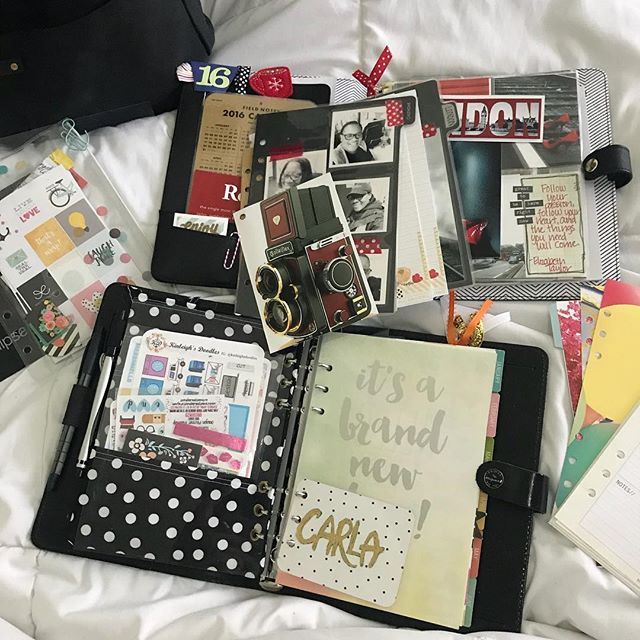
I’ve been following this week’s addict on Instagram for a while, where she shows off an awe-inspiring collection of planners and notebook covers (as well as leather bags and accessories from cult Japanese brand The Superior Labor [drool]). Carla fills her notebooks and planners with lots of creativity, planning and documenting her days with fun calligraphy, stickers, collaged photos and more. One of the notebooks she seems to use the most is a Stalogy 365 notebook. You can follow her at Carla’s Creative Life.
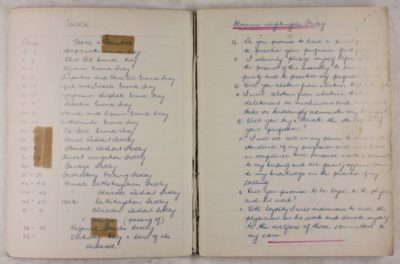
A curious item from the online archive of the Psychiatric Services Collection of Museums Victoria in Australia:
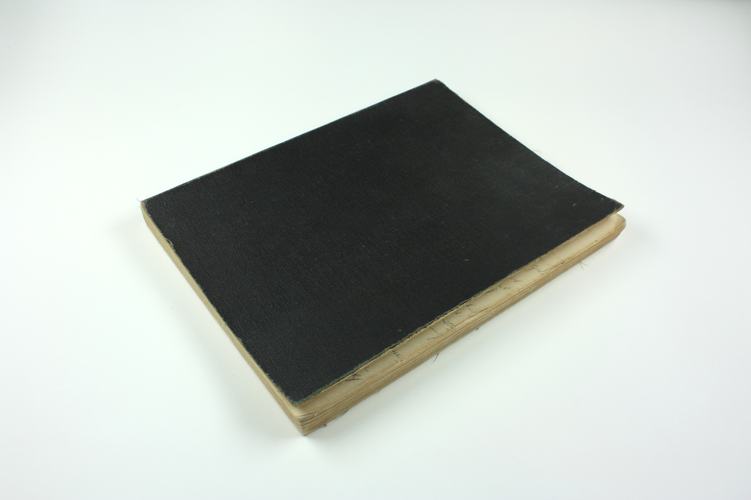
Hand-written student nurse’s notebook written during nursing training at a mental health hospital, Mayday Hills, Beechworth, Victoria, Australia, circa 1955.
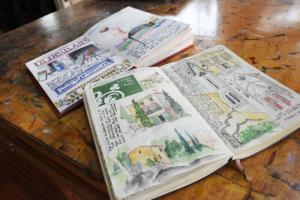
I wish there were more images of these travel sketchbooks in the Cape Gazette’s profile of a local artist in Lewes, Delaware:
As Victor Letonoff flips through the pages of a small sketchbook, watercolor paintings remind him of his travels to Paris. As a page turns, a French street gives way to the Golden Gate Bridge, only to be replaced by another scene showcasing the distinct architecture of Key West.
Rather than document his travels through photography, the 82-year-old Letonoff takes time to sketch or paint his experiences, rarely leaving the house without his paint brushes, pencils and paper.
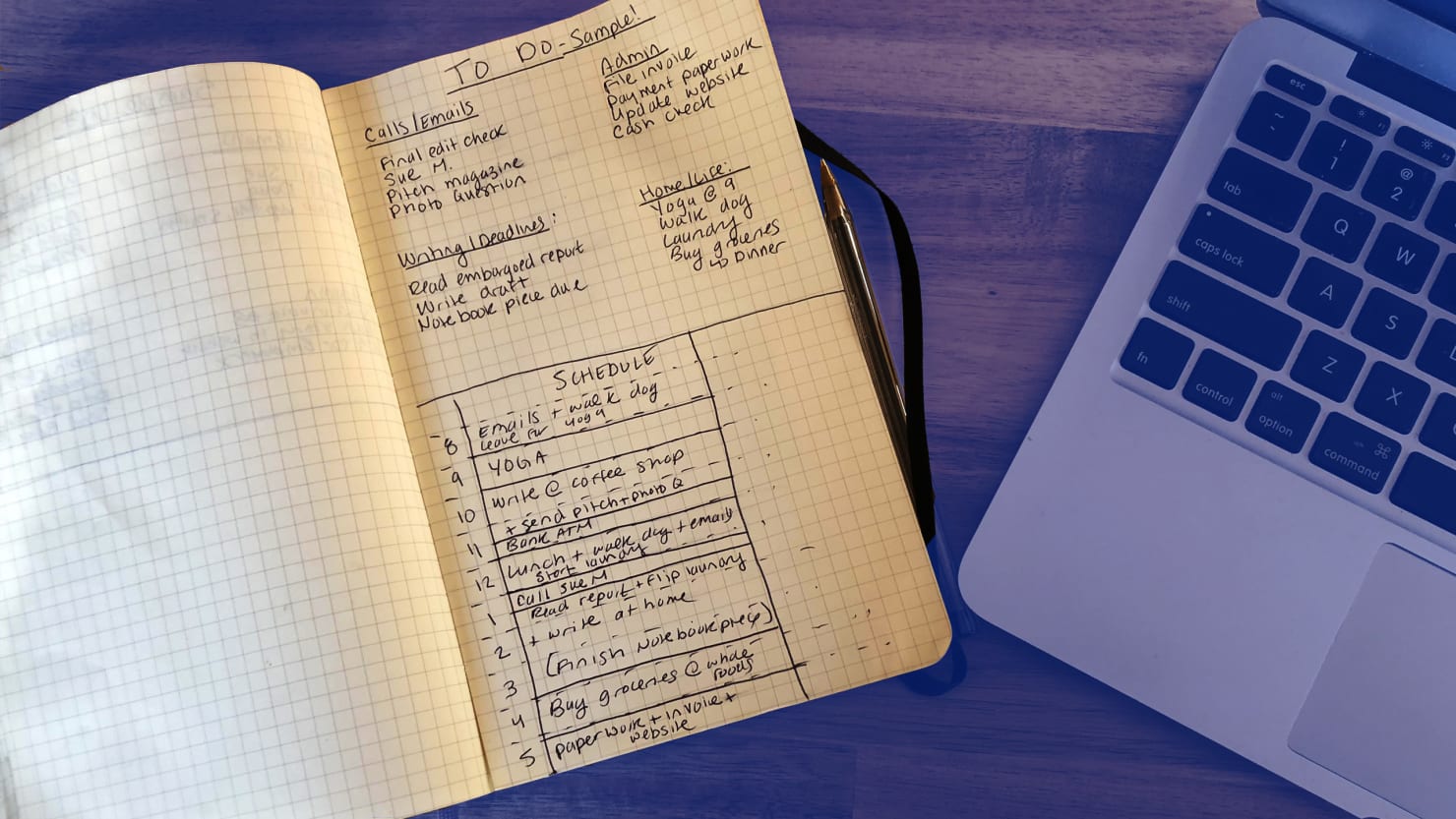
This is an interesting alternative to the Bullet Journal method. Torey Van Dot lays out each day’s tasks divided into categories and then slotted into time blocks on a schedule. As she writes in the linked post, a graph paper notebook made this layout workable.
Who knew graph paper could make such a difference?
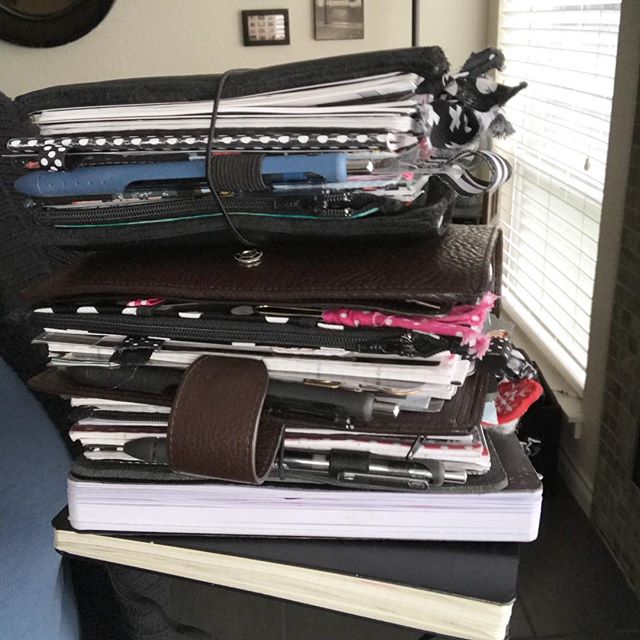
I found this week’s addict on Instagram (@arimako58), where this lovely stack of notebooks was shared: Mostly refillable binders and some chunky journals in covers… I also spy what I think is a Filofax refillable notebook, similar to this one.
Source: Ari. (@arimako58) • Instagram photos and videos
I bought this cute little notebook at the National Gallery of Art in Washington DC. There is no branding on it, so I’m just calling it a “rainbow edge notebook.” I liked the way the museum logo was quite subtle on the cover, and the slim size and eye-catching rainbow-colored page edges seemed quite unique. That was several months ago, and in the meantime I’ve seen other versions of this same notebook in other museum stores, with their logos stamped on the front. It seems to be a generic promotional item that anyone can order and personalize via Alibaba and other sources. But is it a good notebooks? Let’s take a look.
What’s on the Outside
Back cover
As noted above, the outside of the rainbow edge notebook is quite cute. The cover is a soft smooth vinyl. (It has a similar feel to the material used on the Rhodia Webbie and the PSN Notebook I reviewed several years ago, but it feels even softer since there are no hard boards underneath.) I like the feel of it but it does show scuffs a bit more than it would if it had a texture. The museum logo is stamped or perhaps laser-etched on the front and “China” stamped in small letters on the back cover. It is nicely slim and flexible so it’s very pocketable. The cover overhang is pretty minimal. The signatures are squarely aligned. Best of all, it has the fun colored bands all along the page edges– I call it a “rainbow edge” but it’s not just a straightforward rainbow, as the colors appear slightly out of sequence, in bands of varying widths, which to me is much more attractive. Overall, the exterior of the notebook is very appealing, even if it doesn’t feel like a super high-end product.
Comparison to a pocket size Moleskine notebook
What’s on the Inside
The interior of the rainbow edge notebook is totally plain– nothing on the endpapers, no lines, no dot grid, no ribbon marker, no back pocket, no nothing. Just plain creamy sheets of paper, which feel relatively smooth and lightweight. Lined journals are so ubiquitous, I am always happy to find notebooks that are plain and minimal inside.
Pen Tests
Alas, here is where it all comes crashing down. Fountain pens are feathery from the get-go, and lots of inks bleed through. Badly. Show-through is about average. No paper weight is specified, but it seems similar to Moleskine paper, though the surface is a little bit less smooth. If you use pencil or fine point gel ink or ballpoint pen, the paper will perform adequately, but it is definitely not fountain pen friendly.
Conclusion/Where to Buy
The best things about this notebook are that it looks cute and only cost $6.95. It makes a fun little museum souvenir and will serve very well as a lightweight jotter to toss in a bag or pocket. But fountain pen users should definitely stay away. You can look for this notebook in museum stores, or try Amazon for some similar rainbow edged journals.
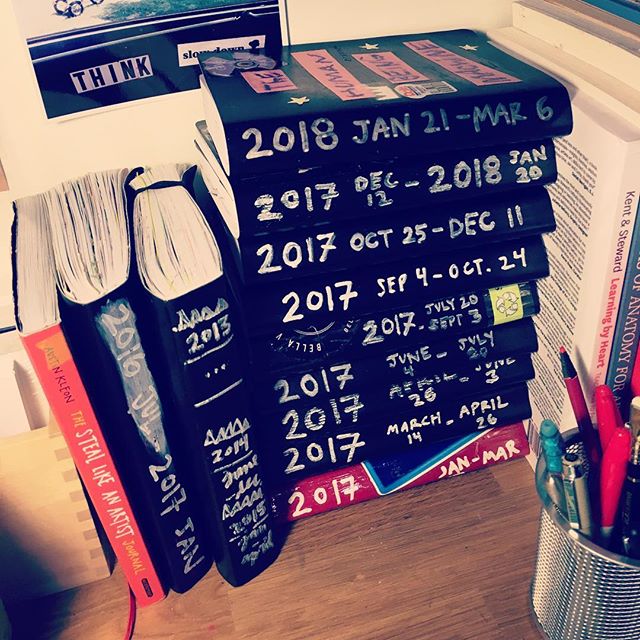
Bestselling author and artist Austin Kleon keeps some great notebooks (see here for other posts I’ve done featuring his work) , and I love this shot of some of his collection. Based on the dates, he goes through about 8 per year, and this photo was from March 2018, so I’m sure there are quite a few more by now! Definitely qualifies as an addict. [UPDATE: a reader asked what brand these are. I believe they are Zequenz notebooks. Miquelrius also makes a similar thick softcover notebook. He also uses Moleskine daily planners.] See lots more from Austin Kleon on Instagram and his website. And check out his books, the newest of which is coming out in April 2019:
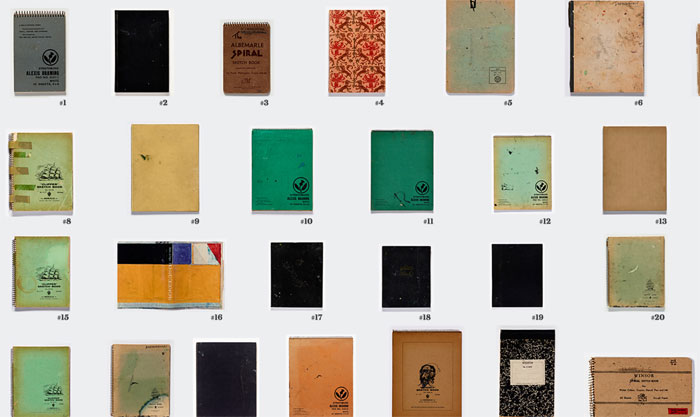
I love this image of the artist Richard Diebenkorn’s sketchbooks. Such an interesting variety, and they’re all digitally archived at Stanford.
“The Cantor Art Center completed the digitization of all twenty-nine books, making them accessible in the exhibition on touchscreens and here on the museum’s website. With these, one may now leaf through the books digitally and see every sketch in the order conceived, gaining insight into the way Diebenkorn experimented with line, shape, form, and perspective and creatively tackled challenging subjects.”
Throughout his long career, seminal California artist Richard Diebenkorn (Stanford BA ’49) always kept a sketchbook—a “portable studio,” as he called it—to capture his ideas. The books contain 1,045 drawings that span the artist’s career and represent the range of styles and subjects he explored—both gestural renderings of mundane, everyday items and powerful vignettes of intimate family moments. In the pages of these books, we see brief visual meditations upon vistas encountered through travels, carefully built-up studies that would become the large-scale Ocean Park paintings we know so well, and a multitude of renderings of the people who surrounded him over the years, revealing his fascination with the human figure.
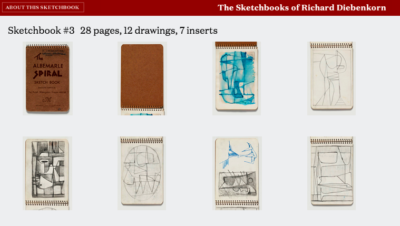
A couple of Diebenkorn’s sketchbooks are “Clipper” sketchbooks similar to one I used in high school.
Richard Diebenkorn sketchbook in Stanford Cantor Arts Center collectionClipper sketchbook from Notebook Stories personal collection
I wondered what had happened to the Morilla Co. There isn’t much information online about them, but it seems they were acquired by Canson, though there is no mention of them in Canson’s company history. The Clipper sketchbook has sailed off over the horizon…
Notebooks, journals, sketchbooks, diaries: in search of the perfect page…